Leave Your Message
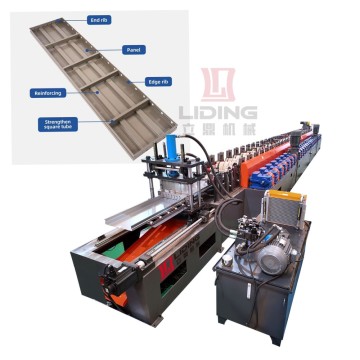
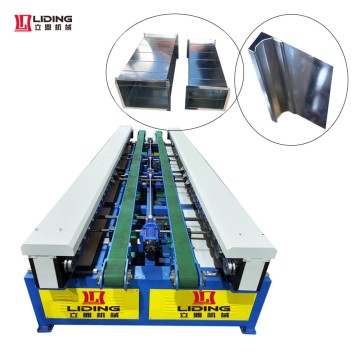
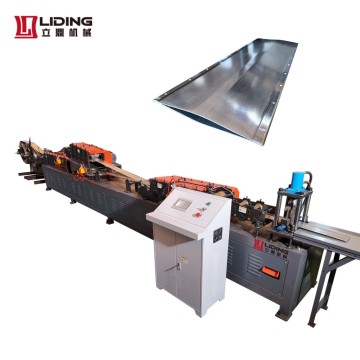
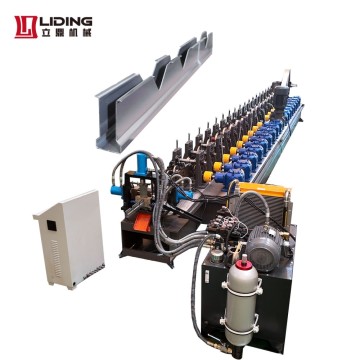
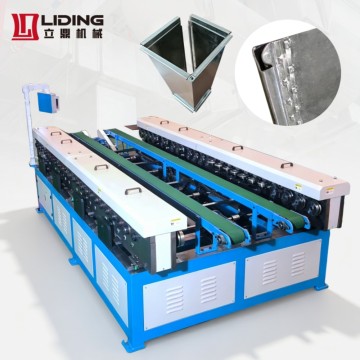
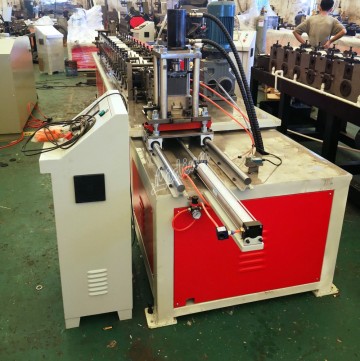
Precision roll forming equipment for vertical industrial pallet racking columns, beams, and shelving panels used in multi-level logistics warehouses.
Understanding the commercial and industrial landscape driving demand for vertical heavy pallet storage systems.
The global logistics and warehousing industry is undergoing a fundamental transformation. Driven by the explosive growth of e-commerce, the reshoring of manufacturing supply chains, and the increasing complexity of last-mile distribution networks, the demand for high-density, multi-level warehouse storage solutions has never been greater. At the heart of this transformation lies the steel framework — the structural backbone of every vertical industrial heavy pallet storage system deployed in modern logistics distribution warehouses.
🏗️ Key Industry Insight: According to global market research, the warehouse racking systems market is projected to surpass USD 15 billion by 2030, with multi-tier heavy pallet storage frameworks representing the fastest-growing segment, driven by cold-chain logistics, automotive parts distribution, and omnichannel retail fulfillment centers.
Steel framework for vertical industrial heavy pallet storage is no longer a commodity product — it has evolved into a precision-engineered, application-specific structural system. Today's logistics distribution warehouses demand racking structures capable of supporting loads exceeding 5,000 kg per pallet position, spanning clear heights of 15–40 meters, while complying with stringent seismic, fire safety, and international load standards (EN 15512, AS 4084, RMI ANSI MH16.1).
The commercial drivers are clear: land costs in urban and peri-urban logistics hubs continue to rise sharply, compelling warehouse operators to maximize cubic storage capacity rather than footprint. This has accelerated adoption of Very Narrow Aisle (VNA) racking, Automated Storage and Retrieval Systems (AS/RS), and multi-story mezzanine pallet storage — all of which rely on ultra-precise cold-formed steel profiles for columns, beams, bracing, and shelving panels.
From a manufacturing standpoint, the quality and dimensional accuracy of the cold-formed steel profiles used in these frameworks directly determines the structural integrity, installation speed, and total lifecycle cost of the storage system. This is precisely where advanced roll forming technology from manufacturers like Liding Machinery becomes a critical competitive differentiator for racking system producers worldwide.
Rising land costs drive vertical storage expansion in city logistics hubs, requiring steel frameworks engineered for 15–40m clear heights and heavy dynamic loads.
Robotic stacker cranes and automated guided vehicles demand sub-millimeter profile tolerances — only precision roll forming achieves the consistency required at scale.
Multi-national logistics operators require racking frameworks compliant with EN 15512, FEM 10.2.02, and RMI standards — achievable through certified cold-forming processes.
Several converging macro-trends are reshaping how steel frameworks for vertical industrial heavy pallet storage are designed, manufactured, and deployed across multi-level logistics distribution warehouses globally.
Advanced high-strength steel grades (S355, S420, S460) combined with optimized cold-formed profile geometries allow engineers to reduce steel tonnage by 15–25% while maintaining or exceeding structural performance targets. Roll forming technology is central to this trend, enabling complex closed-section and open-section profiles that maximize strength-to-weight ratios.
Modern roll forming production lines for racking profiles are increasingly integrated with MES (Manufacturing Execution Systems), real-time quality monitoring via laser measurement, and automated bundling and labeling — enabling lights-out production of racking components at throughput rates exceeding 25 meters per minute.
The logistics sector's net-zero commitments are driving demand for racking frameworks manufactured from recycled-content galvanized steel coil, with designs optimized for disassembly and reuse. Cold-forming processes generate near-zero material waste compared to hot-rolled fabrication, making roll-formed profiles the sustainable choice for large-scale warehouse projects.
The shift toward omnichannel fulfillment requires warehouse operators to rapidly reconfigure storage layouts in response to SKU proliferation and seasonal demand shifts. This demands racking frameworks with standardized, interchangeable cold-formed components — a design philosophy that places precision roll forming at the center of next-generation warehouse infrastructure.
Hyperscale fulfillment centers operated by global e-commerce platforms require multi-level pallet storage frameworks spanning 100,000+ square meters of floor space, with racking heights up to 30 meters. The steel column profiles used in these installations must maintain tight dimensional tolerances across millions of linear meters of production to ensure seamless integration with automated stacker cranes. High-speed roll forming lines capable of producing perforated upright columns, box-section beams, and wire mesh decking components at 20–30 m/min are essential to meeting the compressed construction timelines of these projects.
Temperature-controlled distribution warehouses for cold-chain food logistics and pharmaceutical supply chains present unique structural challenges. Racking frameworks must withstand extreme thermal cycling, high humidity, and strict hygiene requirements. Hot-dip galvanized or zinc-aluminum-magnesium coated cold-formed steel profiles provide the corrosion resistance and surface quality demanded in these environments, with roll forming enabling the precise, burr-free profile edges critical for cleanroom-compatible racking systems.
Automotive tier-1 suppliers and heavy industrial distributors require cantilever racking and drive-in pallet racking systems capable of storing irregularly shaped, extremely heavy loads — engine blocks, transmission assemblies, steel coils — with individual pallet weights exceeding 3,000 kg. The structural steel frameworks for these applications demand heavy-gauge cold-formed profiles with wall thicknesses of 2.5–5mm, produced on robust, high-tonnage roll forming lines engineered for continuous heavy-duty production.
The emergence of urban micro-fulfillment centers — compact, multi-story automated warehouses located close to consumers in dense urban areas — represents one of the most technically demanding applications for steel pallet storage frameworks. These structures must integrate structural racking with building envelope functions, meet strict urban planning and fire safety regulations, and accommodate the full weight of robotic picking systems operating across multiple levels simultaneously. Precision cold-formed steel frameworks are the only cost-effective structural solution for this emerging building typology.
⚡ Technical Advantage: Liding Machinery's roll forming production lines for warehouse racking profiles deliver dimensional accuracy of ±0.3mm on critical profile dimensions, enabling racking system manufacturers to achieve the structural performance and installation quality demanded by the world's most advanced logistics operators.
Trusted by racking and warehouse equipment manufacturers across 50+ countries worldwide.
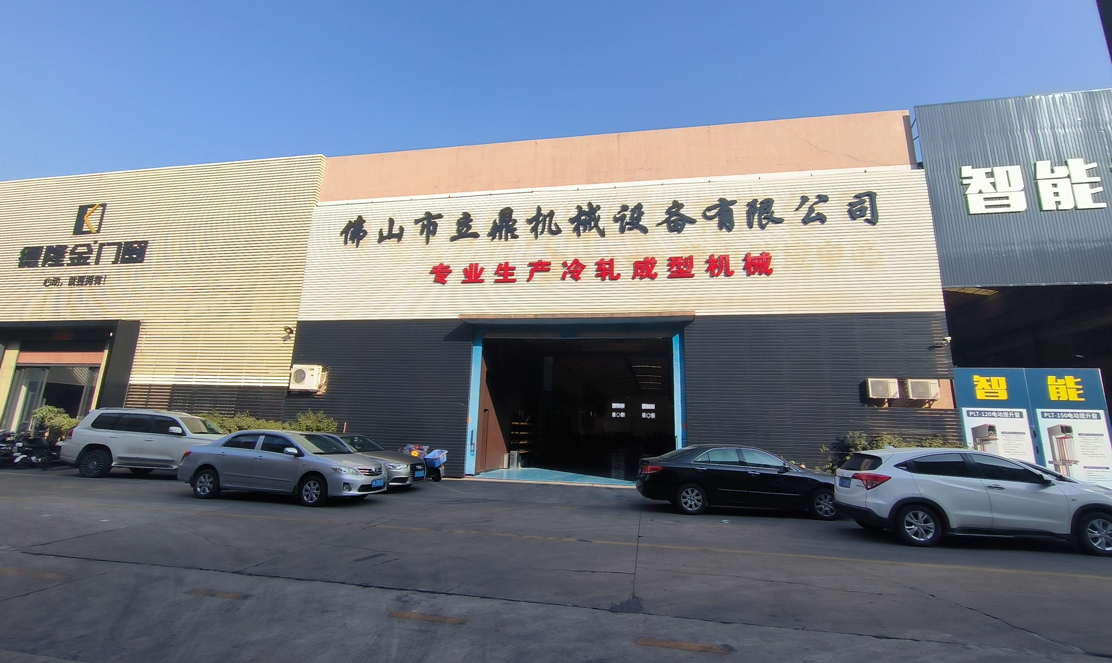
Foshan Liding Machinery Equipment Co., Ltd. was established in 2014, with a core technical team boasting over 25–30 years of hands-on experience in cold-forming technology. We are a specialist manufacturer of metal roll forming equipment dedicated to providing efficient, precise, and reliable customized production line solutions for global HVAC systems, building structures, and storage equipment sectors.
We are not merely a machine supplier — we are your strategic partner in product innovation and production efficiency enhancement. Our expertise spans the full spectrum of warehouse racking components: upright columns, horizontal beams, diagonal bracing, wire decking panels, and mezzanine flooring profiles.
Four pillars that set Liding Machinery apart in the global roll forming equipment market.
25+ years of cold-bending forming expertise, with an R&D team of over 10 specialist engineers continuously advancing profile design and machine performance.
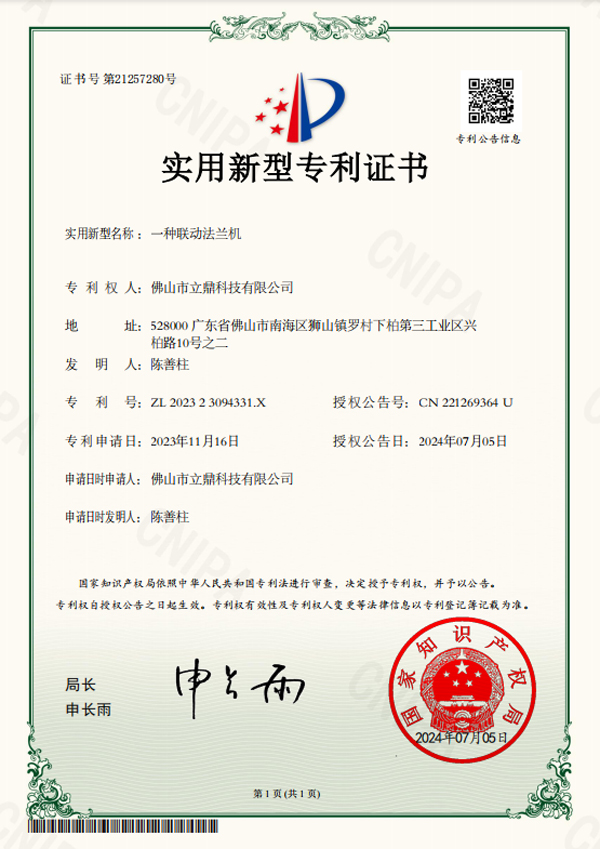
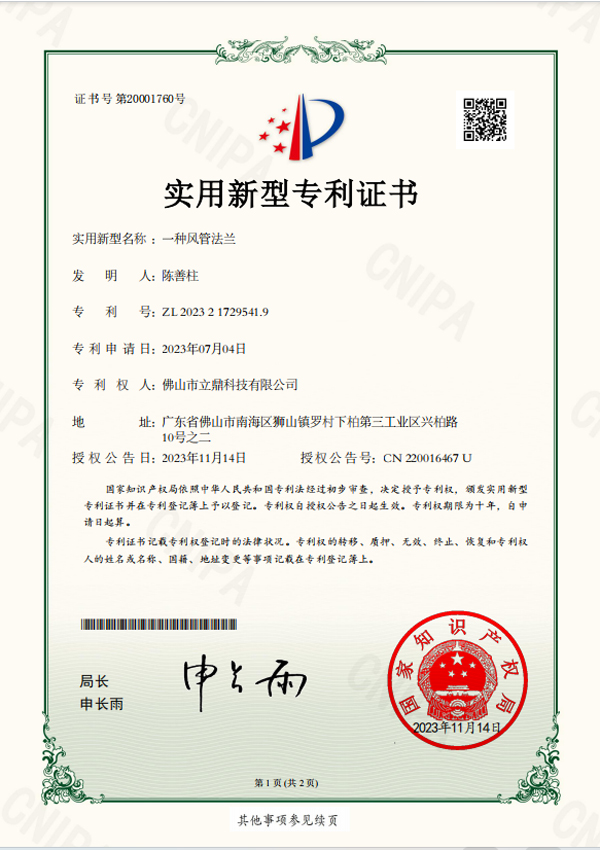
Proprietary anti-seismic bracket patented technology ensures safe, reliable structural performance for racking systems in earthquake-prone logistics zones.
Fully customized on demand — a complete line solution from blueprint to mass production, tailored to your specific racking profile geometry and production volume.
Global technical support with a guaranteed 48-hour response time. Modular machine design enables quick changeover between profile types for maximum production versatility.
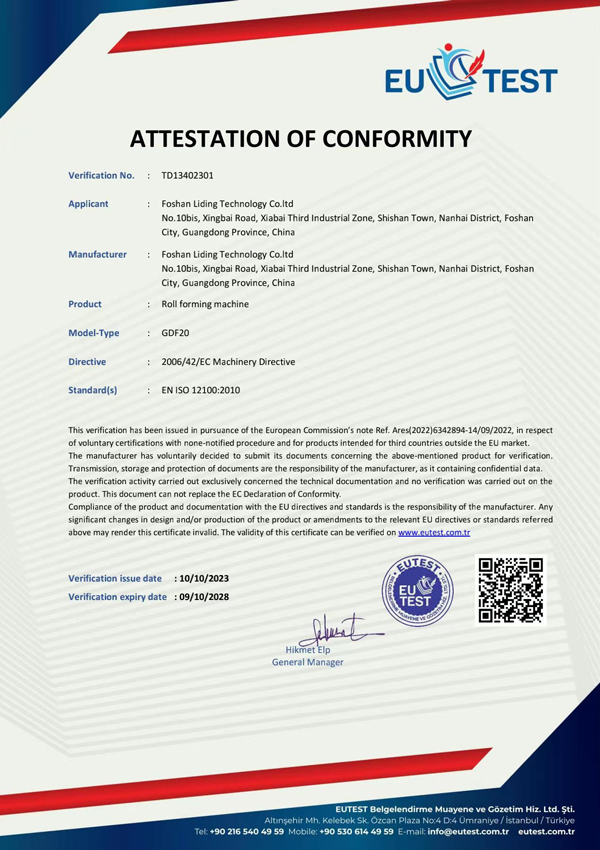
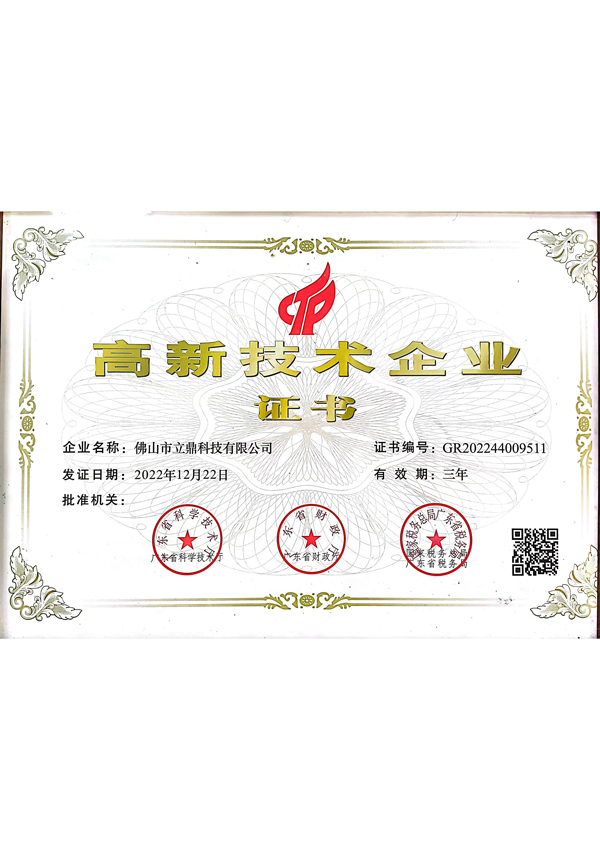
Our roll forming equipment and manufacturing processes are certified to meet international quality and safety standards.
Explore our full range of precision cold-forming machines engineered for warehouse racking, building structures, and HVAC systems.