Leave Your Message
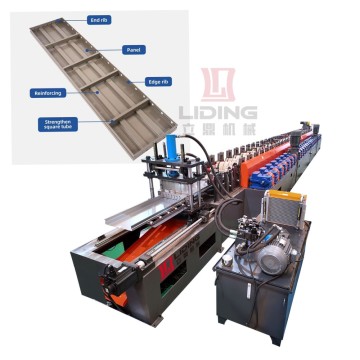
Explore our high-precision machinery designed to roll-form the core structural profiles required for heavy-duty commercial garage doors and logistics dock shutters.
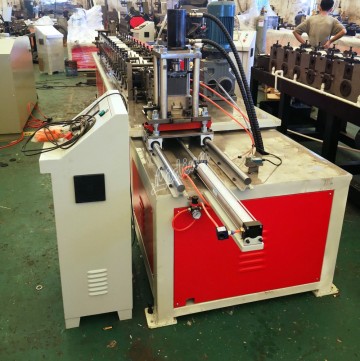
In modern industrial and commercial architecture, secure access is no longer just about locking a door; it is about managing logistical efficiency, ensuring high-security boundaries, and minimizing thermal energy loss. At the core of these operations are automated secure entry roll-up doors. Whether installed at a high-traffic commercial parking garage or an active airport logistics dock, the structural integrity of these doors relies entirely on the quality of their steel framework.
A steel framework for automated roll-up doors consists of heavy-duty guide tracks, structural headers, side columns, wind-resistant locks, and bottom bars. Together, these components must withstand constant mechanical stress, high wind loads, and potential vehicular impacts. Without a robust, cold-formed steel chassis, the advanced automation sensors, rapid-opening motors, and security locks would fail under the sheer physical demands of daily industrial cycles.
Industry Insight: Logistics hubs and commercial complexes report that door failures are among the top three causes of operational downtime. Investing in high-precision, cold-formed steel guide rails and heavy-duty frame elements directly correlates with a 40% reduction in maintenance costs.
Commercial parking garages in metropolitan centers or corporate headquarters experience intense peak traffic hours. During morning and evening commutes, automated roll-up doors operate continuously. The steel framework must be engineered for high-cycle fatigue resistance. Precision-engineered guide tracks reduce friction as the door slats slide up and down, preventing wear on the motor and extending the lifespan of the entire system. Galvanized steel is the material of choice here, offering excellent rust protection against vehicle exhaust, moisture, and road salts brought in by tires.
Airport logistics docks operate in some of the most demanding environments on earth. Positioned on open tarmacs, these facilities are subjected to extreme wind pressures, jet blasts, and strict security regulations. Roll-up doors at airport cargo terminals must feature heavy-duty steel frameworks with integrated deep-channel wind locks. If a door fails due to wind pressure, it compromises not only the cargo but also the security of the airport's restricted areas. The structural framework must be rigid enough to prevent deflection while allowing rapid, automated opening and closing to maintain climate control and security integrity.
Liding Machinery – Our core technical team boasts over 30 years of experience in cold-forming. We design and manufacture high-precision cold-forming equipment covering HVAC ductwork machinery, building structures (light steel studs, steel formwork, seismic brackets, purlins), and warehouse equipment (racking columns/beams/shelving panels).
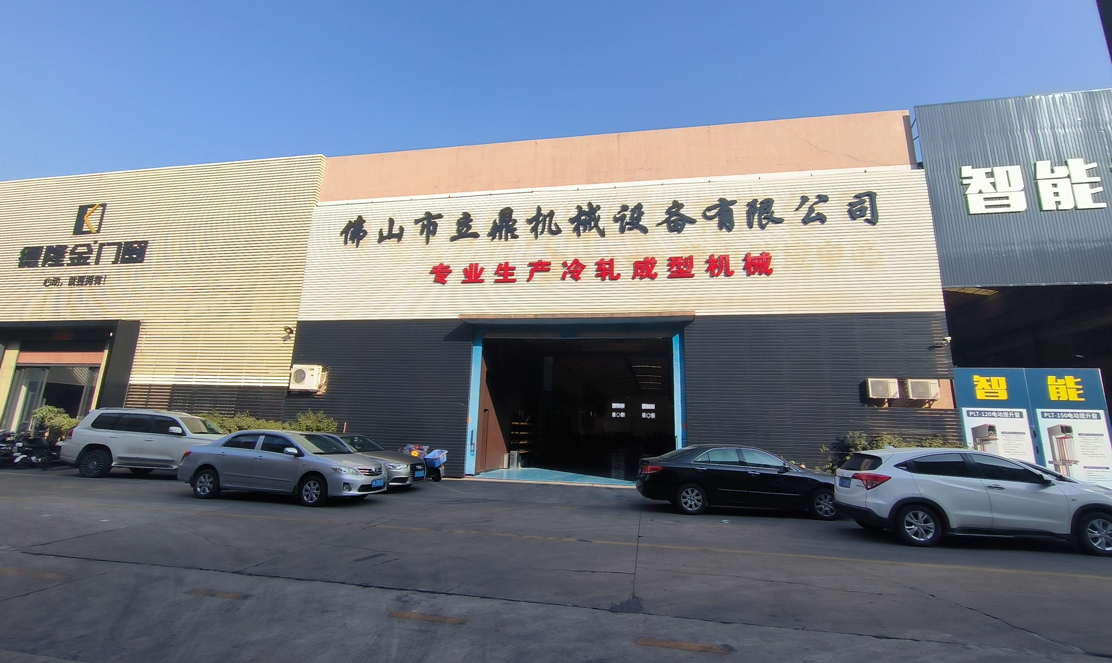
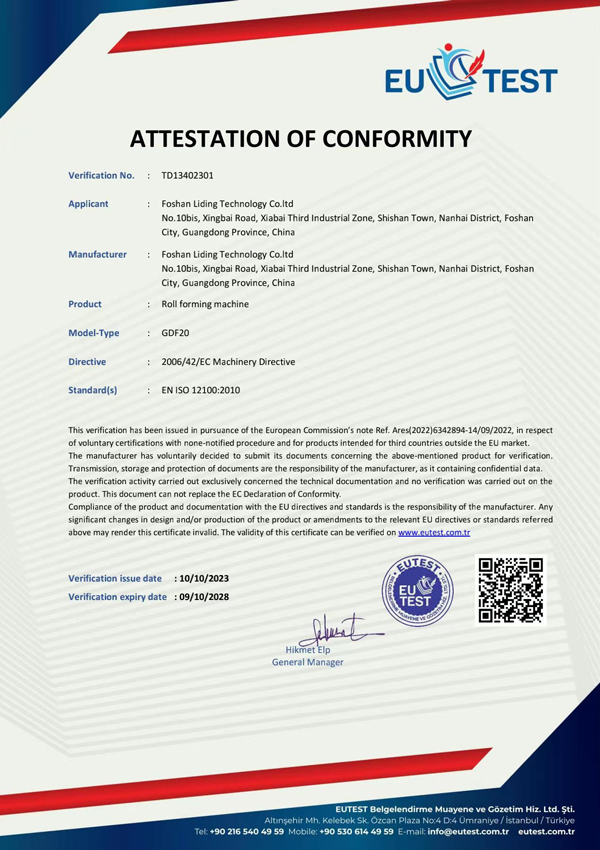
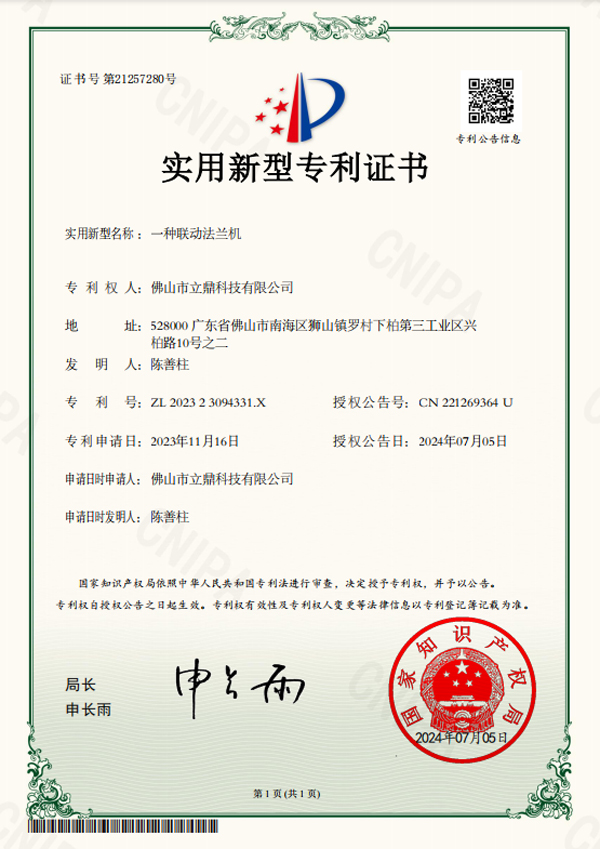
Foshan Liding Machinery Equipment Co., Ltd. was established in 2014, with a core team boasting over 25 years of experience in the cold-forming industry. We are a specialist manufacturer of metal roll forming equipment, dedicated to providing efficient, precise and reliable customised production line solutions for global HVAC systems, building structures and storage equipment sectors. We are not merely a machine supplier, but your strategic partner in product innovation and production efficiency enhancement.
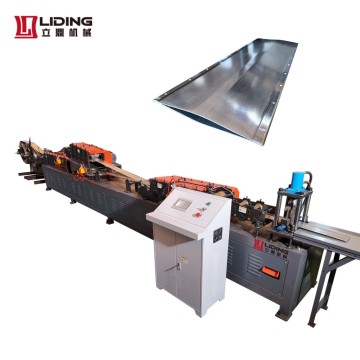
The strength of a steel framework does not just depend on the thickness of the metal, but on the geometry of the profile. Cold roll forming is the premier manufacturing method for producing these complex, high-strength profiles. By progressively bending flat galvanized steel coils through a series of precision-matched rollers, the steel retains its tensile strength while gaining structural rigidity through strategically placed bends and flanges.
For automated secure entry doors, the tolerances of the steel frame must be incredibly tight. A deviation of even 1 millimeter along a 6-meter guide rail can cause an automated high-speed door to bind, triggering safety sensors to reverse the motor. This leads to false alarms and operational delays. Liding Machinery’s roll forming lines are specifically engineered to produce straight, twist-free profiles with high dimensional consistency, ensuring that automated door manufacturers can assemble systems that run smoothly for hundreds of thousands of cycles.
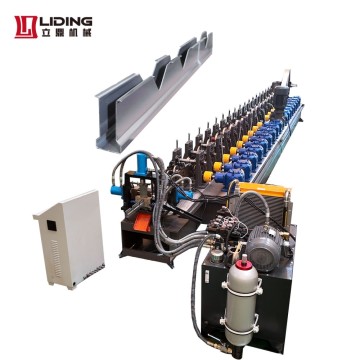
Technical Focus: Cold roll forming allows for the integration of pre-punching and pre-slotting within the production line. This means mounting holes, sensor brackets, and lock cutouts are punched into the steel framework before forming, ensuring perfect alignment and reducing installation labor on the job site.
As commercial buildings evolve, the demand for automated secure entry roll-up doors is experiencing significant shifts. First, there is a major focus on thermal efficiency. Logistics docks must prevent conditioned air from escaping to reduce energy costs. This requires insulated slats and tight-fitting side guide frameworks equipped with brush seals. Roll forming machines must adapt to form double-walled slats that can be filled with polyurethane insulation.
Second, the integration of smart access control, such as license plate recognition, RFID tracking, and AI-driven safety sensors, requires the steel framework to house wiring conduits and sensor brackets safely. The steel frame is no longer just a structural guide; it is an active enclosure for advanced electronics. This shift demands highly customized steel profiles that can protect delicate wiring from physical damage and environmental exposure.
Why global industrial door manufacturers trust Liding Machinery for their roll forming production lines.
We pride ourselves on offering comprehensive production solutions. You provide the drawings or samples, and we deliver the optimal machinery line to manufacture them. Our focus extends beyond the machine itself; we optimize for the quality, tolerances, and production costs of your end products. With ongoing technical support and a 48-hour response time, we guarantee operational reliability for your factory.
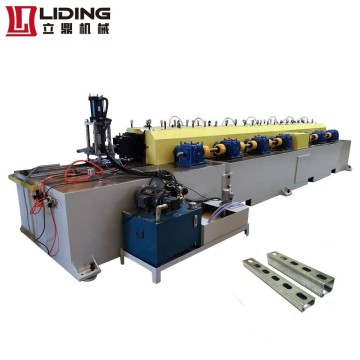
Browse our full range of automated cold roll forming lines, from structural steel formwork to heavy-duty strut channels and specialized door slats.