- Home
- About Us
- Products
- Solution
- Application
- News
- FAQ
- Contact Us
Leave Your Message
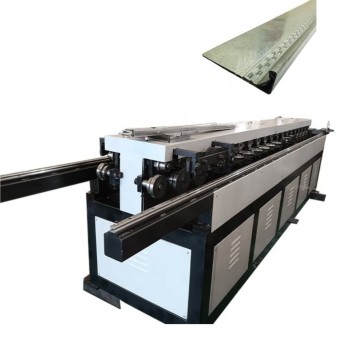
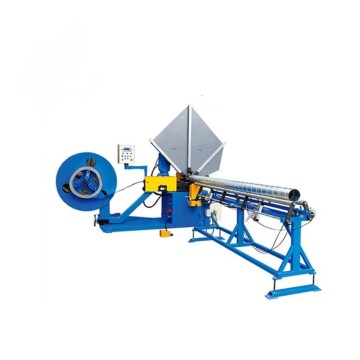
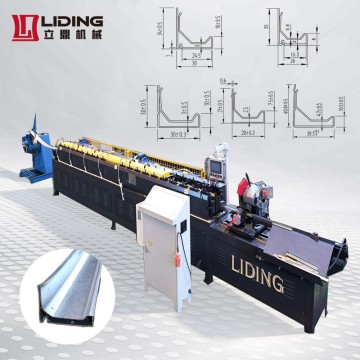
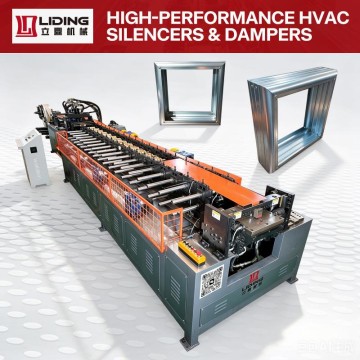
Marine vessels, floating production storage and offloading (FPSO) units, offshore drilling rigs, and offshore wind converter substations operate in what materials scientists classify as the ISO 12944 C5-M (Marine) and CX (Extreme Offshore) corrosive environments. In these hyper-saline, wave-battered, and chemically aggressive settings, ventilation and air handling systems serve as critical lifelines. They not only supply conditioned air to living quarters and machinery compartments but also manage emergency pressurization, smoke exhaust, fire containment, and hazardous gas dilution. At the forefront of these environmental control architectures are Air Regulation Dampers (Volume Control Dampers, Blast Dampers, Backdraft Dampers, and Pressure Relief Dampers).
The outer perimeter of these dampers—the exterior casing and interlocking weather louver/shutter slats—bears the direct brunt of continuous salt-spray aerosols, tropical storm winds surpassing 160 km/h, volatile sulfur compounds, and severe mechanical vibration. Historically, marine damper casings were fabricated through low-volume manual press braking, shearing, and labor-intensive multi-pass seam welding. However, manual welding introduces severe localized thermal residual stresses, destroys the microstructural passivation layers of corrosion-resistant alloys (such as AISI 316L, 31803 duplex, or marine-grade aluminum), and introduces dimensional variances that compromise Class 1 / Class A damper airtightness ratings.
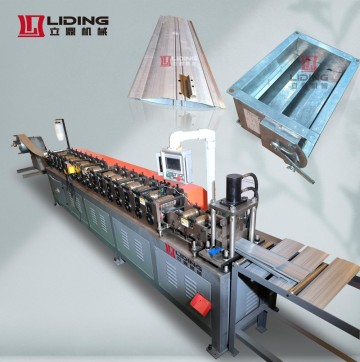
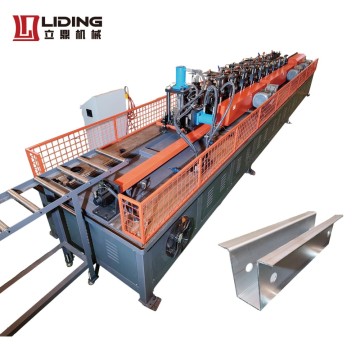
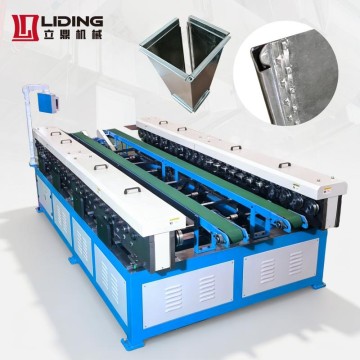
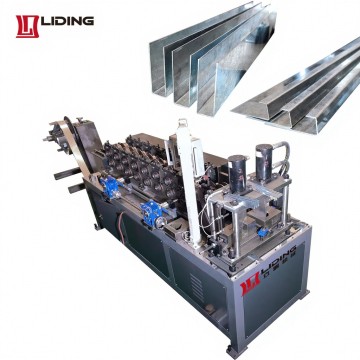
The industrial paradigm has decisively shifted toward automated high-precision rolling shutter machines and customized roll forming lines. By utilizing continuous, multi-station progressive cold deformation with servo-synchronized flying punching and cutting, modern cold roll forming lines produce single-piece interlocking damper casing channels, aerodynamic guide profiles, and structural shutter louvers that exhibit uniform mechanical yield properties, zero heat-affected zone (HAZ) corrosion vulnerability, and micro-millimeter dimensional tolerances.
Engineered roll tooling calibrated for austenitic stainless steels (316L/304), duplex alloys, and prepainted PVDF marine-grade aluminum coils up to 2.5mm thickness, avoiding surface micro-fractures during heavy radius deformation.
Continuous interlocking roll-formed profiles eliminate vulnerable weld seams, achieving dynamic air-pressure ratings up to 3,000 Pa and structural resistance to overpressure shocks common in topside petrochemical environments.
Closed-loop servo feedback with precision CNC roller positioning ensures consistent outer casing geometry, micro-clearance interlocking hems, and automated seal-retaining channel forming at linear speeds up to 25m/min.
Fabricating exterior damper casings for offshore applications involves high-tensile austenitic and ferritic-austenitic stainless steels. These materials exhibit substantial strain hardening and yield point elongation compared to standard structural carbon steel. When subjected to rapid roll bending, improper roll geometry causes extreme springback, asymmetrical bow, edge wave, and microscopic tearing of the protective chromium oxide passivation layer.
To address these mechanical constraints, our customized marine damper casing roll forming systems incorporate 18 to 28 sequential forming stations driven by independent heavy-duty gearboxes. Each roller pass is designed via Finite Element Method (FEM) software to distribute incremental deformation angles below the critical plastic yield limit of AISI 316L. Specially formulated Cr12MoV / DC53 die steel rollers, vacuum hardened to HRC 60–62 and mirror-polished with hard chrome plating, guarantee frictionless profile transit without micro-scuffing or cross-contamination from free iron particles.
Integrated inline servo hydraulic punching assemblies accurately punch flanging holes, aerodynamic louver slots, pivot axle bushings, and thermal-break slots before final profile forming. This eliminates post-forming thermal distortion and assures uncompromised bolt hole alignment during offshore casing module assembly.
| Evaluation Parameter | Continuous Cold Roll Formed Casing | Traditional Welded / Brake Formed Casing | Marine Platform Operational Impact |
|---|---|---|---|
| Corrosion Resistance (C5-M Zone) | Continuous passivated surface; zero HAZ; uncompromised chromium oxide barrier. | Weld seams suffer sensitization, chromium depletion, and crevice corrosion. | Roll forming extends maintenance-free platform service life beyond 25 years. |
| Structural Rigidity & Pressure Limits | Uniform cold-work hardening across corners; integrated stiffening ribs. | Variable corner radii; localized stress concentrations at intermittent stitch welds. | Resists offshore wind gusts up to 250 km/h and high-pressure damper actuations without oil-canning. |
| Dimensional Tolerance (EN ISO 13920) | Linear profile precision within ±0.2mm; flange squareness within ±0.3°. | Heat distortion leads to angular shrinkage and bow variances (±1.5mm to 3.0mm). | Ensures airtight blade sealing to meet AMCA 500-D Class 1A leakage criteria. |
| Production Efficiency & Waste | Continuous uncoiling, punching, forming, and flying cutoff; scrap rate < 1.5%. | Sheet shearing, batch brake pressing, manual deburring, welding; scrap > 8%. | Reduces unit production manufacturing costs by 45% while drastically shortening delivery schedules. |
| Interlocking Slat Geometry | Micro-precision roll-formed double-hemmed interlocking acoustic and weather slats. | Single-bend slats requiring secondary rivet or mechanical fastening. | Smooth kinematic articulation for emergency rapid closure dampers (fail-safe close < 3s). |
Floating Production Storage and Offloading (FPSO) units operate in open oceanic waters for up to 30 years without dry-docking. Their HVAC systems are exposed to concentrated hydrocarbon vapors, corrosive saltwater spray, and constant structural deflection caused by hull hogging and sagging. The exterior casing of topside air regulation dampers must preserve absolute integrity. Continuous roll-formed stainless steel shutter casings maintain precise track alignment, preventing louver slats from binding under vessel pitch and roll motions.
High Voltage Direct Current (HVDC) offshore converter stations generate massive internal heat loads requiring thousands of cubic meters of cooling air per minute. Because these unmanned facilities reside in North Sea and Asian coastal waters, air intake dampers must filter out sea salt aerosols while sustaining extreme laminar face velocities. Roll-formed aerodynamic weather louver blades and rigid C-profile outer frames minimize air friction pressure drops while preventing moisture penetration into ultra-sensitive converter transformer halls.
Safety regulations mandate that platform accommodation modules maintain positive air pressure to prevent ingress of volatile toxic gases (H2S) or hydrocarbon mixtures. Air regulation and blast dampers installed on the boundary walls rely on precision-formed interlocking shutter casings. The high mechanical repeatability of roll-formed profiles guarantees that air seal gaskets maintain 100% perimeter contact, completely preventing toxic gas bypass during topside emergencies.
Modern mega-container ships, LNG carriers, and luxury cruise liners require multi-zone automated ventilation dampers compliant with SOLAS (Safety of Life at Sea) Chapter II-2 fire integrity codes. Roll-formed fire and smoke damper casings with integral pre-notched thermal expansion slots ensure that when automatic actuators close the damper under extreme heat, the casing profile resists warping, successfully sealing off compartments for up to 120 minutes.
The offshore fabrication sector is undergoing rapid evolution propelled by digital twin simulation, modular yard fabrication, and decarbonization mandates. Future rolling shutter and damper casing production lines are integrating laser profile sensors directly after final sizing stations to deliver real-time geometric cloud scans. This closed-loop AI control continuously adjusts motorized roll clearances to compensate for mechanical coil thickness tolerances and variations in batch metallurgy. Furthermore, the industry is witnessing an accelerated adoption of rapid width-adjustable cassette systems, empowering marine contractors to switch between 150mm and 400mm deep damper casing profiles in less than 15 minutes, drastically lowering inventory carrying costs and enabling just-in-time deliveries for specialized shipyard projects worldwide.
We design and manufacture high-precision cold-forming equipment covering:
HVAC ductwork machinery
Building structures: light steel studs, steel formwork, seismic brackets, purlins
Warehouse equipment: racking columns/beams/shelving panel
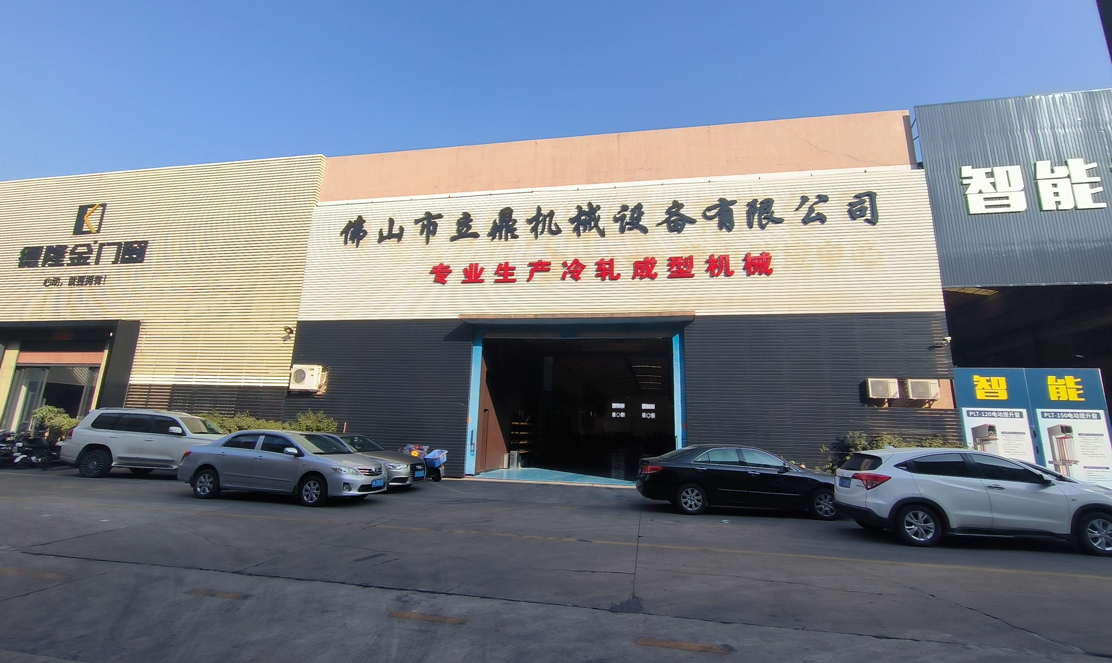
Foshan Liding Machinery Equipment Co., Ltd. was established in 2014, with a core team boasting over 25 years of experience in the cold-forming industry.
We are a specialist manufacturer of metal roll forming equipment, dedicated to providing efficient, precise and reliable customised production line solutions for global HVAC systems, building structures and storage equipment sectors. We are not merely a machine supplier, but your strategic partner in product innovation and production efficiency enhancement.
Over 2,000 roll forming machines operating worldwide.
Exporting to Southeast Asia, Middle East, Europe, Russia.
85% of our clients come back for additional lines.
Average experience of our senior engineers.
You provide drawings or samples; we deliver comprehensive production solutions.
Our focus extends beyond the machinery itself to the quality and production costs of your end products.
Our dedicated team offers ongoing technical support and after-sales service.
25 years of experience in cold bending forming, with a research and development team of over 10 people.
Anti seismic bracket patented technology, safe and reliable.
Customized on demand, a full line solution from blueprint to mass production.
Quick changeover, versatile for one machine. Global technical support, 48 hour response time.