- Home
- About Us
- Products
- Solution
- Application
- News
- FAQ
- Contact Us
Leave Your Message
In the modern architectural landscape, high-rise commercial offices stand as monuments to engineering, housing thousands of workers daily. However, their sheer height, complex structural designs, and dense occupant populations present unprecedented challenges for life safety management. Among these challenges, passive fire containment and air safety isolation are paramount. The rapid spread of fire, toxic smoke, and airborne pathogens through HVAC (Heating, Ventilation, and Air Conditioning) networks can turn a localized incident into a catastrophic event in minutes.
Consequently, global building codes, including the International Building Code (IBC), NFPA 90A, and European standards like EN 1366, have mandated extremely stringent performance criteria for fire dampers, smoke isolation barriers, air plenum boxes, and rigid ventilation ductwork. Historically, fabricating these critical life-safety components relied on semi-automated press brakes and manual folding, which introduced human error, structural inconsistencies, and slow production rates.
Today, the commercial and industrial sectors are undergoing a massive transition. High-precision roll forming machines have emerged as the foundational manufacturing technology for building safety infrastructure. By continuously processing sheet metal coils into complex, high-tolerance profiles, roll forming ensures that every single damper frame, duct flange, and structural channel meets exact aerodynamic and structural specifications. This automation not only helps manufacturers scale production to meet the booming demand of global urbanization but also guarantees the structural integrity required to contain fires and isolate air zones under extreme thermal and pressure stresses.
Ensures all formed profiles meet international fire-rating standards, minimizing structural deflection during thermal expansion.
Replaces labor-intensive manual bending with continuous high-speed roll forming, increasing production efficiency by up to 300%.
Maintains sub-millimeter precision across thousands of runs, ensuring airtight seals for toxic smoke and air isolation.
To appreciate the engineering behind a fire safety roll forming machine, one must examine the specific, demanding environments where its end-products operate. In high-rise offices, passive fire containment and air safety systems are integrated into every floor, ceiling plenum, and vertical shaft.
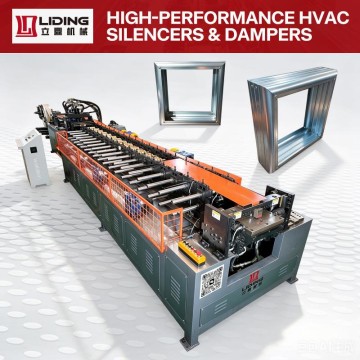
Fire and smoke dampers are installed at the intersections of fire-rated barriers and HVAC ducts. When a fire is detected, these dampers must instantly seal shut to block the passage of flame and hot gases. A roll forming machine configured for damper frames must handle heavy-gauge galvanized steel or stainless steel, forming complex outer frames and internal blade profiles. The structural integrity of the frame is vital; if the frame warps even slightly under intense heat, the damper blades will jam, allowing smoke to bypass the barrier. High-precision roll forming ensures the precise geometry required for smooth blade rotation and zero-leakage closure.
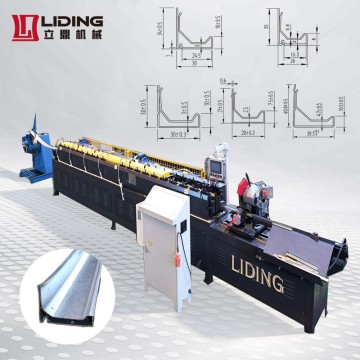
Plenum boxes serve as crucial junctions for air distribution, balancing pressure differences before air enters occupied office spaces. In high-rise designs, these plenums are often combined with acoustic silencers to mitigate equipment noise. However, during an air contamination or fire event, these chambers are subject to high pressure differentials. Roll formed plenum boxes and silencer casings feature integrated stiffening ribs and locking joints that prevent structural collapse or leakage, ensuring that polluted or smoky air remains isolated within targeted containment zones.
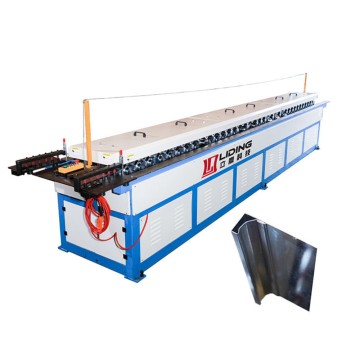
In high-rise commercial structures, ventilation ducts run vertically through service shafts across dozens of floors. Every joint between these duct segments is a potential point of failure. Transverse Duct Connection (TDC) and Proprietary Duct Flange (PDF/GDF) profiles formed directly onto the duct edge—or as slide-on frames—provide the rigid, airtight seal needed to maintain system pressure. Roll forming machines shape these flanges with integrated sealant channels, guaranteeing that toxic fumes do not escape into intermediate ceilings or floor spaces during a building evacuation.
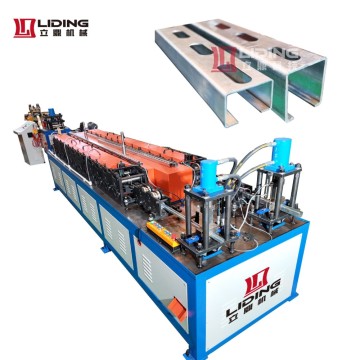
High-rise buildings are subject to sway from wind loads and seismic activities. In such events, the failure of HVAC and fire safety ductwork supports can lead to cascading structural failures and blocked escape routes. Heavy-duty C-channels and strut profiles, manufactured on dedicated roll forming lines, provide the high-load-bearing seismic bracing required to keep massive duct networks and fire containment barriers securely suspended and functional during emergency building movements.
As the demand for smarter, safer, and more sustainable buildings grows, the manufacturing equipment behind building components must evolve. The roll forming industry is currently experiencing several key technological shifts:
We design and manufacture high-precision cold-forming equipment covering:
Foshan Liding Machinery Equipment Co., Ltd. was established in 2014, with a core team boasting over 25 years of experience in the cold-forming industry.
We are a specialist manufacturer of metal roll forming equipment, dedicated to providing efficient, precise and reliable customised production line solutions for global HVAC systems, building structures and storage equipment sectors. We are not merely a machine supplier, but your strategic partner in product innovation and production efficiency enhancement.
Roll forming machines operating worldwide.
Exporting to Southeast Asia, Middle East, Europe, Russia.
Of our clients come back for additional lines.
Average experience of our senior engineers.
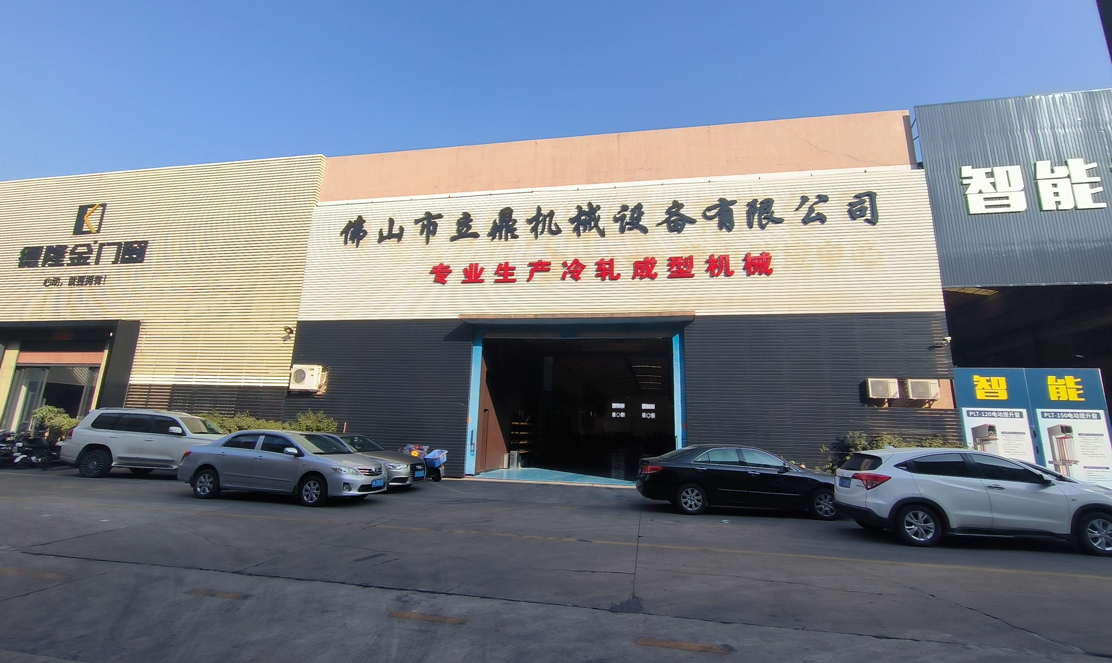
You provide drawings or samples; we deliver comprehensive production solutions. Our focus extends beyond the machinery itself to the quality and production costs of your end products. Our dedicated team offers ongoing technical support and after-sales service.
Whether you are setting up a new production line for high-performance fire dampers or seeking to optimize your current HVAC flange manufacturing, Liding Machinery delivers the technical expertise, robust engineering, and responsive support needed to keep your operations running smoothly.
25 years of experience in cold bending forming, with a research and development team of over 10 people.
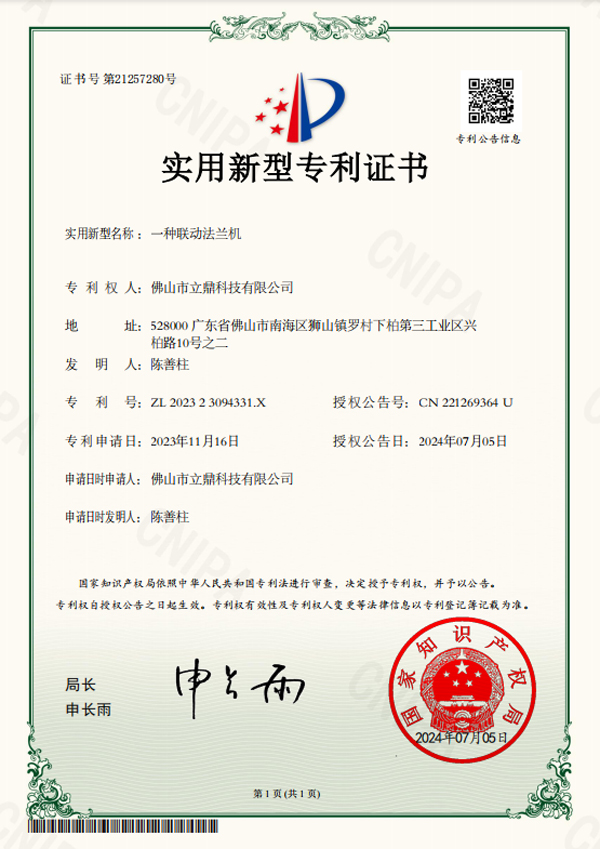
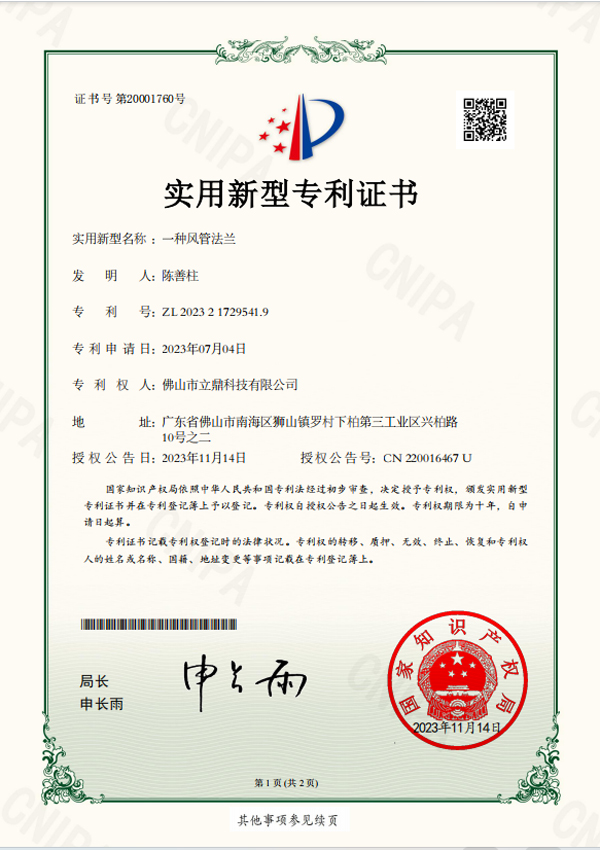
Anti-seismic bracket patented technology, safe and reliable for structural fire and safety isolation mountings.
Customized on demand, providing a full line solution from initial blueprint to stable mass production.
Quick changeover systems, making our machines highly versatile for multiple profile productions.
In addition to these core strengths, we offer Global Technical Support with a guaranteed 48-hour response time, ensuring your manufacturing lines experience minimal downtime.