
Leave Your Message
Core roll forming machines designed for structural secondary framing in prefabricated steel industrial facilities.
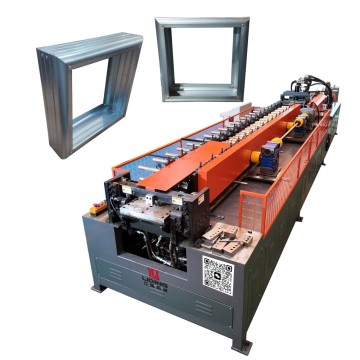
High-Accuracy Automatic HVAC Air Plenum Box & Silencer Roll Forming Machine | 15KW Ductwork Noise Control Equipment LD-SF01
View Details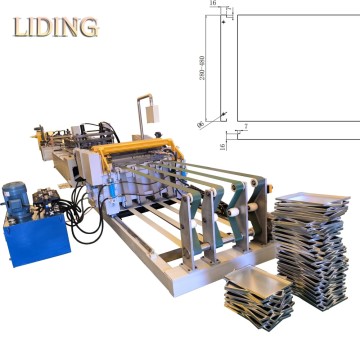
Shelf Box Panel Making Machine | Metal Supermarket Storage Rack Upright & Laminate Roll Forming Machine
View Details
Liding LD-FW008 V-Type Steel Formwork Machine — Precision forming for prefabricated structural steel applications.
View Details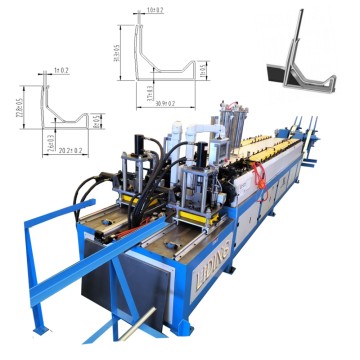
Hydraulic TDC Flange Forming Machine | 2 in 1 for TDC 20/30 | HVAC Duct System
View DetailsIn the construction of prefabricated steel industrial factories, the secondary load-bearing framing system — comprising purlins, girts, eave struts, hat channels, and cold-formed C/Z sections — plays an indispensable role in transferring loads from cladding and roofing to the primary structural frame. Profile forming machines (also known as roll forming machines) are the backbone of manufacturing these precision steel profiles at scale.
Unlike traditional fabrication methods, cold-roll forming continuously bends coiled steel strip through a series of profiled roller stations, producing consistent cross-sectional shapes at high speed with minimal material waste. For industrial factory construction, this translates to dramatically faster project timelines, tighter dimensional tolerances, and significantly lower per-unit costs.
🔩 Key insight: A modern profile forming line for secondary framing can produce up to 40 meters of finished purlin or girt per minute — replacing what would take hours of manual fabrication — making it the critical enabler of today's fast-track prefabricated steel construction industry.
The global prefabricated steel construction market is undergoing a structural transformation, and profile forming machines are at the center of it.
The global prefabricated steel building market was valued at over USD 130 billion in 2023 and is projected to surpass USD 220 billion by 2030. Industrial factories, logistics warehouses, and manufacturing plants account for the largest segment of demand, all requiring vast quantities of secondary framing profiles.
Cold-formed steel (CFS) profiles — including C-purlins, Z-purlins, hat channels, and sigma sections — are increasingly preferred over hot-rolled equivalents due to their superior strength-to-weight ratio, ease of handling, and compatibility with automated production. Profile forming machines are the only viable technology for producing these sections at industrial volumes.
Southeast Asia, the Middle East, Africa, and Eastern Europe are experiencing explosive growth in industrial real estate development. In these regions, prefabricated steel factories offer speed-to-occupancy advantages that conventional construction cannot match — driving urgent demand for efficient profile forming equipment capable of supplying local fabricators.
Modern profile forming lines are no longer standalone machines. They are being integrated into fully automated production cells with servo-controlled feeding, CNC punching, automatic length measurement, and robotic bundling — dramatically reducing labor costs and human error while increasing throughput and consistency.
Cold-roll forming generates near-zero material scrap compared to cutting or machining processes. As the construction industry faces increasing pressure to reduce embodied carbon, the inherent efficiency of roll-formed steel profiles — combined with the recyclability of steel — positions profile forming machines as a key technology in green industrial construction.
Every industrial factory project has unique span requirements, load specifications, and cladding systems. The ability to quickly reconfigure a profile forming machine — or supply a purpose-built machine — to produce project-specific purlin depths, flange widths, and lip lengths is a critical differentiator for steel fabricators competing in the global market.
Six key trends shaping the next decade of profile forming machine development for prefabricated steel construction.
Next-generation forming lines integrate PLC-controlled servo drives, real-time quality monitoring via laser measurement, and MES connectivity. This enables lights-out production shifts and seamless integration with ERP systems for just-in-time manufacturing of secondary framing components.
Fabricators supplying multiple factory projects simultaneously demand machines capable of switching between C-purlin, Z-purlin, and sigma profiles in under 30 minutes. Modular cassette-style roller stations and motorized spacer adjustment are becoming standard features on premium forming lines.
Innovations in flexible roll forming allow a single machine to produce profiles with continuously variable cross-section depths — enabling tapered purlins and curved structural members that optimize material usage in complex industrial building geometries.
The shift toward 550 MPa and 700 MPa ultra-high-strength steel coils for secondary framing demands forming machines with reinforced roller stations, precision-ground tooling, and advanced springback compensation algorithms to maintain dimensional accuracy.
IoT-enabled forming machines now transmit operational data — motor loads, roller temperatures, production counts, fault logs — to cloud platforms accessible by both the end-user and the machine manufacturer. This enables predictive maintenance scheduling that minimizes unplanned downtime in high-volume fabrication environments.
Modern secondary framing profiles require pre-punched bolt holes, service penetrations, and connection notches. Inline servo-driven punching units synchronized with the forming speed eliminate secondary operations, reducing handling time and improving hole-position accuracy to within ±0.5mm over 12-meter lengths.
From single-span workshops to mega-distribution centers — the critical role of precision-formed secondary framing profiles across industrial building typologies.
Clear-span steel warehouses with 30–60m spans rely entirely on cold-formed Z and C purlins for roof and wall secondary framing. Profile forming machines producing 200–300mm deep purlins from 2.0–3.0mm G550 steel coil are the workhorses of this sector. A single 50,000m² distribution center may consume over 800 tonnes of roll-formed purlin sections.
Automotive assembly facilities demand secondary framing systems that support heavy overhead crane loads, accommodate complex service runs, and meet stringent fire protection requirements. Custom sigma and omega profiles produced on purpose-built forming lines provide the precise geometry needed for integrated crane runway brackets and utility attachment points.
Insulated panel systems for cold storage buildings impose unique demands on secondary framing — profiles must accommodate thermal spacers, vapor barriers, and hygienic cladding systems. Hot-dip galvanized or Zincalume-coated profiles from dedicated forming lines provide the corrosion resistance and dimensional precision these applications demand.
The explosive growth of rooftop solar on industrial buildings has created enormous demand for secondary framing profiles that simultaneously support both the building envelope and PV mounting systems. Specialized hat channel and C-section forming machines produce the precise profiles needed for integrated solar-ready secondary framing systems.
Data center construction demands secondary framing with exceptional dimensional consistency to support precision-engineered raised floor systems, cable management infrastructure, and seismic-rated equipment platforms. Profile forming machines with ±0.5mm tolerance capability are essential for producing the consistent sections these applications require.
The emerging market for modular factory buildings — designed for rapid assembly, disassembly, and relocation — demands secondary framing profiles with precision-punched connection patterns. Inline punching-equipped forming lines produce fully pre-fabricated purlin and girt sections that bolt together without site cutting, enabling factory assembly times measured in days rather than weeks.
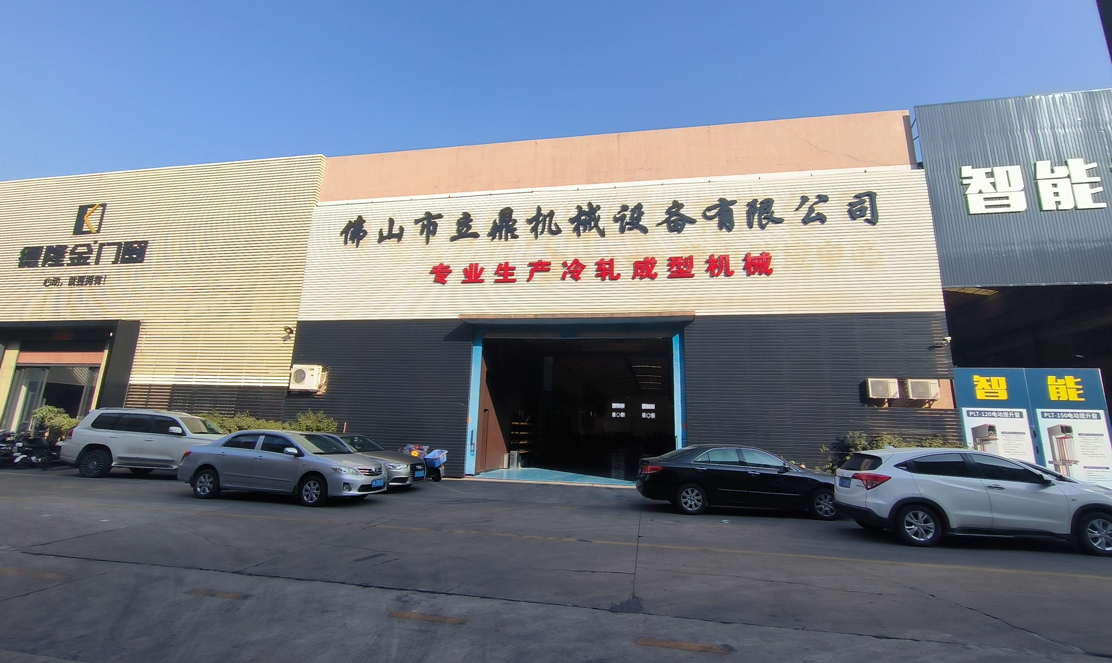
Foshan Liding Machinery Equipment Co., Ltd. was established in 2014, with a core technical team boasting over 25 years of hands-on experience in cold-forming engineering. We are a specialist manufacturer of metal roll forming equipment, dedicated to providing efficient, precise, and reliable customized production line solutions for global HVAC systems, building structures, and storage equipment sectors.
We are not merely a machine supplier — we are your strategic partner in product innovation and production efficiency enhancement. You provide drawings or samples; we deliver comprehensive production solutions, from roller tooling design through commissioning and ongoing technical support.
25+ years of experience in cold-bending forming, with a dedicated R&D team of over 10 engineers continuously advancing forming technology for structural secondary framing applications.
Anti-seismic bracket patented technology ensures safe and reliable performance in seismically active regions — a critical advantage for industrial factory secondary framing systems.
Customized on demand — a full-line solution from blueprint to mass production. Every purlin depth, flange width, and connection pattern engineered precisely to your project specifications.
Quick changeover, versatile one-machine multi-profile capability. Switch between C-purlin, Z-purlin, and hat channel profiles rapidly to maximize machine utilization across multiple projects.
Liding Machinery's profile forming machines are manufactured and tested to international quality standards, ensuring reliable performance in demanding industrial production environments worldwide.
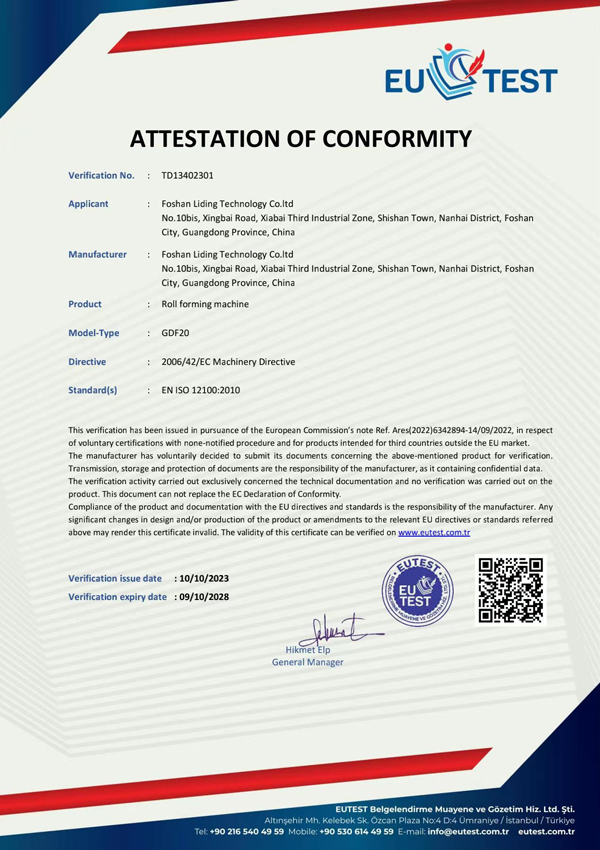
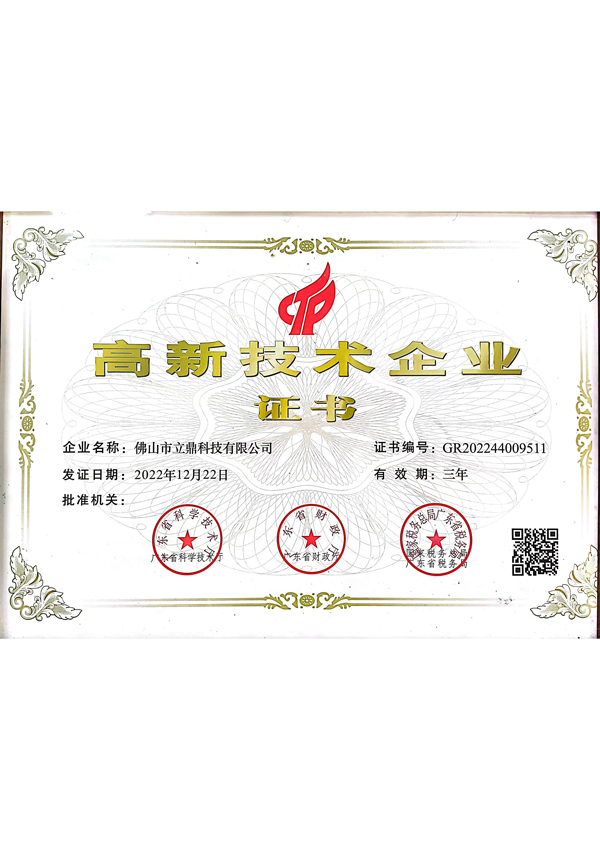
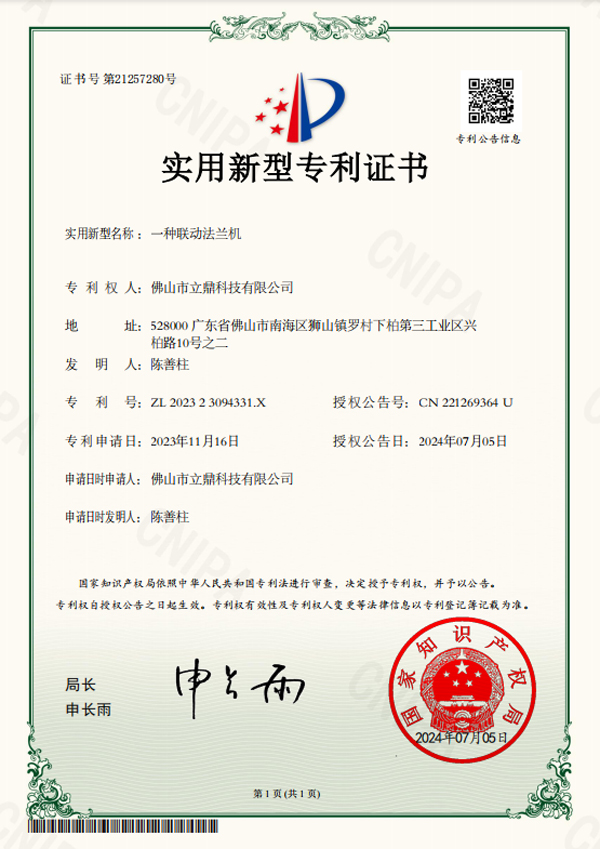
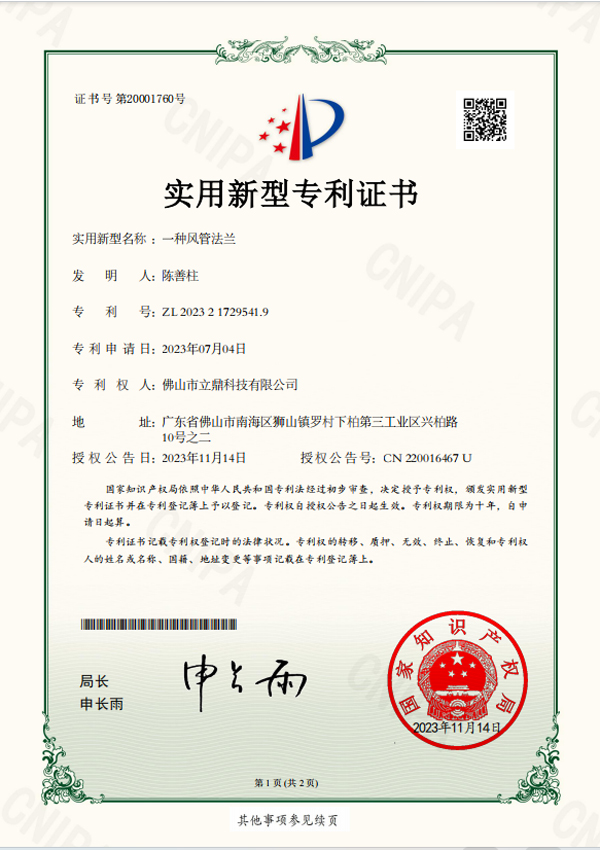
Explore our complete range of cold-roll forming solutions for prefabricated steel construction, HVAC systems, and industrial framing.
High-Accuracy Automatic HVAC Air Plenum Box & Silencer Roll Forming Machine | 15KW Ductwork Noise Control Equipment LD-SF01
View DetailsShelf Box Panel Making Machine | Metal Supermarket Storage Rack Upright & Laminate Roll Forming Machine
View DetailsLiding LD-FW008 V-Type Steel Formwork Machine — Secondary Structural Framing Profile Former
View DetailsHydraulic TDC Flange Forming Machine | 2 in 1 for TDC 20/30 | HVAC Duct System
View Details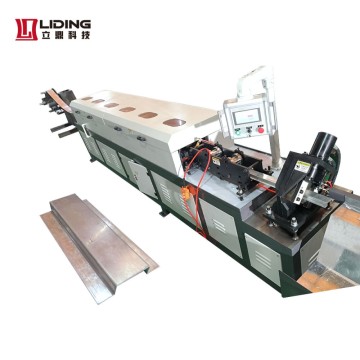
Liding Hat Channel & Omega Groove Keel Machine — Precision Secondary Load-bearing Framing Profile Former
View Details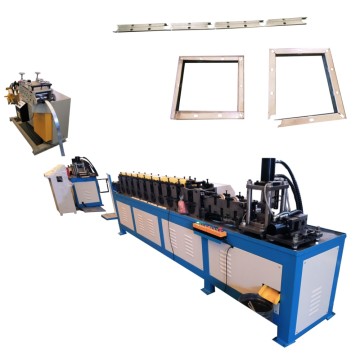
Automatic Duct Flange Machine | Ventilation Duct Flange Frame Former | Fire Pipe Flange Special V4-2
View Details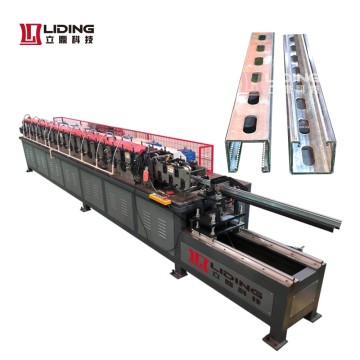
Liding Changeable Solar C Channel Machine — Photovoltaic Support Profile Forming for Industrial Rooftop Structures
View Details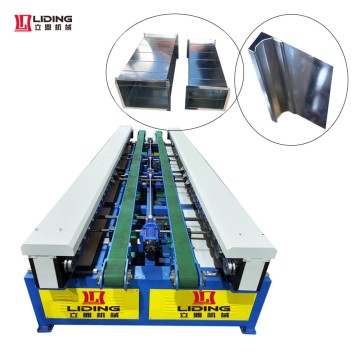
High Quality PDF Steel Coil Flange Profile Machine — Structural Secondary Load-bearing Framing Solution
View DetailsTell us your profile specifications, production volume, and steel grade — our engineering team will design a complete forming line solution tailored to your prefabricated steel factory project requirements.