Leave Your Message
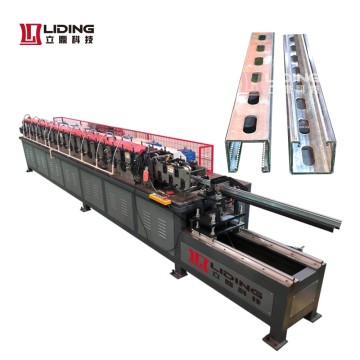
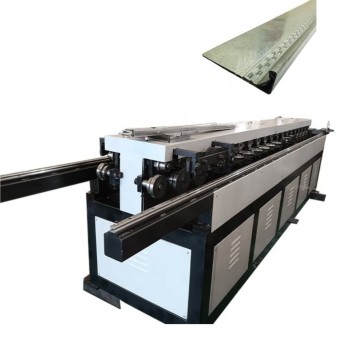
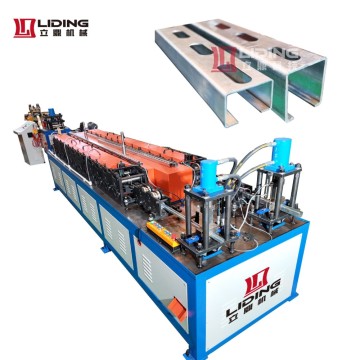
Core forming equipment engineered for automated secure entry roll-up door panel production in commercial garages and airport logistics docks.
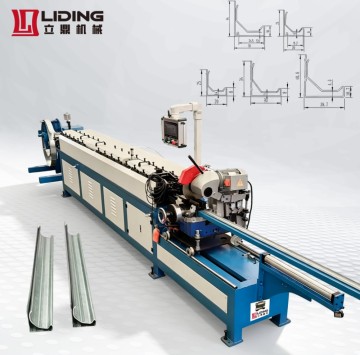
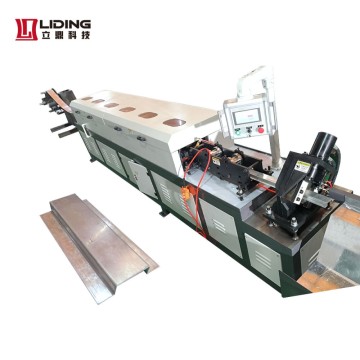
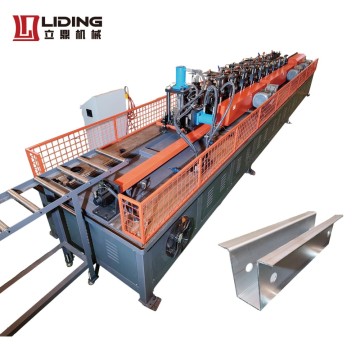

From multi-story commercial parking structures to high-throughput airport cargo terminals, automated secure entry roll-up doors have become a critical infrastructure component — and the profile forming machines behind them are evolving fast.
The global automated door market is projected to surpass USD 28 billion by 2030, with roll-up and sectional overhead door segments accounting for the fastest-growing share. In commercial garages — whether serving retail complexes, multi-tenant logistics parks, or urban parking towers — roll-up doors must cycle thousands of times per year under demanding load conditions. Airport logistics docks face even more rigorous requirements: cargo bay doors at major international hubs operate 24/7, handling temperature differentials, blast-resistant requirements, and precise dimensional tolerances demanded by automated guided vehicle (AGV) systems.
At the heart of every roll-up door panel is a cold-formed steel or aluminum profile — a precisely shaped slat, guide rail, or reinforcing rib produced by a profile forming machine. The quality, dimensional consistency, and material efficiency of these profiles directly determine the door's operational lifespan, noise performance, insulation value, and structural integrity under lateral wind and impact loads.
The manufacturing of roll-up door profiles has undergone a significant transformation over the past decade. Traditional hydraulic press brake operations — slow, labor-intensive, and prone to dimensional variation — are being systematically replaced by continuous cold roll forming lines. These automated forming systems offer several decisive advantages:
In China, Southeast Asia, and the Middle East — the three fastest-growing markets for commercial construction and logistics infrastructure — demand for roll-up door profile forming equipment has grown at a compound annual rate exceeding 12% since 2020. European and North American markets, while more mature, are driving demand for higher-specification machines capable of forming high-tensile steel (up to 550 MPa yield strength) for blast-resistant and fire-rated door applications.
Machine learning algorithms now monitor roll gap pressure, material springback, and profile geometry in real time, automatically adjusting forming parameters to maintain tolerance within ±0.1mm across full production runs.
Replacing hydraulic drives with servo-electric systems reduces energy consumption by up to 35%, eliminates oil contamination risks, and enables precise speed profiling for complex cross-sections required in high-security door applications.
Cassette-style roll station modules allow complete profile changeovers in under 30 minutes, enabling manufacturers to serve multiple door system OEMs from a single forming line with minimal downtime.
Cloud-connected forming machines transmit production data, maintenance alerts, and quality metrics to plant managers and equipment suppliers in real time — enabling predictive maintenance and remote commissioning support.
New forming machine designs accommodate recycled-content galvanized coil and ultra-thin high-strength steel grades, reducing the material weight of roll-up door panels by 15–20% without compromising structural performance.
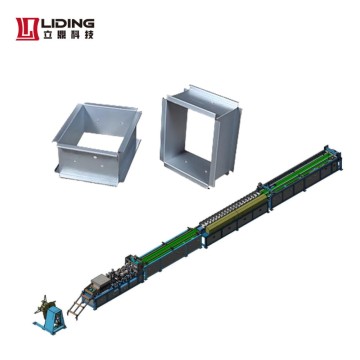
Full turnkey systems combining decoiling, forming, punching, embossing, cut-to-length, and stacking — all controlled from a single HMI — are becoming the standard for large-scale roll-up door manufacturers serving airport and logistics clients.
International cargo terminals such as those at Dubai World Central, Amsterdam Schiphol, and Guangzhou Baiyun require roll-up doors capable of operating in extreme temperature ranges (-30°C to +70°C), withstanding jet blast pressures, and integrating seamlessly with automated cargo handling systems. Profile forming machines producing these door slats must deliver consistent wall thickness control (±0.05mm) and precise interlocking profile geometry to ensure airtight sealing and smooth automated operation across millions of cycles.
Urban parking towers and commercial garage facilities demand roll-up doors that combine security, speed, and noise reduction. Cold-formed double-skin insulated slat profiles — produced on precision forming lines — provide the thermal break and acoustic damping required for mixed-use developments. Profile forming machines with inline foam injection capability enable manufacturers to produce insulated door panels in a single continuous process, eliminating assembly operations.
The explosion of e-commerce logistics has created massive demand for high-cycle roll-up dock doors at fulfillment centers. These facilities may have 200–500 loading bays, each requiring a door that can withstand 500,000+ annual cycles. Profile forming machines producing reinforced guide rail profiles and heavy-gauge slat sections are essential to meeting the structural demands of these high-throughput environments.
Clean-room and pharmaceutical manufacturing environments require roll-up doors with smooth, non-porous surface profiles that resist bacterial accumulation and withstand chemical cleaning agents. Stainless steel profile forming — a specialty capability of advanced forming machines — produces the seamless, crevice-free slat geometries mandated by GMP and FDA facility standards.
Blast-resistant and forced-entry-resistant roll-up doors for government facilities require profiles formed from high-tensile steel (550–700 MPa) with complex multi-bend cross-sections that maximize moment of inertia. Only precision roll forming machines with robust drive systems and rigid frame construction can maintain profile accuracy in these demanding material grades.
Vehicle assembly plants use large-format roll-up doors at paint shop entries, body shop transitions, and final assembly areas. These doors must provide precise sealing to maintain controlled atmospheres while operating at high cycle frequencies. Profile forming machines producing the guide rail and bottom bar components for these industrial doors must achieve the flatness and straightness tolerances required for reliable automated operation.
When specifying a profile forming machine for automated secure entry roll-up door production, procurement engineers and production managers should evaluate the following key parameters:
Trusted by roll-up door manufacturers and industrial facility builders across 50+ countries.
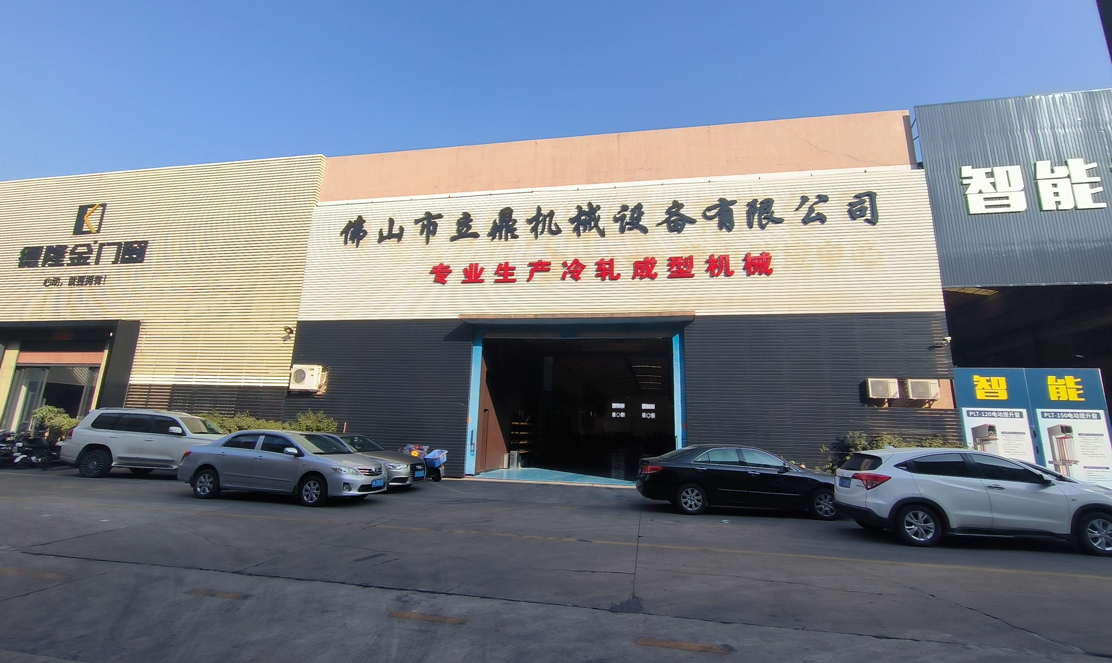
Foshan Liding Machinery Equipment Co., Ltd., established in 2014, brings a core team with over 30 years of cold-forming industry expertise. We are not simply a machine supplier — we are your strategic partner in roll-up door profile production, from initial concept through mass production ramp-up.
Our core technical team boasts over 30 years of experience in cold-forming.
We design and manufacture high-precision cold-forming equipment covering HVAC ductwork machinery; building structures including light steel studs, steel formwork, seismic brackets, and purlins; warehouse equipment such as racking columns, beams, and shelving panels; and industrial door profile systems for automated secure entry applications.
Foshan Liding Machinery Equipment Co., Ltd. was established in 2014, with a core team boasting over 25 years of experience in the cold-forming industry. We are a specialist manufacturer of metal roll forming equipment, dedicated to providing efficient, precise, and reliable customised production line solutions for global HVAC systems, building structures, storage equipment sectors, and industrial door manufacturers.
We are not merely a machine supplier, but your strategic partner in product innovation and production efficiency enhancement — helping roll-up door manufacturers serving commercial garages and airport logistics docks achieve the precision, throughput, and quality consistency demanded by their most critical clients.
Four pillars that make Liding the preferred forming machine partner for automated door profile manufacturers worldwide.
25+ years of experience in cold bending forming, with a dedicated R&D team of over 10 engineers continuously advancing forming technology for industrial door applications.
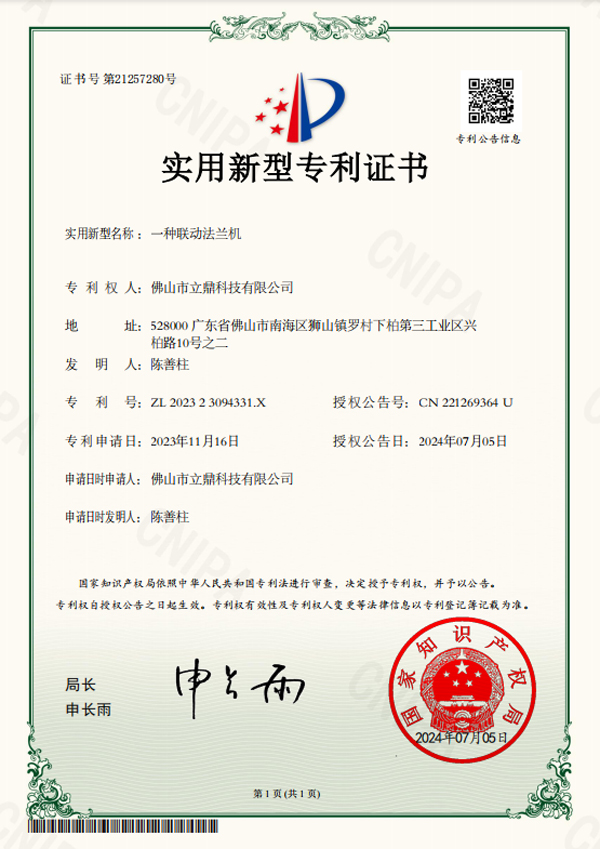
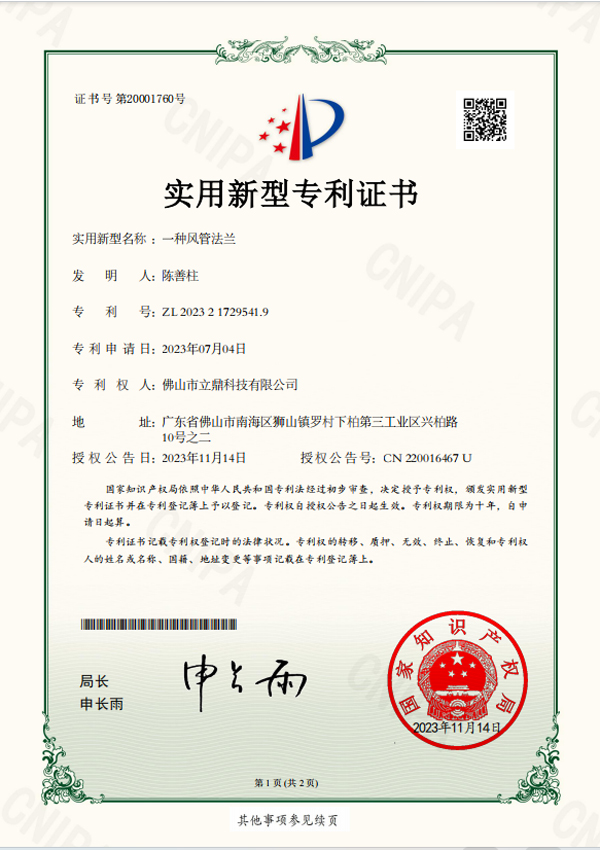
Anti-seismic bracket patented technology and proprietary roll tooling designs — safe, reliable, and legally protected innovations that deliver measurable performance advantages.
Customized on demand — a full-line solution from blueprint to mass production. We engineer forming lines specifically for your roll-up door profile geometry, material specification, and production volume requirements.
Global technical support with 48-hour response commitment. Remote diagnostics, on-site commissioning, and operator training ensure your forming line achieves target OEE from day one.
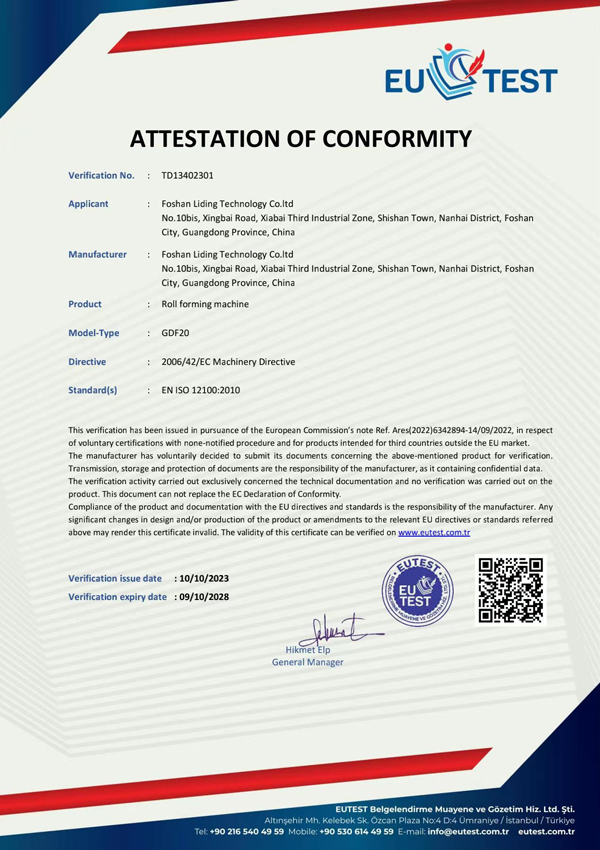
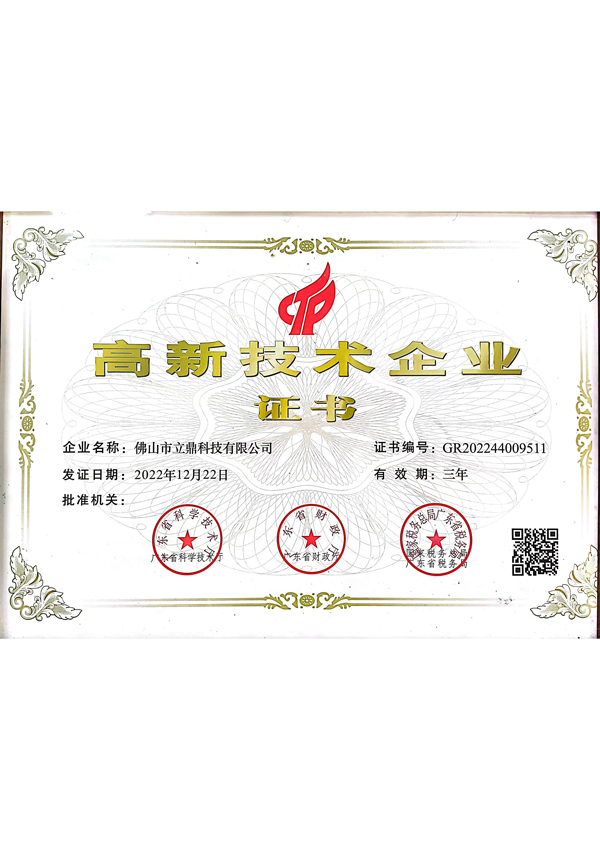
Our manufacturing processes and products are certified to international quality and safety standards.
Explore our full portfolio of precision forming machines for automated door systems, HVAC integration, structural profiles, and more.