Leave Your Message
Precision-engineered roll forming equipment for automated commercial garage doors and airport logistics access systems

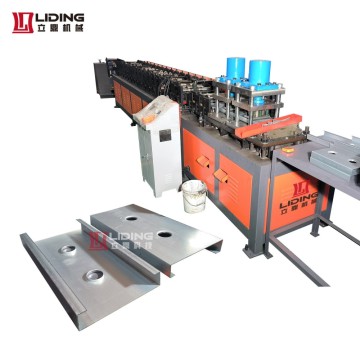
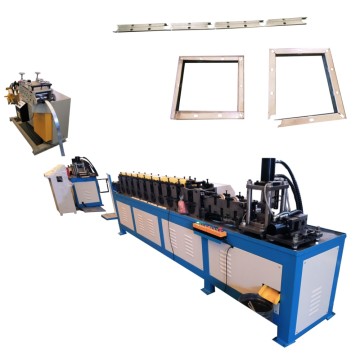
A deep-dive into industrial applications, commercial trends, and precision manufacturing for modern access infrastructure
The global demand for automated secure entry roll-up doors in commercial garages, airport cargo terminals, and logistics docks is accelerating at an unprecedented pace. At the heart of this transformation lies the pipe roll forming machine — a cornerstone of modern cold-forming manufacturing that enables the continuous, high-precision production of structural pipe profiles, slat panels, guide rails, and reinforcement tubes that form the skeletal framework of every roll-up door system.
Pipe roll forming machines convert flat metal coil stock into complex tubular and open profiles with tolerances as tight as ±0.1 mm — enabling mass production of roll-up door components that meet the rigorous demands of commercial and aviation-grade security infrastructure.
According to industry analysis, the global roll-up door market is projected to surpass USD 12 billion by 2030, driven by rapid expansion in e-commerce fulfillment centers, multi-story automated parking structures, and international airport cargo logistics hubs. Each of these environments demands doors that combine structural integrity, rapid cycle speeds, and resistance to forced entry — all of which trace back to the precision of the pipe profiles manufactured by roll forming technology.
Commercial garages in metropolitan areas increasingly integrate automated roll-up doors with IoT-based access control, license plate recognition, and biometric authentication. The structural components — primarily tubular steel slats, guide rail pipes, bottom bar assemblies, and torsion spring housings — must meet strict dimensional tolerances to ensure seamless mechanical operation over hundreds of thousands of open/close cycles.
Airport logistics docks face even more demanding requirements. Cargo bay doors at facilities like FedEx, DHL, and major international freight terminals operate in environments with extreme temperature fluctuations, high wind loads, and constant forklift impact risk. The pipe roll forming machine enables manufacturers to produce high-tensile steel profiles with consistent wall thickness and cross-section geometry that withstand these conditions without fatigue failure.
Compared to stamping, extrusion, or welded tube fabrication, cold roll forming offers a uniquely compelling combination of benefits for roll-up door component production:
Modern commercial parking structures in urban centers require roll-up doors that execute 500–1,000 cycles per day. The guide rail pipes and torsion tube assemblies must maintain sub-millimeter straightness over their entire length to prevent binding. Pipe roll forming machines produce these profiles from galvanized high-strength steel (S350GD+Z) with surface flatness deviations under 0.5 mm/m, ensuring the door curtain tracks smoothly even after years of continuous operation. The ability to produce custom-length profiles without welded joints eliminates stress concentration points that are common failure sites in high-cycle applications.
International airport cargo terminals require roll-up doors certified to withstand blast pressure, forced entry, and vehicle impact. The structural reinforcement pipes embedded within door curtain assemblies are typically formed from 2.0–3.0 mm cold-rolled high-tensile steel. Pipe roll forming lines equipped with servo-controlled straightening units and inline eddy current inspection systems ensure that each profile meets the dimensional and metallurgical specifications required for aviation security compliance. The consistency of roll-formed profiles also simplifies the certification process, as dimensional variation — a common issue with welded fabrication — is virtually eliminated.
Mega-distribution facilities operated by Amazon, Alibaba, and major third-party logistics providers install hundreds of high-speed roll-up doors per facility. These doors must operate at speeds up to 2.5 m/s and withstand daily impacts from forklifts and pallet jacks. The bottom bar pipe profile — typically a hollow rectangular section — must absorb impact energy without permanent deformation. Roll forming machines produce these profiles with precisely controlled corner radii and wall thickness uniformity, ensuring the impact-resistance characteristics are consistent across every unit in a large facility installation.
Defense installations, data centers, and government facilities require roll-up doors classified as forced-entry resistant (FER) or ballistic-resistant. The structural pipe elements in these doors are formed from ultra-high-strength steel (UHSS) or stainless steel, requiring roll forming machines with reinforced tooling and precision servo-drive systems capable of processing materials with yield strengths exceeding 700 MPa. Liding's pipe roll forming technology is engineered to handle these demanding material specifications while maintaining the dimensional accuracy required for certified security door systems.
Key macro and technological trends accelerating the adoption of pipe roll forming in secure entry door manufacturing
Industry 4.0 adoption is driving demand for roll forming lines with OPC-UA connectivity, real-time SPC monitoring, and MES integration — enabling zero-defect production of door components with full digital traceability.
The shift toward advanced high-strength steels (AHSS) and aluminum alloys for door profiles is reducing door weight by 15–25%, lowering motor energy consumption and enabling faster door speeds — all while maintaining structural performance.
Next-generation roll forming machines utilize full-servo drive architecture, enabling rapid profile changeover in under 30 minutes and supporting the production of multiple door component variants on a single line — critical for JIT manufacturing.
Door manufacturers are standardizing on modular component systems where all structural pipes and profiles share common cross-sections, enabling roll forming lines to produce the complete component set for multiple door models with minimal tooling changes.
Post-pandemic supply chain restructuring is driving door manufacturers in Southeast Asia, the Middle East, and Eastern Europe to invest in local roll forming capacity, creating strong demand for turnkey pipe roll forming production lines.
Evolving EN 1627, ASTM F3038, and IBC standards for commercial door security are raising the structural requirements for door components, driving adoption of higher-precision roll forming technology to meet tighter dimensional and strength tolerances.
Engineered specifically for the structural demands of automated roll-up door and secure entry systems
Precision-ground roll tooling and CNC servo positioning ensure every pipe profile meets the tight tolerances required for roll-up door guide rail and slat applications.
High-throughput forming capability enables continuous production of door component profiles at speeds that match the output demands of large-scale door manufacturing facilities.
Modular roll station design enables profile changeover in under 30 minutes, supporting flexible production of multiple door component variants on a single machine platform.
Reinforced forming stands and hardened tooling support processing of materials up to 700 MPa yield strength, enabling production of security-grade door structural components.
Siemens/Mitsubishi PLC with touchscreen HMI enables precise control of forming parameters, automatic length measurement, and integration with factory MES systems.
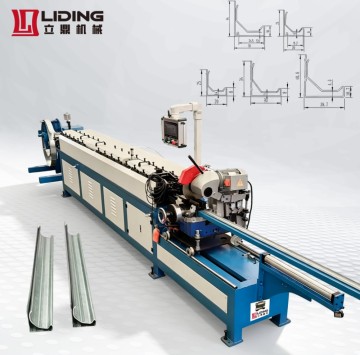
From decoiler and straightener through roll forming, inline punching, and automatic cut-off to stacking — we deliver complete turnkey production lines for door component manufacturing.
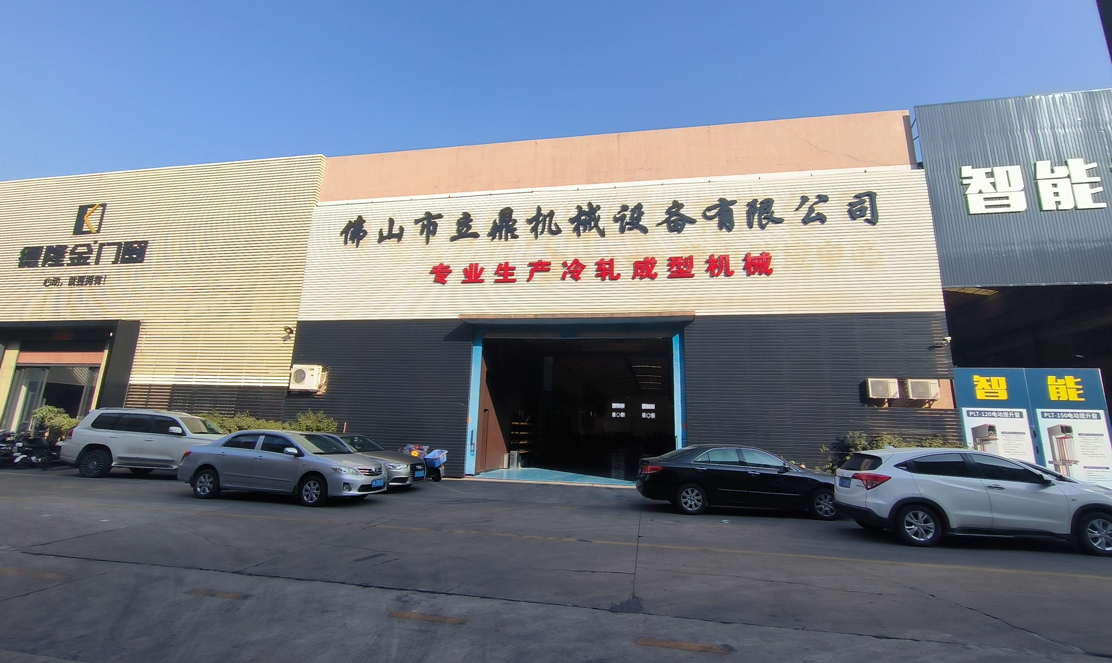
Foshan Liding Machinery Equipment Co., Ltd. — Your strategic partner in roll forming technology for global industrial applications
Established in 2014, Liding Machinery's core technical team brings over 30 years of cold-forming expertise to every project. We design and manufacture high-precision cold-forming equipment covering HVAC ductwork machinery, building structures (light steel studs, steel formwork, seismic brackets, purlins), warehouse equipment (racking columns, beams, shelving panels), and specialized pipe roll forming solutions for security door and automated entry system manufacturers worldwide.
We are not merely a machine supplier — we are your strategic partner in product innovation and production efficiency enhancement. You provide drawings or samples; we deliver comprehensive production solutions, with our focus extending beyond the machinery itself to the quality and production costs of your end products.
When it comes to manufacturing structural pipe profiles for automated roll-up doors in commercial garages and airport logistics docks, the precision and reliability of your roll forming equipment is non-negotiable. Liding Machinery delivers the technical depth and manufacturing excellence to meet these demands.
Four pillars that define Liding Machinery's competitive edge in pipe roll forming for secure entry door systems
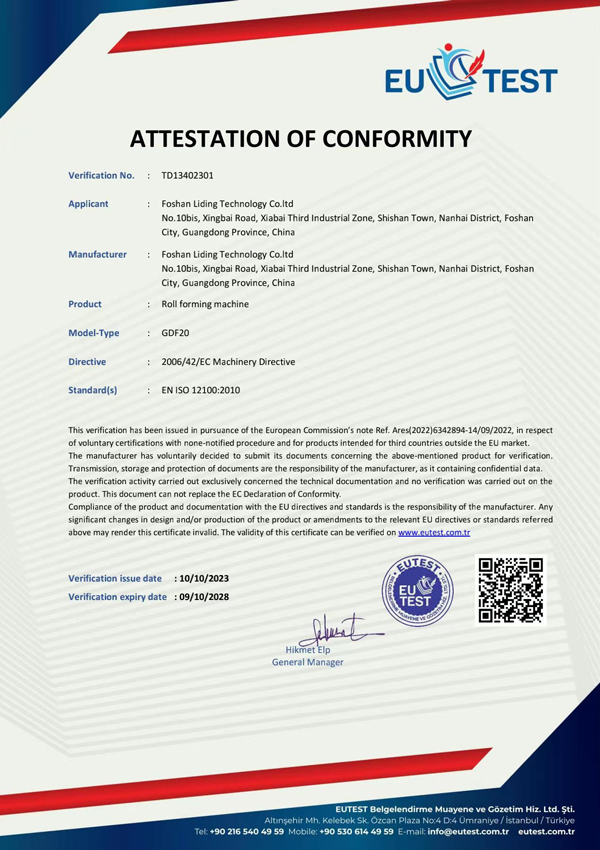
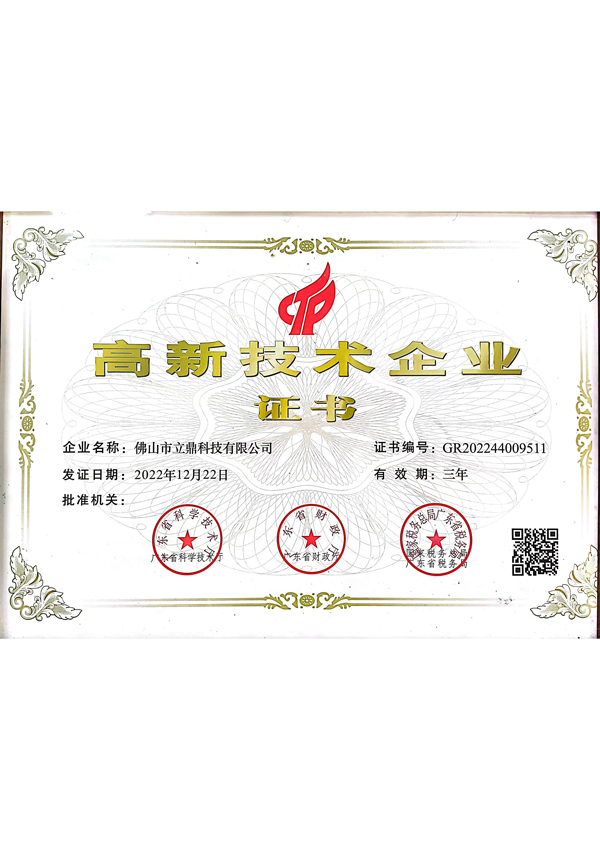
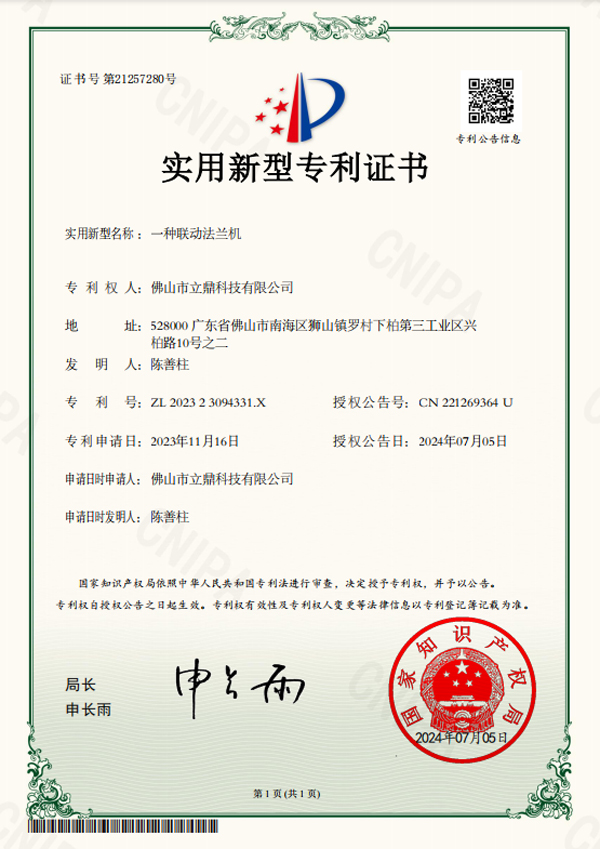
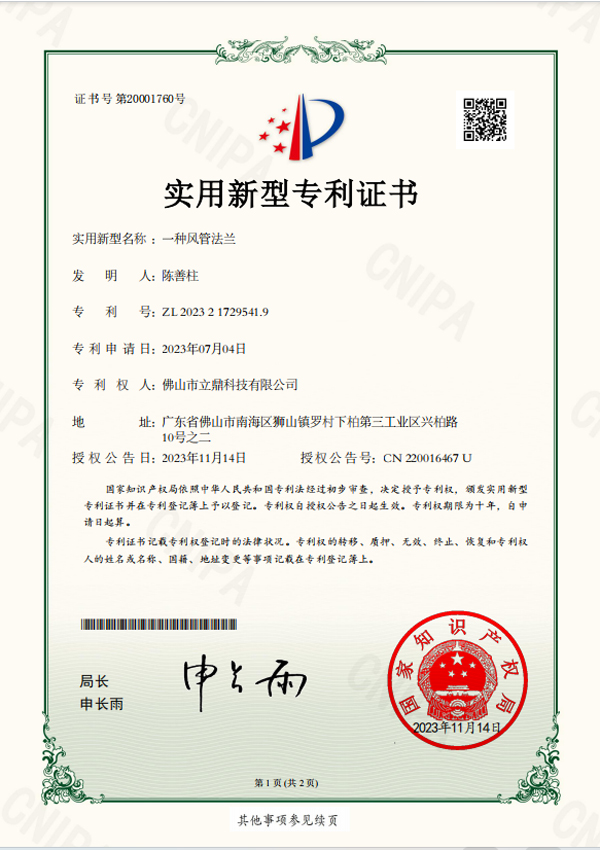
Internationally recognized certifications validating Liding Machinery's commitment to quality and reliability
Explore our full lineup of precision cold-forming solutions for HVAC, structural, storage, and secure entry door applications