Leave Your Message
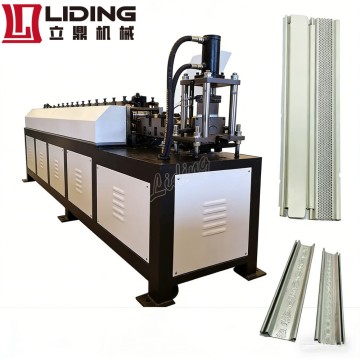
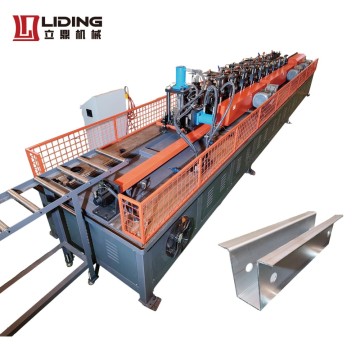
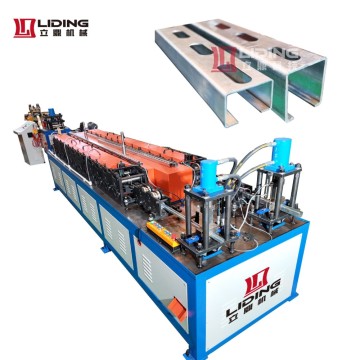
Purpose-built hot forming equipment for structural roof framing, wall cladding support, and barn framework systems.
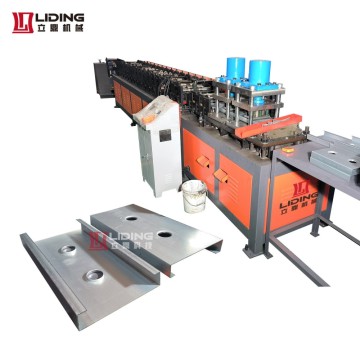

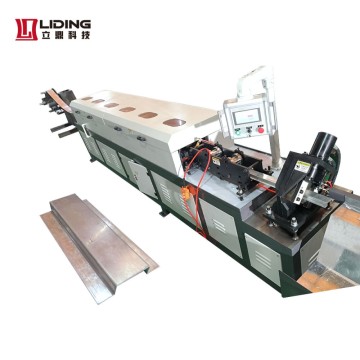
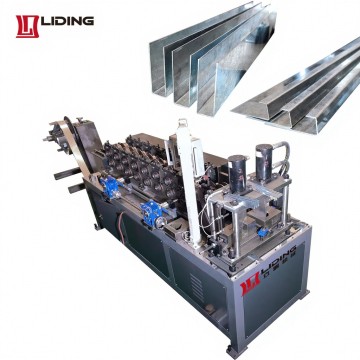
An in-depth look at industrial trends, commercial developments, and advanced application scenarios in barn roof framing and wall cladding support.
The modern agricultural sector is undergoing a significant structural transformation. As farming operations scale up globally — from family-run livestock shelters to expansive commercial poultry houses, grain storage facilities, and equestrian centers — the need for robust, long-lasting, and cost-efficient building structures has never been greater. Traditional timber framing, once the backbone of agricultural construction, is rapidly being displaced by cold-formed and hot-formed steel profiles that deliver superior strength-to-weight ratios, dimensional accuracy, and resistance to pests, moisture, and fire.
At the center of this transformation is the hot forming machine — a class of precision roll forming equipment capable of producing structural steel profiles for roof framing, wall cladding support, purlins, girts, and secondary framing elements at high speed and with tight tolerances. These machines are not merely fabrication tools; they represent a strategic industrial investment that enables barn builders, steel structure contractors, and agricultural developers to bring production in-house, reduce material waste, and respond to project-specific requirements with agility.
Industry Insight: The global pre-engineered metal building market — which encompasses agricultural barns, warehouses, and industrial sheds — was valued at over USD 18 billion in 2023 and is projected to grow at a CAGR of 6.2% through 2030, driven largely by the adoption of automated roll forming technology in structural component manufacturing.
A hot forming machine — broadly referring to high-performance roll forming equipment used in the production of structural steel profiles — continuously bends metal coil stock into precise cross-sectional shapes through a series of progressively contoured roller stations. In the context of agricultural barn construction, these machines produce the critical structural elements that give a barn its load-bearing capacity and weather-tight envelope:
Compared to press braking or manual bending, roll forming delivers consistent cross-sections across unlimited run lengths with minimal operator intervention. For agricultural barn contractors producing repetitive purlin and girt lengths across multiple projects, the economics are compelling: a single roll forming line can produce several tonnes of finished profiles per shift, with material utilization exceeding 98% and scrap rates below 0.5%. The ability to integrate automatic length cutting, hole punching, and stacking further reduces downstream labor costs.
The commercial adoption of hot forming machines for agricultural applications is accelerating across several key regions. In Southeast Asia — particularly Vietnam, Indonesia, and Thailand — the rapid expansion of large-scale poultry and aquaculture operations is driving demand for prefabricated steel barn structures. In the Middle East, government-backed agricultural modernization programs are funding the construction of climate-controlled livestock facilities that rely on precision-formed steel framing. In Europe and Australia, the push for energy-efficient farm buildings with insulated metal panel (IMP) envelopes is creating demand for compatible hat channel and omega profile sub-framing systems.
On the manufacturing side, Chinese roll forming machine builders have emerged as the dominant global suppliers, offering technically sophisticated equipment at competitive price points. Companies like Foshan Liding Machinery Equipment Co., Ltd. are at the forefront, providing fully customized production lines that can be configured for specific barn profile geometries, material gauges (typically 0.8mm to 3.0mm galvanized or Zincalume steel), and output speeds (up to 30m/min for standard purlin profiles).
Market Trend: Over 65% of new agricultural steel building projects in Southeast Asia and the Middle East now specify factory-formed steel purlins and girts produced on dedicated roll forming lines, replacing field-cut and hand-bent alternatives that introduced dimensional inconsistency and structural risk.
Modern roll forming machines for agricultural profiles increasingly feature servo-driven, CNC-controlled roller adjustment systems. Operators can switch between C, Z, and Sigma purlin profiles — or change flange widths for different girt sizes — in under 10 minutes without manual roller swapping, dramatically improving production flexibility for contractors serving diverse barn projects.
Next-generation lines integrate servo-hydraulic punching units that stamp bolt holes, slotted connections, and drainage apertures into profiles on-the-fly at full production speed. Combined with flying shear or hydraulic post-cut systems, these lines deliver fully finished, ready-to-install barn framing components directly off the machine — eliminating secondary operations entirely.
Agricultural barn developers are increasingly specifying high-strength, thin-gauge steel (G550 or equivalent) to reduce material consumption without compromising structural performance. Hot forming machines capable of processing these higher-strength coils — while maintaining tight dimensional tolerances — are commanding premium market positions as sustainability credentials become a procurement requirement.
Industry 4.0 connectivity is entering the agricultural roll forming space. PLC-based control systems with Ethernet and cloud connectivity allow production supervisors to monitor output rates, material consumption, tool wear indicators, and fault diagnostics remotely — enabling predictive maintenance scheduling and minimizing costly unplanned downtime on agricultural construction sites.
Leading manufacturers now offer modular roll forming platforms where the entry decoiler, straightener, punching unit, forming stations, and exit stacker can be independently configured and upgraded. This allows agricultural barn fabricators to start with a basic purlin line and progressively add capabilities — such as stiffening rib embossing or integrated labeling — as their business scales.
For large-scale agricultural development projects in remote locations, containerized and trailer-mounted roll forming lines are gaining traction. These mobile production units allow structural profiles to be formed on-site from coil stock, eliminating long-distance freight of finished profiles and enabling just-in-time production that aligns with the barn erection schedule.
From poultry houses to grain storage, precision roll-formed profiles are redefining structural performance across every barn typology.
Modern broiler and layer houses spanning 12–16 meters require continuous Z-purlin or Sigma-purlin roof framing systems capable of supporting insulated sandwich panel roofs under significant wind and snow loads. Hot forming machines producing 200Z25 to 250Z30 profiles at 20–25m/min allow poultry house contractors to fabricate all roof framing in-house, achieving 30–40% cost savings versus buying pre-cut profiles from steel service centers.
Grain storage facilities demand wall cladding support systems that resist lateral pressure from stored grain while providing a flat, true surface for corrugated or ribbed steel cladding sheets. Roll-formed C-girts and hat channels — produced to tight straightness tolerances on precision forming lines — deliver the geometric consistency required for proper cladding alignment and weatherproofing performance.
Open-sided dairy barns and covered feedlot structures require robust secondary framing that can withstand the corrosive environment created by animal waste gases. Hot-formed profiles produced from pre-galvanized or Zincalume coil provide the corrosion resistance needed for 20–30 year service life in these demanding agricultural environments, with roll forming machines capable of processing coil thicknesses up to 3.0mm for heavy-duty applications.
Long-span equestrian arenas — often spanning 30–60 meters — rely on cold-formed omega brackets and hat channels as secondary framing for translucent roof panel systems. The dimensional precision of roll-formed omega profiles ensures consistent panel bearing surfaces across the full span, preventing water ingress at panel joints and maintaining the structural integrity of the roof system over decades of service.
The emerging agri-voltaic sector — where solar panels are integrated into agricultural barn roof structures — creates demand for precision C-channel and solar racking profiles that can support both photovoltaic modules and traditional roofing materials simultaneously. Roll forming machines producing adjustable-width solar C-channels enable barn developers to configure roof-integrated solar arrays to any panel geometry without custom fabrication lead times.
Controlled-environment agricultural facilities — including cold stores for produce, mushroom farms, and vertical growing structures — require insulated metal panel (IMP) wall and roof systems supported by precision hat channel sub-framing. Roll-formed hat channels produced to ±0.5mm dimensional tolerances ensure IMP panels install flat and true, maintaining the thermal continuity of the insulated envelope and meeting food safety construction standards.
For agricultural construction contractors and steel building manufacturers, the decision to invest in a dedicated hot forming machine line represents one of the highest-ROI capital expenditure decisions available. The economics are straightforward: a contractor purchasing finished purlin and girt profiles from a steel service center pays a fabrication premium of 15–25% over raw coil cost. A roll forming line that processes the same coil in-house eliminates this premium entirely, typically achieving payback in 12–24 months at moderate production volumes.
Beyond direct material cost savings, in-house roll forming delivers competitive advantages that compound over time. The ability to produce custom profile lengths — eliminating field cutting and the associated material waste — reduces on-site labor by 20–35% on typical barn framing projects. The ability to produce to order, with zero minimum order quantities and same-day turnaround, enables contractors to respond to last-minute design changes and project schedule accelerations that would otherwise require expensive expedited freight from external suppliers.
Furthermore, contractors who own their roll forming capability can offer value-added services — custom hole punching patterns, embossed stiffening ribs, pre-painted or pre-primed profiles — that differentiate their offering in an increasingly competitive market. These capabilities, once exclusive to large steel fabricators, are now accessible to mid-size agricultural building contractors through affordable, high-performance roll forming equipment from manufacturers like Liding Machinery.
Choosing the appropriate roll forming machine for barn structural profile production requires careful evaluation of several technical and commercial parameters. Profile geometry and size range are primary considerations: a machine intended for 100–300mm flange-width Z-purlins must be engineered with sufficient roller station count (typically 16–22 stations) and roller shaft diameter to maintain profile straightness at production speeds. Material thickness range — typically 1.2mm to 2.5mm for agricultural purlins — determines the required drive motor power and frame rigidity.
Production speed requirements should be matched to project volume: a contractor producing 50–100 tonnes of profiles per month can be well-served by a 15–20m/min line, while high-volume manufacturers supplying regional barn construction markets may require 25–35m/min capability with automated stacking and bundling. Integration of punching and notching systems should be evaluated against the complexity of connection details specified in the barn structural design — more complex connection systems justify the additional capital investment in integrated punching capability.
Finally, after-sales support capability is a critical selection criterion that is often underweighted in purchasing decisions. A roll forming machine is a long-term production asset, and the availability of spare parts, remote technical support, and on-site service engineers directly impacts the machine's lifetime productivity and the contractor's ability to meet project delivery commitments. Liding Machinery's commitment to 48-hour global technical response and comprehensive after-sales support makes it a trusted partner for agricultural construction businesses worldwide.
Trusted by agricultural and industrial builders across 50+ countries worldwide.
Your strategic partner in agricultural and industrial roll forming technology — from blueprint to full-scale production.
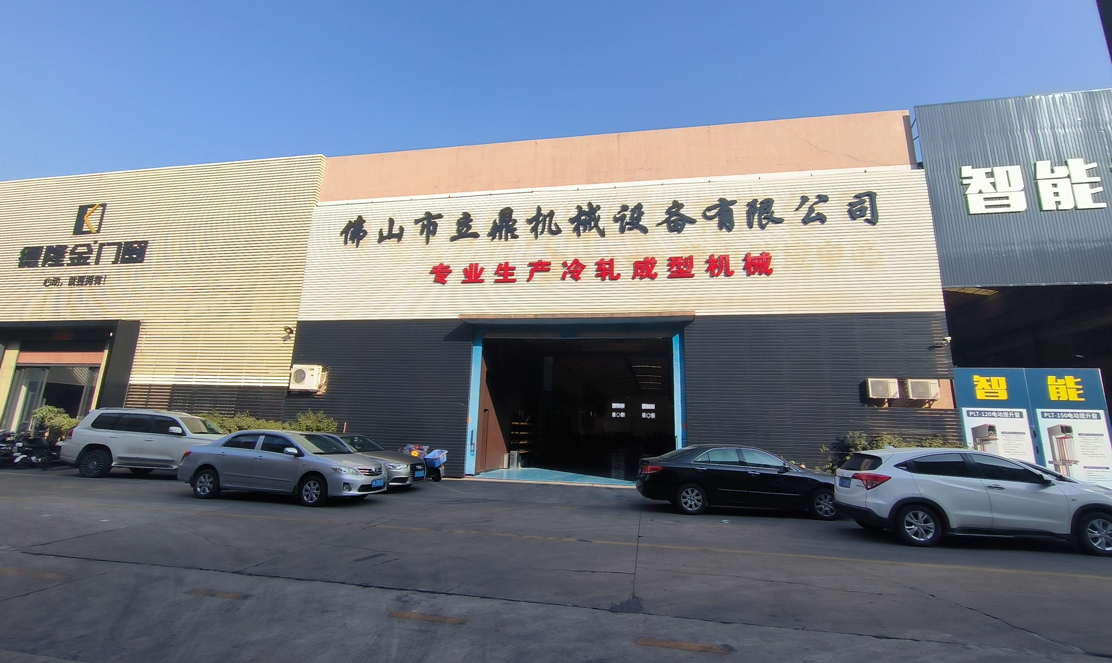
Foshan Liding Machinery Equipment Co., Ltd. was established in 2014, with a core technical team boasting over 25 years of experience in the cold-forming industry. We design and manufacture high-precision cold-forming equipment covering HVAC ductwork machinery, building structures (light steel studs, steel formwork, seismic brackets, purlins), and warehouse equipment (racking columns, beams, and shelving panels).
We are a specialist manufacturer of metal roll forming equipment, dedicated to providing efficient, precise, and reliable customised production line solutions for global HVAC systems, building structures, and storage equipment sectors. We are not merely a machine supplier — we are your strategic partner in product innovation and production efficiency enhancement.
You provide drawings or samples; we deliver comprehensive production solutions tailored to your barn framing requirements.
Our focus extends beyond the machinery itself to the quality and production costs of your end products.
Our dedicated team offers ongoing technical support and after-sales service with a 48-hour global response commitment.
Liding Machinery — Our core technical team boasts over 30 years of experience in cold-forming, delivering precision roll forming solutions for agricultural, HVAC, and structural construction applications worldwide.
We design and manufacture high-precision cold-forming equipment covering HVAC ductwork machinery; building structures including light steel studs, steel formwork, seismic brackets, and purlins; and warehouse equipment including racking columns, beams, and shelving panels. Foshan Liding Machinery Equipment Co., Ltd. was established in 2014, with a core team boasting over 25 years of experience in the cold-forming industry. We are a specialist manufacturer of metal roll forming equipment, dedicated to providing efficient, precise, and reliable customised production line solutions for global HVAC systems, building structures, and storage equipment sectors. We are not merely a machine supplier, but your strategic partner in product innovation and production efficiency enhancement.
Four pillars of excellence that make Liding Machinery the preferred roll forming partner for agricultural barn construction worldwide.
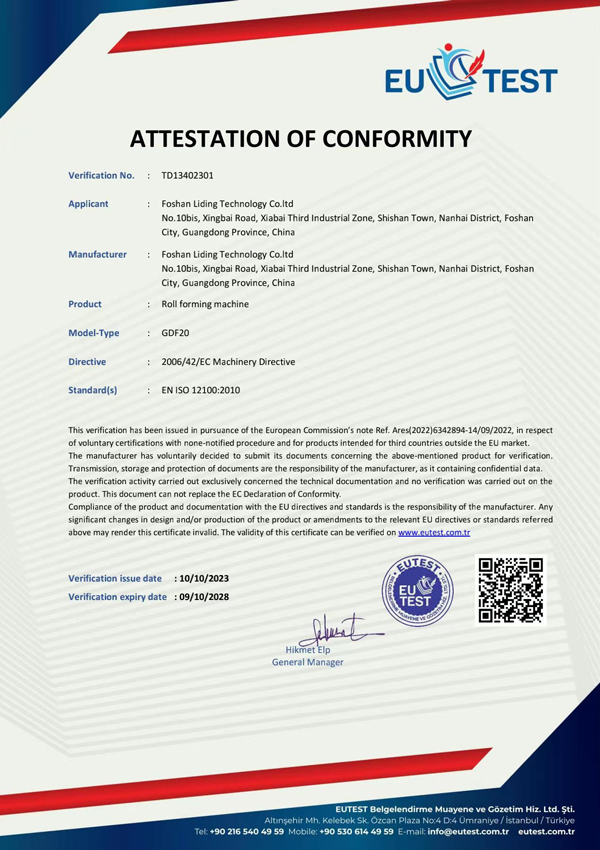
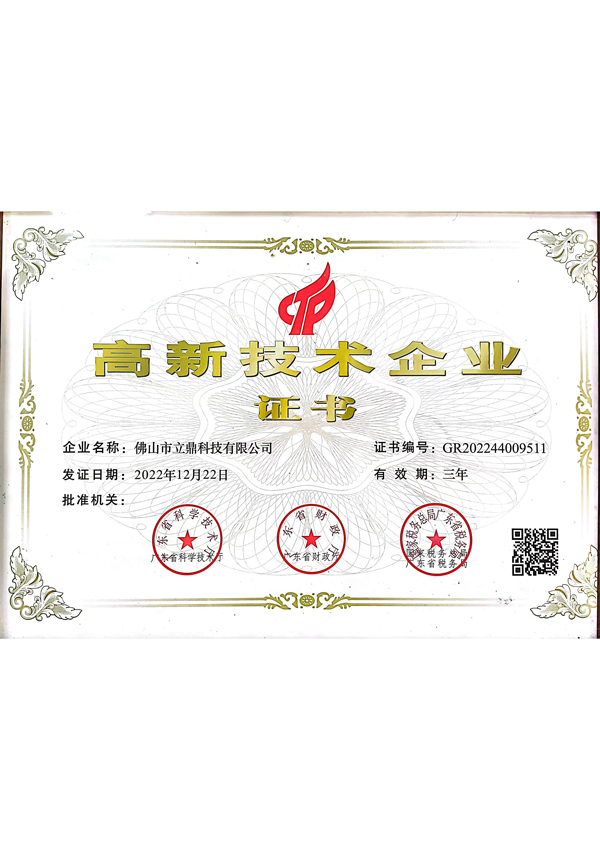
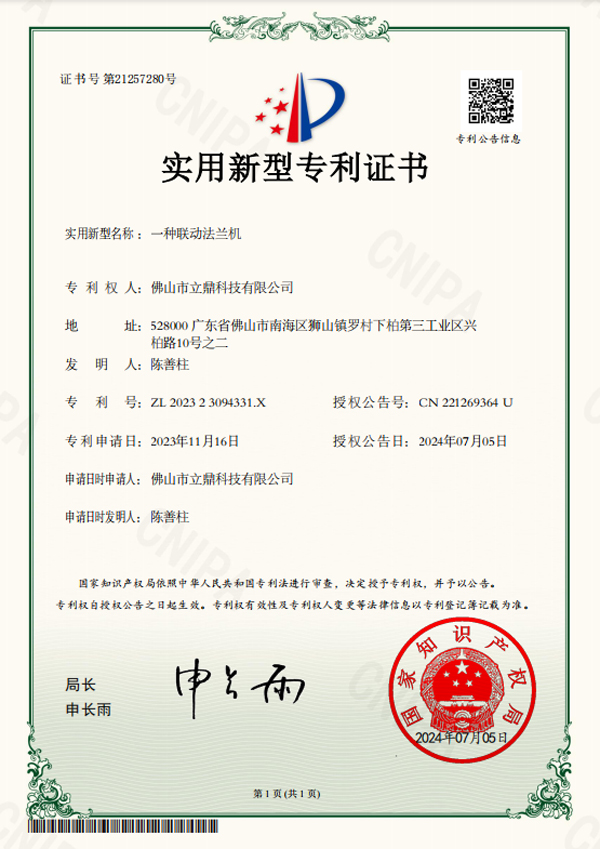
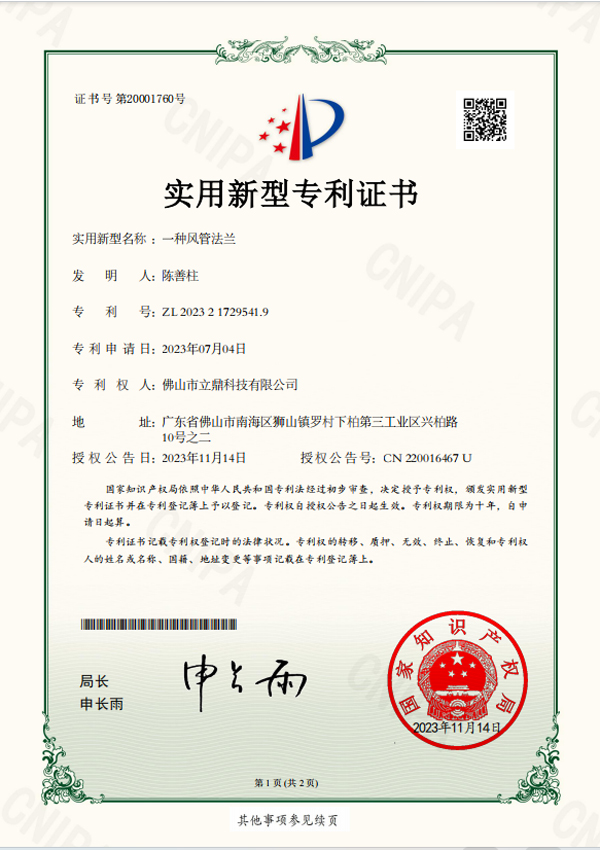
Internationally recognized quality certifications validating Liding Machinery's engineering excellence and production standards.
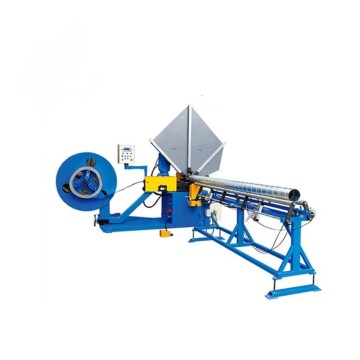
Explore our full lineup of precision roll forming solutions for agricultural barns, HVAC systems, and structural construction.