Leave Your Message
High-precision roll forming solutions engineered for centralized building airflow management
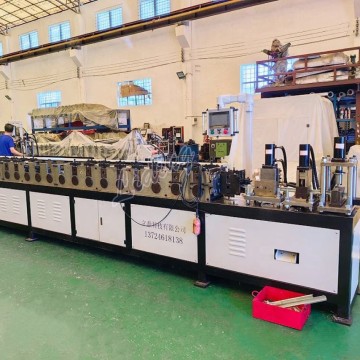
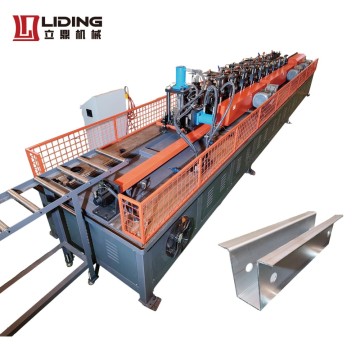
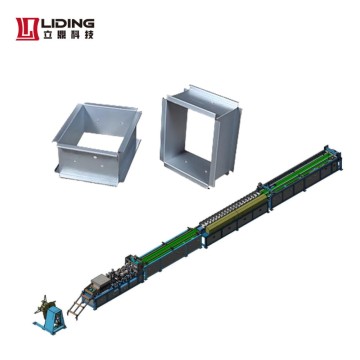
A duct making machine — also known as an HVAC duct forming machine or air duct roll former — is an automated industrial system designed to continuously shape flat metal coil stock into precisely dimensioned duct profiles used in centralized building ventilation, heating, and air conditioning (HVAC) systems. These machines employ cold-roll forming technology to produce rectangular, spiral, oval, and custom-profile ducts at high speeds, eliminating manual fabrication inconsistencies and dramatically reducing production costs.
In the context of automated airflow management for centralized building ventilation systems, duct making machines are the foundational manufacturing backbone. The quality, dimensional accuracy, and surface integrity of the ductwork produced directly determine the efficiency of the entire HVAC network — affecting air leakage rates, static pressure losses, noise levels, and ultimately energy consumption across commercial, industrial, and institutional buildings.
⚡ Key Insight: According to ASHRAE research, poorly fabricated ductwork can account for up to 30% of total HVAC energy loss in commercial buildings. Precision duct making machines with automated seam locking and flange forming reduce air leakage to below 1%, translating directly into measurable energy savings and carbon footprint reduction.
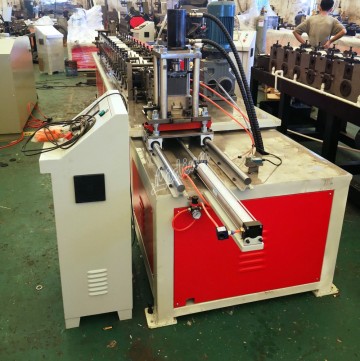
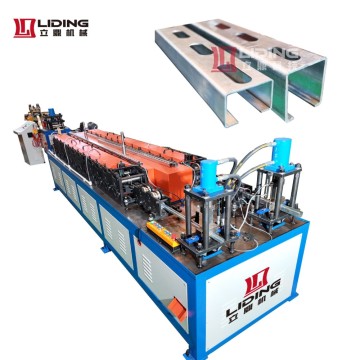
Modern duct making machines integrate PLC control systems, servo-driven roll stations, automatic length measurement, and hydraulic cutting units — enabling lights-out manufacturing environments where a single operator can oversee production lines outputting thousands of linear meters of ductwork per shift. This level of automation is no longer a luxury but a competitive necessity as global construction timelines compress and labor costs rise.
The global HVAC equipment market was valued at over USD 240 billion in 2024 and is projected to exceed USD 380 billion by 2032, driven by rapid urbanization, green building mandates, and the proliferation of data centers, hospitals, and large commercial complexes requiring sophisticated climate control infrastructure. Within this ecosystem, duct making machinery represents a critical upstream segment that directly enables the fabrication capacity needed to meet surging ductwork demand.
Southeast Asia — particularly Vietnam, Indonesia, Thailand, and the Philippines — is experiencing a construction boom fueled by foreign direct investment and industrial zone development. These markets represent the fastest-growing demand centers for automated duct making equipment as local HVAC contractors transition from manual fabrication to fully automated production lines. The Middle East continues to invest heavily in mega-projects such as NEOM, Expo-legacy developments, and healthcare infrastructure, all requiring massive volumes of precision ductwork. Meanwhile, Europe's stringent energy efficiency directives (EU Energy Performance of Buildings Directive — EPBD) are compelling building owners to retrofit and upgrade ventilation systems, generating sustained demand for high-quality duct components.
Office towers, shopping malls, hotels, and mixed-use developments require extensive centralized HVAC duct networks with stringent dimensional tolerances and fire-rated assemblies.
Hospitals and cleanrooms demand ultra-low-leakage ductwork with smooth internal surfaces to prevent bacterial growth and maintain precise pressure differentials in sterile zones.
High-density server environments require precision airflow management with zero tolerance for duct leakage — driving demand for machine-formed, laser-welded duct assemblies.
Chemical plants, food processing facilities, and electronics manufacturers rely on corrosion-resistant stainless steel and galvanized ductwork produced on heavy-duty forming lines.
The duct making machine industry is undergoing a profound technological transformation, driven by the convergence of Industry 4.0 principles, sustainability imperatives, and the growing complexity of modern building ventilation requirements. The following trends are defining the next generation of HVAC duct fabrication equipment:
Next-generation duct forming lines feature integrated IoT sensors that monitor roll wear, dimensional drift, and material thickness in real time — enabling predictive maintenance and zero-defect production. Remote diagnostics via cloud platforms allow manufacturers to support customers globally with minimal on-site intervention.
Servo-electric drive systems are rapidly replacing hydraulic and pneumatic actuators, reducing energy consumption by up to 40% per production cycle while delivering superior speed control and repeatability. Variable frequency drives (VFDs) on forming rolls optimize power usage across different material gauges and widths.
Machine vision systems integrated into duct forming lines perform 100% dimensional inspection at production speeds, flagging profile deviations as small as ±0.1mm. AI algorithms analyze defect patterns to automatically adjust roll gap settings, eliminating manual calibration downtime.
Modular roll cassette systems allow HVAC fabricators to switch between duct profiles — rectangular, oval, spiral, and custom — within minutes rather than hours. This flexibility enables just-in-time production for complex building projects with diverse ductwork specifications.
Advanced duct forming machines are engineered to process high-strength, lightweight galvanized steel (SGCC, SECC), pre-painted coil, and stainless steel with minimal material waste. Precision slitting and nesting algorithms reduce scrap rates below 2%, supporting circular economy objectives.
Leading duct fabricators are adopting digital twin technology to simulate ductwork performance before physical production. Direct integration with BIM (Building Information Modeling) platforms enables automatic generation of cutting lists and forming parameters from architectural models, dramatically reducing engineering lead times.
How precision duct forming technology enables superior airflow management across diverse built environments
Centralized fresh air systems in skyscrapers require thousands of meters of precisely dimensioned rectangular ductwork with plug-in flange connections. Automated flange roll formers produce TDF (Transverse Duct Flange) and TDC (Transverse Duct Connection) profiles at 20+ m/min, enabling on-site prefabrication of complete floor-by-floor duct assemblies.
Metro systems and road tunnels demand heavy-gauge spiral ductwork capable of withstanding fire conditions and high static pressures. Specialized forming machines process 1.5–2.0mm galvanized steel into oversized oval and circular profiles with longitudinal seam welding, meeting EN 13501 fire classification requirements.
ISO Class 1–6 cleanrooms require electropolished stainless steel ductwork with zero crevices and hermetically sealed flanges. Precision forming machines with mirror-finish roll tooling produce duct sections with internal surface roughness Ra ≤ 0.4μm, critical for contamination control.
Airports and convention centers feature exposed architectural ductwork as design elements, requiring aesthetically finished oval and custom-profile ducts with consistent external surface quality. Multi-radius roll forming tooling produces complex cross-sections that integrate seamlessly with interior architectural schemes.
Refrigerated warehouses and food processing facilities require insulated ductwork systems with stainless steel or pre-painted aluminum inner liners. Dual-material forming lines co-form inner and outer duct shells simultaneously, with automated foam injection stations completing the insulated duct assembly in a single pass.
Hyperscale data centers deploy under-floor and overhead plenum duct systems requiring exact airflow distribution to hot-aisle/cold-aisle containment systems. CNC-controlled duct making machines produce tapered duct sections with graduated outlet openings, optimizing airflow uniformity across server rack rows without manual balancing.
💡 Pro Tip for HVAC Contractors: Investing in a fully automatic duct making machine with integrated flange forming capability eliminates the need for separate flange roll formers and manual assembly jigs — reducing your ductwork fabrication cost-per-meter by 35–50% compared to semi-automatic or manual methods, while improving dimensional consistency to within ±0.5mm across all profile dimensions.
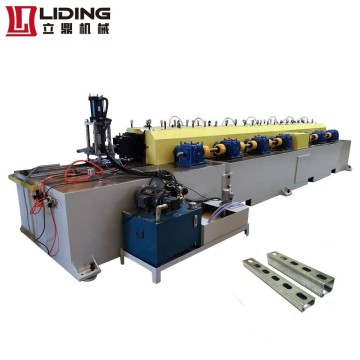
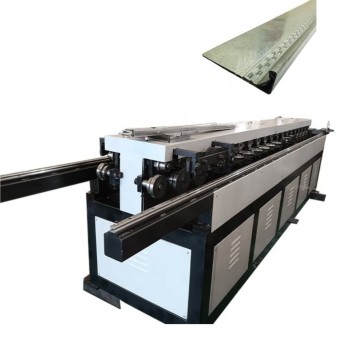
Flange connections are the most critical sealing points in any centralized duct system. Poorly formed flanges — with uneven heights, inconsistent corner angles, or surface irregularities — create leakage paths that undermine the entire ventilation system's performance. Automated flange roll forming machines, such as the Common Plate Plug-In Flange Former and GDF20/30 series, produce TDF/TDC flanges with tolerances of ±0.2mm on flange height and ±0.5° on corner angles, ensuring airtight connections that meet SMACNA Class A leakage standards.
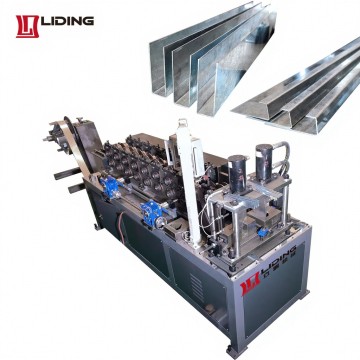
Volume Control Damper (VCD) frames, produced on dedicated high-speed roll forming lines, are equally critical components in automated airflow management systems. These frames house motorized damper blades that modulate airflow in real time based on building automation system (BAS) commands — enabling demand-controlled ventilation (DCV) strategies that can reduce HVAC energy consumption by 20–40% in variable-occupancy spaces such as conference rooms, auditoriums, and open-plan offices.
Foshan Liding Machinery Equipment Co., Ltd. was established in 2014, with a core technical team boasting over 25–30 years of experience in the cold-forming industry. We are a specialist manufacturer of metal roll forming equipment, dedicated to providing efficient, precise, and reliable customized production line solutions for global HVAC systems, building structures, and storage equipment sectors.
We design and manufacture high-precision cold-forming equipment covering: HVAC ductwork machinery, building structures (light steel studs, steel formwork, seismic brackets, purlins), and warehouse equipment (racking columns, beams, shelving panels). We are not merely a machine supplier — we are your strategic partner in product innovation and production efficiency enhancement.
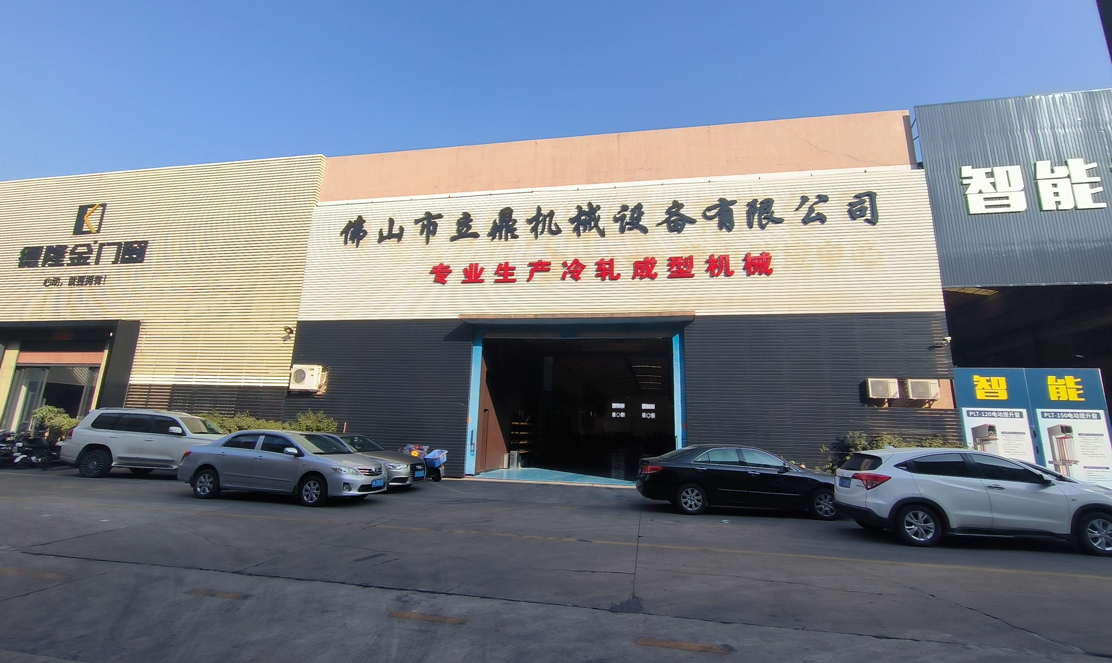
You provide drawings or samples; we deliver comprehensive production solutions tailored to your specific ductwork profile requirements and production capacity targets.
Our focus extends beyond the machinery itself to the quality and production costs of your end products — we optimize roll tooling, material feed systems, and cutting mechanisms to maximize your per-shift output while minimizing material waste.
Our dedicated team offers ongoing technical support and after-sales service with a guaranteed 48-hour response time for all technical inquiries — backed by remote diagnostic capabilities and a global spare parts network.
Four pillars that set Liding duct making machines apart in automated ventilation system manufacturing
25+ years in cold-bend forming with an R&D team of 10+ engineers dedicated to HVAC duct and structural roll forming innovation.
Anti-seismic bracket patented technology and proprietary flange forming profiles — safe, reliable, and certified for global building codes.
Full-line solutions from blueprint to mass production. Customized on demand — whether standard rectangular duct or complex architectural profiles.
Quick-changeover modular tooling for multi-profile versatility, plus global technical support with 48-hour response time guaranteed.
Our duct making machines and manufacturing processes are certified to international quality and safety standards
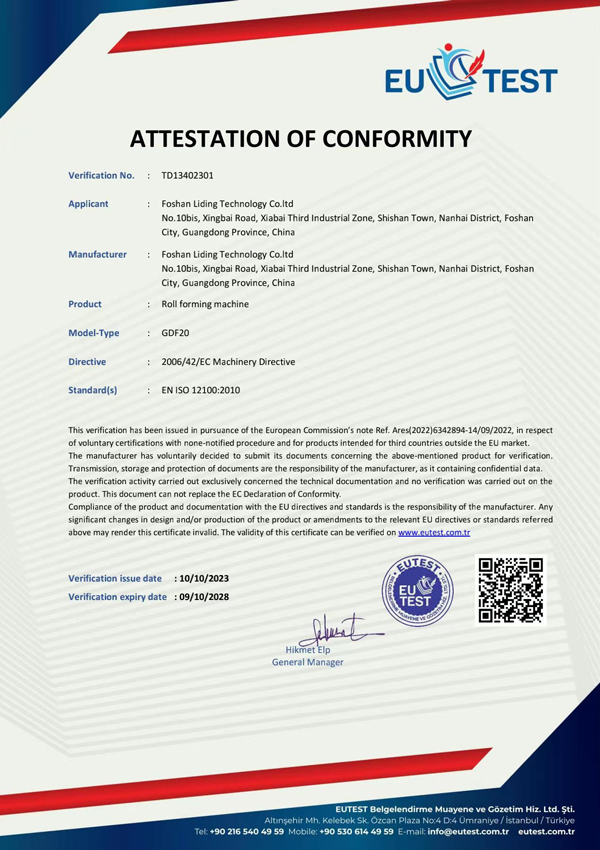

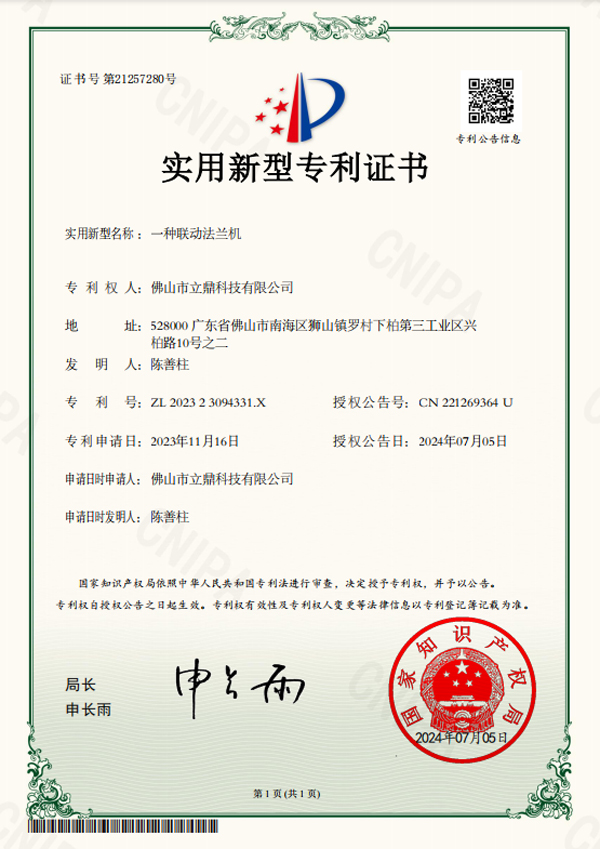
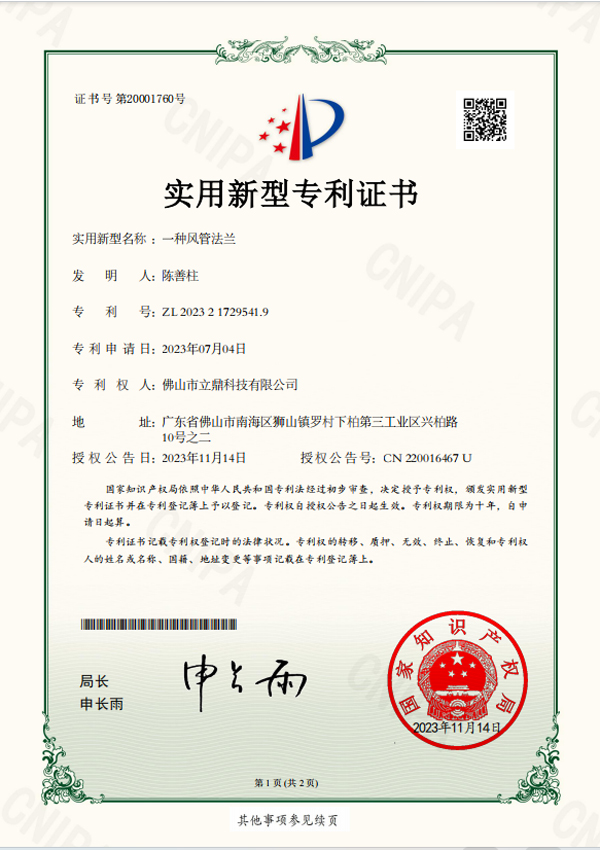
Explore our full lineup of automated forming machines for HVAC ductwork, structural components, and building systems
Partner with Liding Machinery to deploy a fully automated duct making solution tailored to your centralized building ventilation system requirements. From single flange formers to complete turnkey production lines — we deliver precision, speed, and reliability.
Request a Custom Solution