
Leave Your Message
High-performance cold roll forming machinery designed for modern structural fabrication

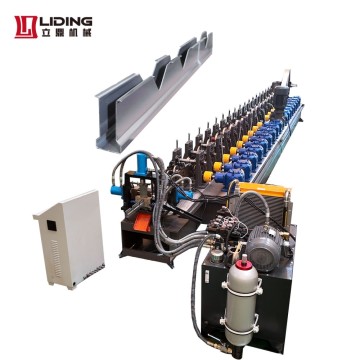
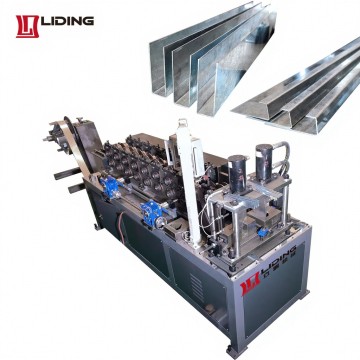
The global construction industry is undergoing a massive paradigm shift toward prefabrication, modularization, and rapid erection methodologies. At the heart of this industrial revolution is the construction of prefabricated steel industrial factories. These massive structures, designed to house manufacturing lines, logistics centers, and high-tech assembly plants, rely heavily on structural secondary load-bearing framing. Secondary framing components—such as C/Z purlins, girts, eave struts, and bracing—act as the critical bridge transferring wind, snow, and dead loads from the building envelope to the primary structural steel frames.
Historically, the erection of these secondary load-bearing elements presented significant logistical and safety challenges. However, the commercial integration of advanced construction scaffolding systems with structural secondary framing has revolutionized site operations. Modern industrial construction demands zero-downtime workflows, which has driven the development of high-capacity, modular scaffolding systems (such as ringlock and cuplock scaffolding) specifically engineered to interface with heavy-duty steel framing. Today, scaffolding is no longer viewed merely as temporary access equipment, but as a critical, integrated component of the structural erection process, ensuring safety, structural alignment, and swift project delivery.
SEO Key Insight: The synergy between high-precision cold roll-formed steel components (like C/Z channels and heavy-duty steel formwork) and modern scaffolding design allows for unprecedented speed and safety in large-span industrial factory construction.
In prefabricated steel industrial factories, the secondary load-bearing framing must be installed with extreme precision to ensure the overall integrity of the building envelope. This installation process occurs at significant heights, requiring scaffolding systems that offer both lateral stability and flexible working platforms. Here is how scaffolding integrates into specific application scenarios:
Providing essential temporary load-bearing support for secondary framing elements during the critical bolting and welding phases.
Allowing construction crews to work at height with absolute stability, ensuring zero-tolerance alignment of C/Z purlins.
Minimizing high-altitude fall risks in compliance with stringent global safety regulations like OSHA and EN standards.
As prefabricated steel factories grow in scale and complexity, several developmental trends are shaping the future of construction scaffolding and secondary framing systems:
Modern engineering projects utilize BIM to design and simulate the entire construction sequence. Scaffolding layouts are now modeled in 3D alongside the primary and secondary steel framing. This prevents spatial conflicts, optimizes the quantity of scaffolding materials needed, and plans precise tie-in points on the secondary framing structure without compromising its load-bearing capacity.
The demand for faster erection cycles has led to the adoption of high-tensile steel and aluminum alloy scaffolding. Similarly, secondary framing components are increasingly manufactured using high-strength, thin-walled cold-formed steel. Advanced roll forming technology allows for the production of lightweight yet incredibly strong C-channels and V-type formwork, reducing the structural load on both the temporary scaffolding and the permanent foundation.
The efficiency of secondary framing installation is heavily dependent on the quality of the profiles. Any deviation in dimensions can delay assembly and increase the time workers spend on scaffolding. By utilizing fully automatic roll forming machines with adjustable width capabilities, manufacturers can produce C-channels, Z-purlins, and steel formwork with millimeter-level precision. This ensures a perfect fit on-site, drastically reducing scaffolding dwell times and enhancing overall project safety.
Industry Trend: The convergence of modular ringlock scaffolding and precision roll-formed secondary profiles is setting new benchmarks for construction efficiency, reducing labor hours by up to 35% on industrial jobsites.
For heavy-duty applications, such as factory floor slabs and high-load secondary framing, traditional scaffolding is being replaced by heavy-duty modular shoring towers. These towers are engineered to handle massive vertical loads while offering quick-erect capabilities. When paired with high-quality steel formwork, they provide a rock-solid foundation for constructing complex industrial facility floors.
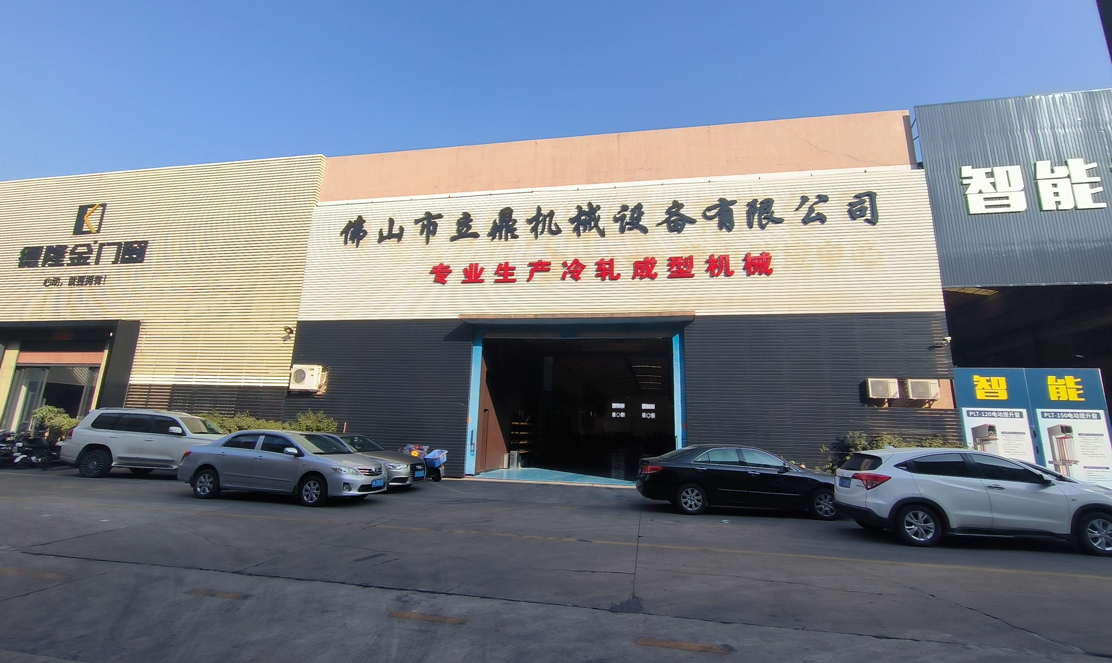
Liding Machinery – Our core technical team boasts over 30 years of experience in cold-forming.
Foshan Liding Machinery Equipment Co., Ltd. operates a state-of-the-art manufacturing facility dedicated to engineering high-precision roll forming lines. From raw material processing to final assembly and testing, our strict quality control systems ensure that every machine delivers maximum reliability and efficiency for modern construction projects worldwide.
Quality and safety standards validated by international certifications
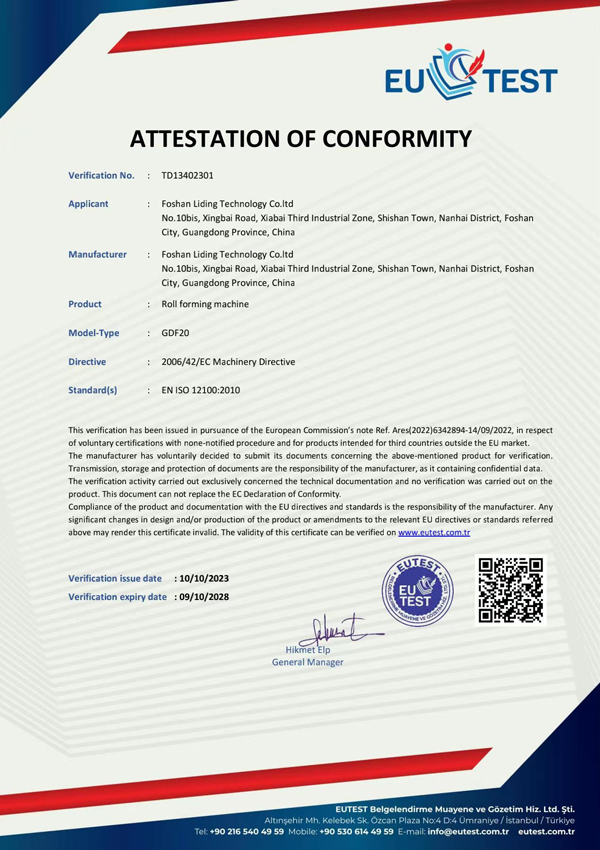

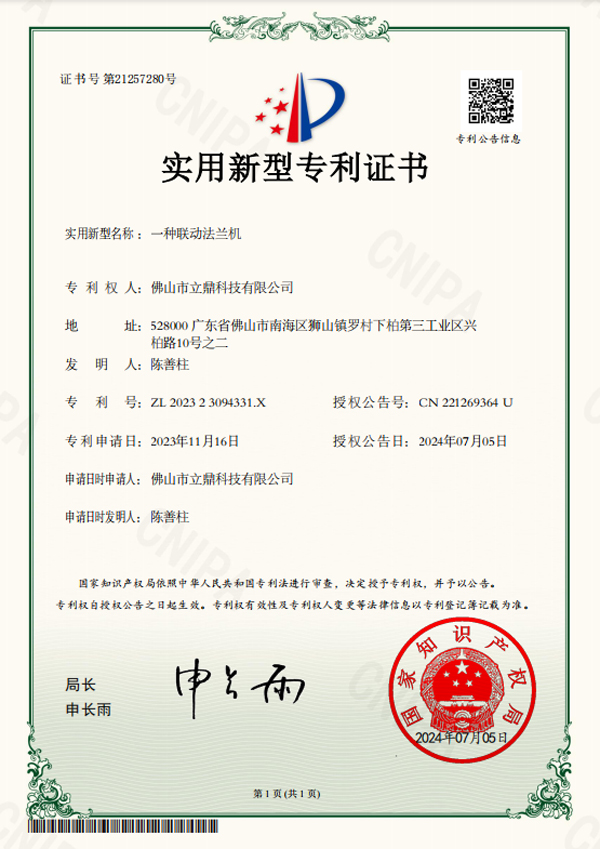
Why we stand out in the global cold roll forming industry
25 years of experience in cold bending forming, with a research and development team of over 10 people.
Anti-seismic bracket patented technology, safe and reliable for structural applications.
Customized on demand, providing a full-line solution from blueprint to mass production.
Quick changeover capabilities, making one machine highly versatile for multiple profiles.
Explore our complete range of cold roll forming machines and structural construction equipment