Leave Your Message
Industrial Cold Roll Forming Technology

Cold Roll Forming Machine For Emergency Smoke Extraction And Air Control In Underground Subway Stations

Precision-Engineered HVAC Duct Components | Life-Safety Ventilation Systems | Global Manufacturing Solutions

Subway Smoke Extraction Duct Forming Solutions

Precision roll forming machines engineered for HVAC, fire damper, and emergency ventilation duct production in underground transit systems.

Cold Roll Forming Technology in Underground Subway Ventilation & Emergency Smoke Control

How precision cold roll forming machines are transforming the production of life-safety air management components for modern metro infrastructure.

Underground subway stations represent one of the most demanding environments for HVAC and emergency ventilation engineering. With millions of commuters passing through enclosed, subterranean corridors daily, the reliability of smoke extraction systems and air control infrastructure is not merely a matter of comfort โ€” it is a critical life-safety requirement mandated by international fire codes and transit authority standards worldwide. At the heart of manufacturing these systems lies a technology that is often overlooked but absolutely indispensable: cold roll forming.

๐Ÿ”ท Cold roll forming machines produce the precision metal duct sections, fire damper frames, flanged connectors, and structural support channels that form the backbone of every subway emergency smoke extraction and air control system โ€” with tolerances measured in fractions of a millimeter and production speeds that make large-scale transit projects economically viable.

Why Emergency Smoke Extraction Is Critical in Underground Subway Stations

In the event of a fire or smoke incident in an underground station, the consequences of ventilation system failure can be catastrophic. Unlike above-ground structures where natural buoyancy helps direct smoke upward and away from occupants, underground environments trap smoke horizontally. Evacuation corridors can become impassable within minutes if smoke extraction systems are not functioning at full capacity.

Modern subway smoke management systems are designed to achieve several key objectives simultaneously:

Achieving these objectives requires ductwork, damper housings, and structural framing components manufactured to exceptional precision and material consistency โ€” qualities that cold roll forming delivers at industrial scale.

The Role of Cold Roll Forming Machines in Subway HVAC Component Manufacturing

Cold roll forming is a continuous bending process in which a flat metal strip โ€” typically galvanized steel, stainless steel, or aluminum โ€” is progressively shaped through a series of profiled roller stations until it reaches a precise cross-sectional geometry. Unlike stamping or press-brake operations, cold roll forming produces components with consistent wall thickness, superior surface finish, and excellent dimensional repeatability across very long production runs.

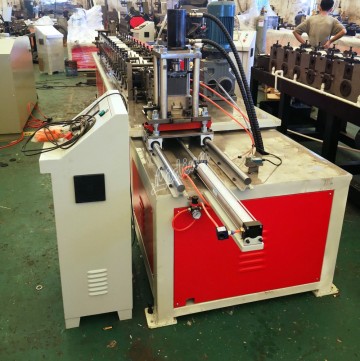
For subway ventilation and smoke extraction systems, cold roll forming machines are used to manufacture:

๐ŸŒฌ๏ธ
Rectangular & Oval Smoke Extraction Ducts
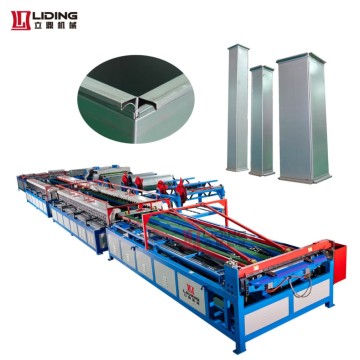
High-volume smoke exhaust ducts with TDC/TDF flanged connections, manufactured from 0.8โ€“2.0mm galvanized steel. Roll forming ensures consistent cross-sections over lengths of 1.2โ€“3.0m per section, critical for maintaining designed airflow velocities in emergency mode.
๐Ÿ”ฅ
Fire Damper & Volume Control Damper Frames
The structural frames that house fire dampers and VCDs must maintain dimensional integrity under thermal stress. Cold roll forming produces these frames with the tight tolerances required for reliable blade seating and actuator alignment โ€” directly impacting whether a damper closes and seals correctly during an emergency.
๐Ÿ”ฉ
TDC / TDF Flange Profiles
Transverse duct connection flanges are the mechanical interface between duct sections. Roll-formed TDC flanges provide the structural rigidity and sealing surface geometry required for smoke-tight joints โ€” essential in systems where leakage would compromise smoke zone isolation.
๐Ÿ—๏ธ
Seismic & Structural Support Channels
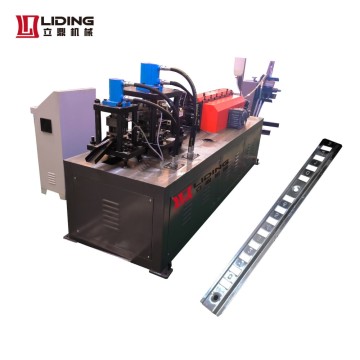
Subway infrastructure is subject to ground vibration, train-induced dynamic loads, and seismic events. Unistrut-type and C/U channel profiles produced by roll forming provide the support framework for hanging ductwork โ€” with anti-seismic bracket compatibility increasingly mandated by transit authority specifications.
โš™๏ธ
Plenum & Distribution Box Components
Air distribution plenums at platform level direct conditioned and emergency supply air across the full width of the platform. Roll-formed panel sections and stiffening ribs maintain the structural integrity of these large-format components under the pressure differentials generated during emergency extraction mode.
๐Ÿ›ก๏ธ
Tunnel Ventilation Duct Sections
Between stations, tunnel ventilation ducts handle the longitudinal airflow management that prevents smoke migration along running tunnels. These require high-volume production of standardized duct sections โ€” precisely the application where roll forming's continuous output and dimensional consistency deliver the greatest production efficiency advantage.

Commercial & Industrial Landscape: Market Drivers for Subway Ventilation Component Manufacturing

The global market for subway and urban rail infrastructure is undergoing a sustained expansion phase driven by urbanization, environmental policy, and post-pandemic investment in public transit. This growth directly translates into demand for the manufacturing equipment that produces ventilation system components.

Key market drivers include:

๐ŸŒ
50+
Countries served with Liding roll forming solutions
โšก
2000+
Roll forming machines operating worldwide
๐Ÿ”
85%
Client repeat purchase rate for additional lines
๐Ÿ†
30+
Years average experience of senior engineers

Development Trends: The Next Generation of Roll Forming for Subway Ventilation

The cold roll forming industry serving the subway and transit ventilation sector is evolving rapidly, driven by both technological advancement and changing customer requirements. Several key trends are reshaping the competitive landscape:

๐Ÿค–
Full-Line Automation & Industry 4.0 Integration
Modern roll forming lines for subway duct production increasingly incorporate servo-driven feeding systems, automatic length measurement and cut-to-length, robotic stacking, and real-time quality monitoring via laser measurement. PLC-based control systems with HMI interfaces allow operators to switch between duct profiles with minimal changeover time โ€” critical for HVAC contractors handling multiple duct sizes across a single project.
๐Ÿ”„
Quick-Change Tooling for Multi-Profile Production
Subway ventilation projects require a wide range of duct cross-sections โ€” from small branch ducts of 200ร—150mm to main exhaust risers exceeding 1200ร—800mm. Modular roll forming systems with quick-change roller cassettes allow a single production line to serve multiple profile requirements without the capital cost of dedicated lines for each size.
๐ŸŒก๏ธ
High-Temperature & Stainless Material Capability
As fire resistance requirements intensify, more subway smoke extraction components are being specified in stainless steel or with high-temperature coatings. Advanced roll forming machines with hardened roller sets and enhanced drive torque are being developed to handle these more demanding materials while maintaining the dimensional precision required for fire-rated assemblies.
๐ŸŒฑ
Sustainable Manufacturing & Material Efficiency
Transit authorities and their supply chains face growing sustainability reporting requirements. Cold roll forming's inherent material efficiency advantage โ€” near-zero scrap generation compared to cut-and-weld fabrication โ€” is increasingly valued. New roll forming lines optimize coil utilization further through precision servo feed systems and intelligent nesting algorithms for punched features.
๐Ÿ“ก
Digital Twin & Remote Diagnostics
Leading roll forming machine manufacturers are embedding IoT connectivity into production lines, enabling remote monitoring of machine health, production metrics, and predictive maintenance alerts. For HVAC manufacturers supplying time-critical subway construction projects, minimizing unplanned downtime is paramount โ€” making remote diagnostics a competitive differentiator.
๐Ÿ“
BIM-to-Production Integration
Building Information Modeling is now standard in major subway construction projects. The emerging capability to translate BIM ductwork models directly into roll forming machine cutting and punching programs โ€” bypassing manual re-drawing โ€” is dramatically reducing production setup time and eliminating transcription errors in complex duct fabrication schedules.

Deep-Dive Application Scenarios: Cold Roll Forming in Subway Smoke Control Engineering

Scenario 1: Platform-Level Smoke Exhaust Duct Manufacturing

Island and side platforms in underground stations typically require longitudinal smoke exhaust ducts running the full length of the platform โ€” commonly 120โ€“250 meters. These ducts must maintain consistent cross-sectional dimensions to achieve designed airflow velocity without generating excessive noise or pressure drop. A single platform-level exhaust duct project may require 80โ€“200 individual duct sections, all produced to the same tight dimensional tolerance. Cold roll forming lines producing TDC-flanged rectangular duct sections at speeds of 8โ€“15 m/min make this volume achievable within practical project timelines.

Scenario 2: Tunnel Jet Fan Bypass Duct Systems

Modern longitudinal tunnel ventilation systems use jet fans supplemented by bypass duct networks to achieve bi-directional smoke management capability. The bypass ducts โ€” typically oval or rectangular cross-sections of 600โ€“1000mm equivalent diameter โ€” are manufactured in segments that must mate precisely with cast or fabricated transition pieces at each jet fan installation. Roll forming delivers the consistent outer dimensions required for reliable field assembly in the confined working conditions of an active tunnel construction site.

Scenario 3: Fire Damper Frame Production for Smoke Zone Isolation

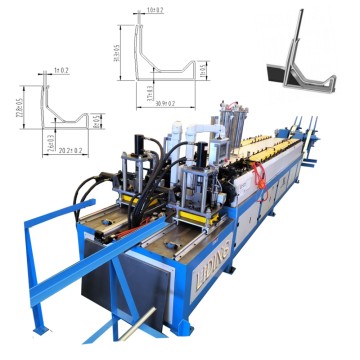
A medium-sized underground station may incorporate 40โ€“80 fire dampers and volume control dampers at smoke zone boundaries, plant room interfaces, and cross-passage connections. Each damper requires a precisely formed frame to house the blade assembly and provide the mounting interface with the ductwork. Liding's LD-FD05 fire damper frame roll forming line produces these frames at rates that support the just-in-time delivery schedules demanded by subway construction contractors โ€” with the dimensional consistency that ensures every damper achieves its rated leakage class.

Scenario 4: Seismic-Rated Duct Support Systems

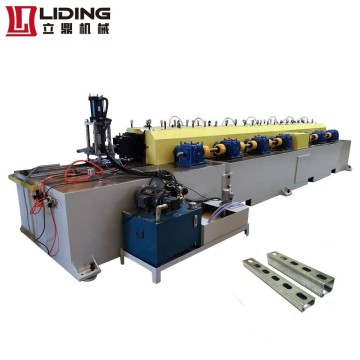
In seismically active regions โ€” including much of East Asia, the western Americas, Turkey, and Southern Europe โ€” subway ventilation ductwork must be suspended from seismic bracing systems designed to maintain duct integrity and function during and after seismic events. The unistrut channels, strut clamps, and bracing angles that form these systems are produced by roll forming machines, with Liding's anti-seismic bracket technology providing patented profile geometries that meet international seismic support standards.

Scenario 5: Emergency Pressurization Duct Networks

Stairwell and corridor pressurization systems โ€” which maintain positive pressure in evacuation routes to prevent smoke ingress โ€” require carefully sized supply air ducts with precise discharge opening dimensions. The roll-formed duct sections and perforated face panels used in these systems must maintain their dimensional accuracy over the full production run to ensure that the designed pressure differential is achieved uniformly along the length of the protected route.
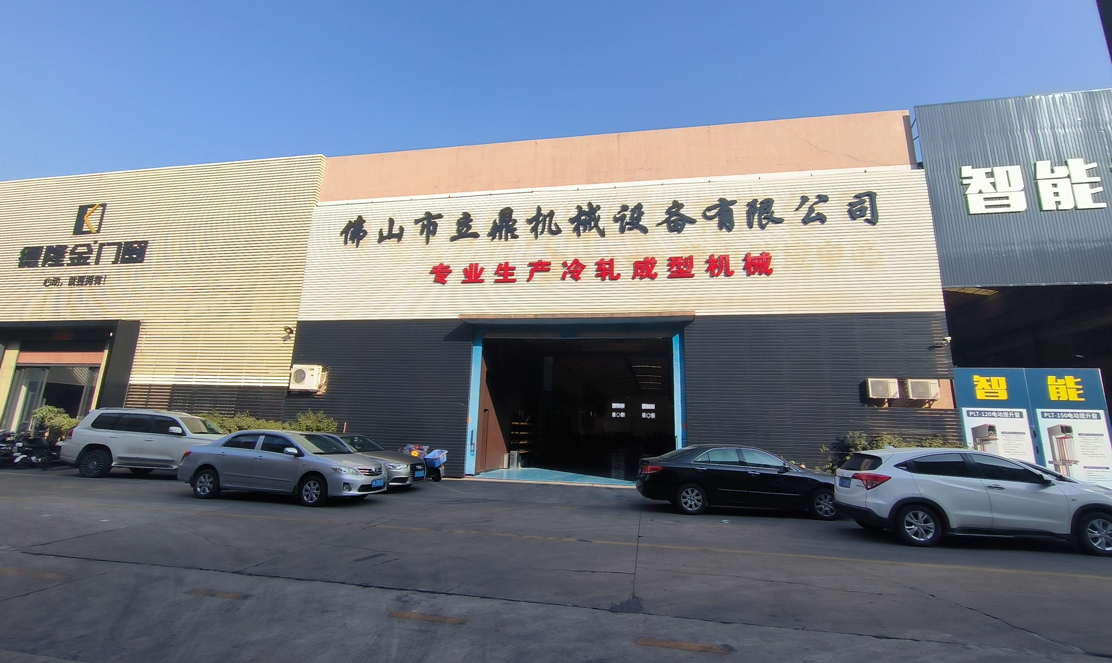
Liding Machinery Factory - Cold Roll Forming Machine Manufacturer for Subway HVAC Systems
About the Factory

Why Choose Liding Machinery for Subway Ventilation Component Production?

Foshan Liding Machinery Equipment Co., Ltd. was established in 2014, with a core technical team boasting over 25 years of experience in the cold-forming industry. We are a specialist manufacturer of metal roll forming equipment, dedicated to providing efficient, precise and reliable customised production line solutions for global HVAC systems, building structures and storage equipment sectors.

We are not merely a machine supplier โ€” we are your strategic partner in product innovation and production efficiency enhancement for subway and underground transit ventilation applications.

  • You provide drawings or samples; we deliver comprehensive production solutions
  • Our focus extends beyond the machinery to the quality and production costs of your end products
  • Dedicated team offering ongoing technical support and after-sales service
  • 25+ years of cold-forming expertise with R&D team of 10+ engineers
  • Anti-seismic bracket patented technology โ€” safe and code-compliant
  • Customized on demand: full-line solutions from blueprint to mass production
  • Global technical support with 48-hour response time commitment

About Us โ€” Liding Machinery

Liding Machinery โ€“ Our core technical team boasts over 30 years of experience in cold-forming, serving global HVAC, transit, and building structure sectors.

๐Ÿญ
2000+
Over 2,000 roll forming machines operating worldwide
๐ŸŒ
50+
Exporting to Southeast Asia, Middle East, Europe, Russia and beyond
๐Ÿ”
85%
85% of our clients return for additional production lines
๐Ÿ‘จโ€๐Ÿ”ง
30+
Average years of experience of our senior engineers

OUR ADVANTAGES

What sets Liding roll forming solutions apart for subway and underground HVAC ventilation manufacturing.

01
Experience
25 years of experience in cold bending forming, with a research and development team of over 10 engineers dedicated to HVAC and ventilation applications.
02
Patent
Anti-seismic bracket patented technology โ€” safe, reliable, and compliant with international seismic support standards for subway infrastructure.
03
Customization
Customized on demand โ€” a full-line solution from blueprint to mass production, covering every duct profile and damper frame geometry your project requires.
04
Modularization
Quick changeover, versatile multi-profile capability from a single machine โ€” maximizing your return on capital investment across diverse subway ventilation component types.
05
Service
Global technical support with a 48-hour response time commitment. Whether you are commissioning a new subway duct production line in Southeast Asia or troubleshooting a fire damper frame line in the Middle East, Liding's engineering team is available to provide remote and on-site assistance to keep your production on schedule.

Certificate

Quality certifications underpinning our roll forming machines for HVAC and subway ventilation component manufacturing.
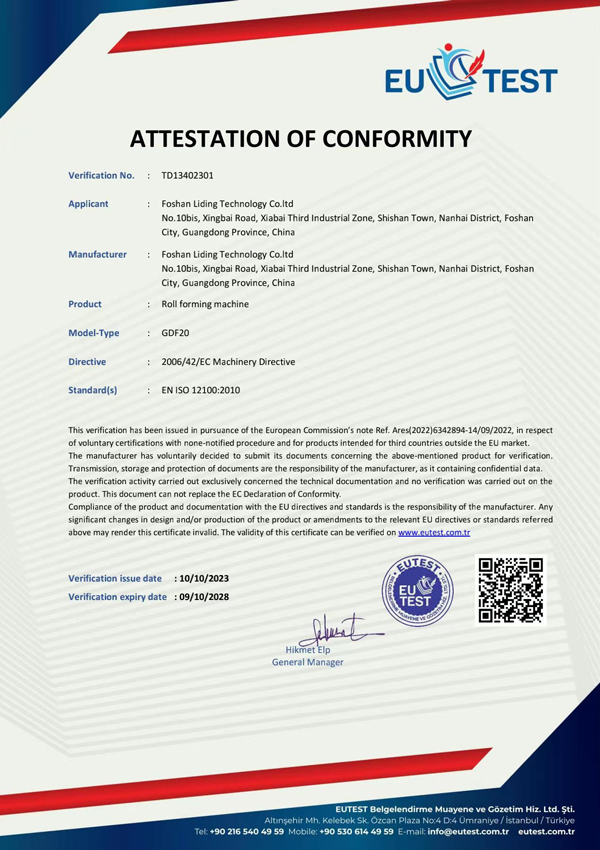
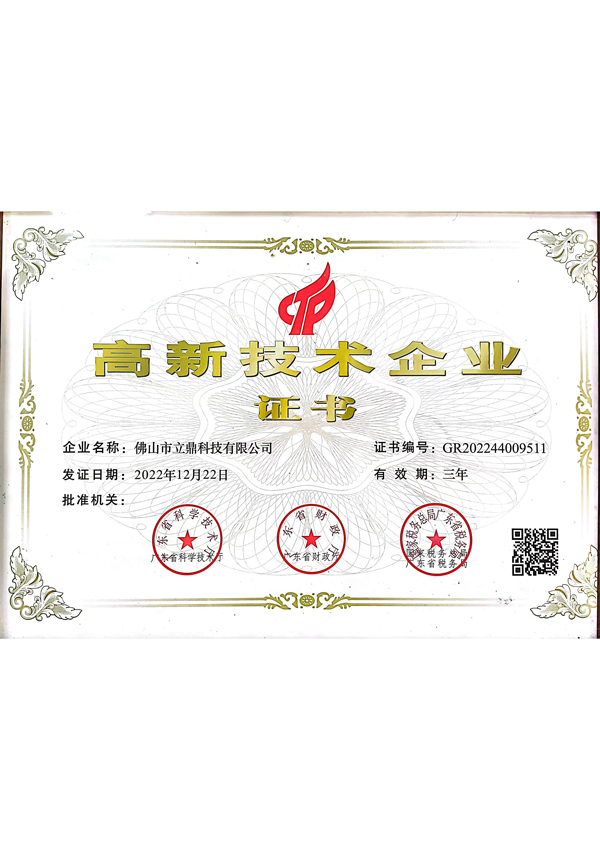
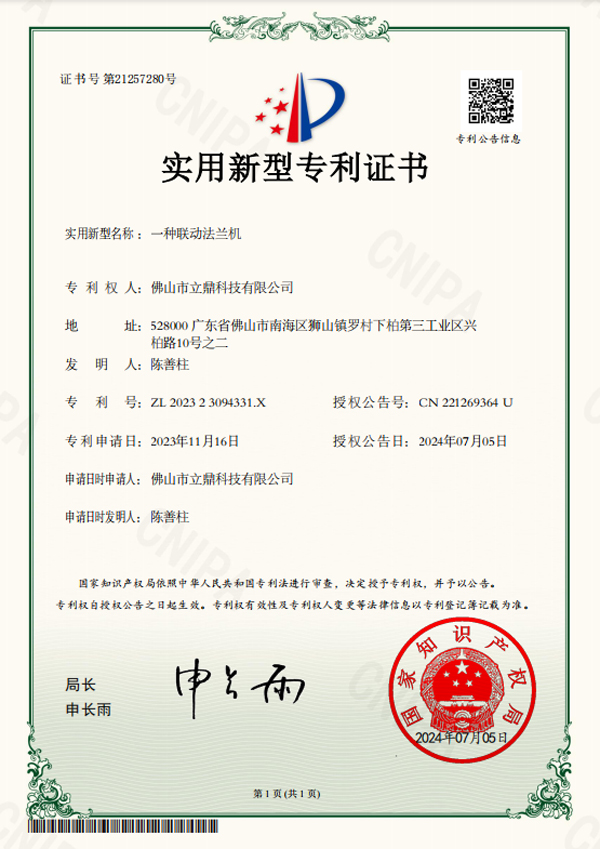
Liding Machinery Certificate 1 - Cold Roll Forming Machine Quality Certification
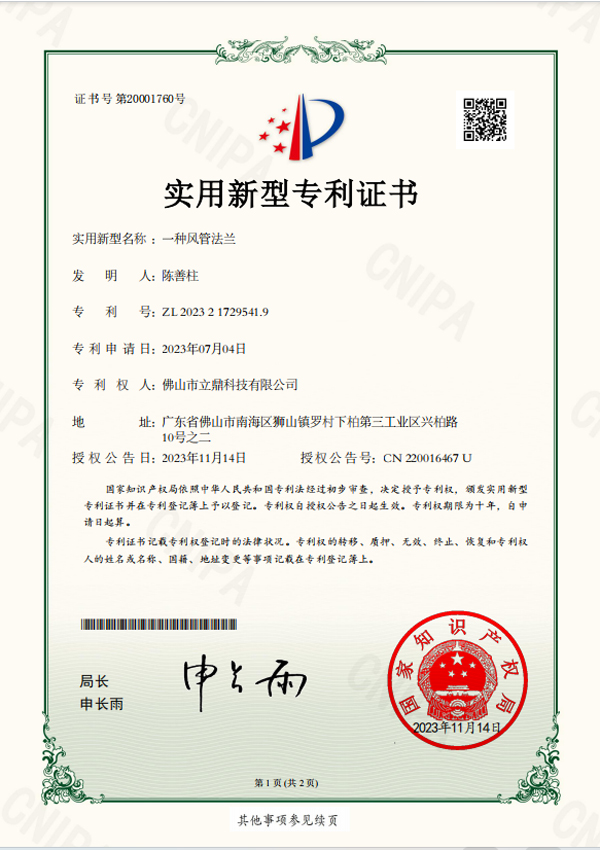
Liding Machinery Certificate 2 - HVAC Roll Forming Equipment Certification
Liding Machinery Certificate 3 - Manufacturing Quality Standard
Liding Machinery Certificate 4 - Industrial Equipment Certification

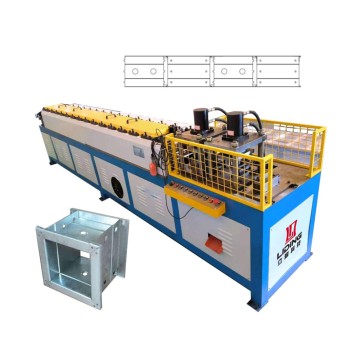
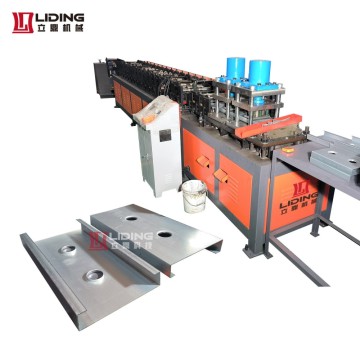
Complete Roll Forming Machine Product Range

Explore our full range of cold roll forming solutions for subway ventilation, HVAC ductwork, building structures, and industrial storage systems.
๐Ÿš‡

Ready to Optimize Your Subway Ventilation Component Production?

Contact Liding Machinery to discuss your cold roll forming requirements for emergency smoke extraction ducts, fire damper frames, and air control system components. We design and manufacture for your exact specifications.

Get a Custom Solution Quote