Leave Your Message
Purpose-built cold roll forming solutions for air regulation damper exterior casings in offshore and marine environments
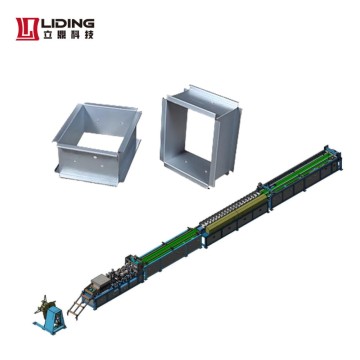
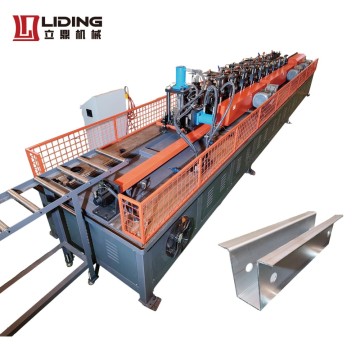
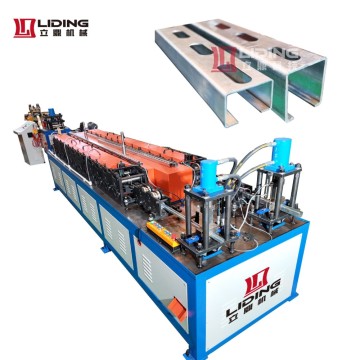
Industry insight, application depth, and production innovation for the maritime sector
In the demanding environments of marine vessels and offshore oil & gas platforms, air regulation dampers play a critical role in maintaining ventilation, fire safety, and pressure balancing across confined compartments. The exterior casing of these dampers must endure relentless saltwater corrosion, extreme temperature fluctuations, mechanical vibration, and stringent fire-resistance standards — all while maintaining dimensional precision for airtight sealing.
🔩 Cold roll forming machines deliver the most cost-effective, dimensionally consistent, and material-efficient method for producing durable exterior casings for marine and offshore air regulation dampers at industrial scale.
Cold roll forming is a continuous metal-forming process in which coiled sheet metal — typically galvanized steel, stainless steel, or aluminum alloy — is progressively shaped through a series of precision-engineered roll stations into a desired cross-sectional profile. Unlike stamping or press-forming, cold roll forming produces parts of unlimited length with consistent tolerances, minimal material waste, and superior surface finish — making it the preferred technology for producing the rectangular or circular exterior casings of air regulation dampers deployed in marine and offshore applications.
For damper casing profiles used on vessels and offshore rigs, the cold roll forming process enables the production of complex channel, U-section, Z-section, and hat-section profiles in high-strength, corrosion-resistant alloys with wall thicknesses typically ranging from 0.8mm to 3.0mm. The high repeatability of the roll forming process ensures that every casing panel and frame section meets the tight dimensional tolerances required for proper damper blade seating, actuator alignment, and flange connection to ductwork.
The global marine HVAC and ventilation equipment market has experienced consistent growth driven by expanding offshore energy infrastructure, increasing LNG carrier construction, and tightening international maritime safety regulations including SOLAS (Safety of Life at Sea) and IMO fire safety codes. According to industry estimates, the marine HVAC market is projected to surpass USD 1.8 billion by 2028, with damper systems representing a significant share of this value.
As shipbuilding activity accelerates across South Korea, China, Japan, and emerging yards in Southeast Asia and Europe, demand for high-volume, precision damper casing production lines has intensified. Offshore platform operators — particularly in the North Sea, Gulf of Mexico, Middle East, and Southeast Asian shelf regions — are investing heavily in HVAC system upgrades to comply with updated fire suppression and ventilation standards. This creates a strong and sustained demand for cold roll forming machines capable of producing marine-specification damper casings at scale.
Simultaneously, the rising adoption of modular offshore construction techniques — where living quarters, process modules, and utility modules are prefabricated onshore before installation — has increased the need for standardized, batch-produced damper casing components that can be manufactured using automated roll forming lines rather than labor-intensive manual fabrication methods.
The cold roll forming machine industry serving the marine and offshore damper casing sector is undergoing rapid technological evolution along several key dimensions:
Modern marine damper casing roll forming lines integrate servo-driven material feeding, automatic profile changeover via CNC-adjustable roll stations, in-line dimensional measurement using laser gauges, and robotic end-of-line stacking. These fully automated lines can produce multiple casing sizes on a single machine with changeover times under 15 minutes, dramatically reducing setup costs for batch production of diverse damper sizes required across a vessel or platform.
The offshore industry's drive to reduce topside weight — which directly impacts platform stability and structural load — is pushing damper manufacturers toward high-strength, low-alloy (HSLA) steels and aluminum alloys that deliver equivalent structural performance at reduced thickness. Advanced cold roll forming machines equipped with higher-force roll stations, precision pre-cut or post-cut systems, and optimized roll pass designs can handle these materials without springback or edge-cracking defects.
Leading roll forming machine manufacturers are now embedding IoT connectivity, real-time production monitoring, predictive maintenance algorithms, and digital twin simulation into their machine platforms. For marine damper casing producers, this enables remote diagnostics, production data logging for quality certification traceability, and integration with ERP/MES systems for automated production scheduling aligned with vessel build programs.
Offshore platforms require a wide variety of damper sizes — from small 200×200mm ventilation dampers in accommodation modules to large 1200×800mm fire dampers in engine room bulkheads. Modular roll forming machine architectures with quick-change cassette tooling systems allow manufacturers to switch between profile families rapidly, supporting the diverse product mix demanded by marine HVAC contractors.
Understanding the specific installation environments of air regulation dampers on marine and offshore platforms reveals why precision-formed casings are non-negotiable:
Engine rooms on vessels and offshore platforms operate at elevated temperatures with hydrocarbon vapor exposure. Fire dampers and smoke control dampers in these spaces require casings with exceptional dimensional stability at elevated temperatures, tight blade-to-frame clearances to prevent smoke bypass, and robust flange connections capable of withstanding thermal expansion cycles. Cold roll formed stainless steel or aluminized steel casings are the standard solution.
Living quarters on offshore platforms must maintain comfortable, safe air quality for crew members. Volume control dampers (VCDs) in accommodation HVAC systems require precision-formed casings that support accurate airflow balancing, low noise operation, and compatibility with automated building management systems. The tight tolerances achievable through roll forming ensure consistent blade seating and minimal leakage, which is critical for energy efficiency and comfort.
Process areas on offshore platforms classified as Zone 1 or Zone 2 hazardous areas require specialized blast-resistant and pressure-relief dampers. The casings for these dampers must be formed from heavy-gauge, high-yield-strength steel with reinforced flanges and precise dimensional control to ensure the damper mechanism functions correctly under overpressure events. Cold roll forming with heavy-duty roll stations is the only cost-effective method for producing these profiles at the required tolerances and volumes.
Ventilation dampers serving ballast tanks and cargo holds on tankers and bulk carriers operate in highly corrosive, moisture-saturated atmospheres. Stainless steel or hot-dip galvanized casings produced on precision roll forming lines provide the corrosion resistance and dimensional consistency required for reliable long-term operation in these environments.
Where cold roll formed damper casings deliver critical performance advantages
Technology evolution and market forces shaping the future of marine damper casing manufacturing
Next-generation marine damper casing lines integrate servo-driven roll stations, laser in-line measurement, and robotic stacking — enabling lights-out production of diverse casing sizes with sub-15-minute changeover times and zero-defect output for certified marine applications.
IoT-connected roll forming machines with digital twin simulation and real-time production monitoring enable remote diagnostics, predictive maintenance, and seamless integration with shipyard MES systems for automated production scheduling aligned to vessel build programs.
Offshore weight reduction targets are driving adoption of HSLA steels and marine-grade aluminum alloys for damper casings. Advanced roll forming machines with optimized roll pass designs handle these springback-prone materials without dimensional compromise.
The shift to onshore-fabricated offshore modules requires standardized, batch-produced damper casings. Modular roll forming lines with quick-change cassette tooling systems support the diverse product mix demanded by marine HVAC module contractors worldwide.
Updated IMO fire safety codes and SOLAS amendments are raising the bar for marine damper performance certification. Precision roll formed casings — with documented dimensional traceability and material certification — provide the compliance foundation for IMO A.754(18) and EN 1366-2 rated damper systems.
IMO 2030 decarbonization targets are driving investment in energy-efficient HVAC systems on new vessels. Low-leakage, precision-formed damper casings play a direct role in reducing HVAC energy consumption, making high-quality roll forming a key enabler of green shipbuilding goals.
Trusted by marine HVAC manufacturers and offshore equipment producers worldwide
Why global marine and offshore equipment manufacturers choose Liding Machinery
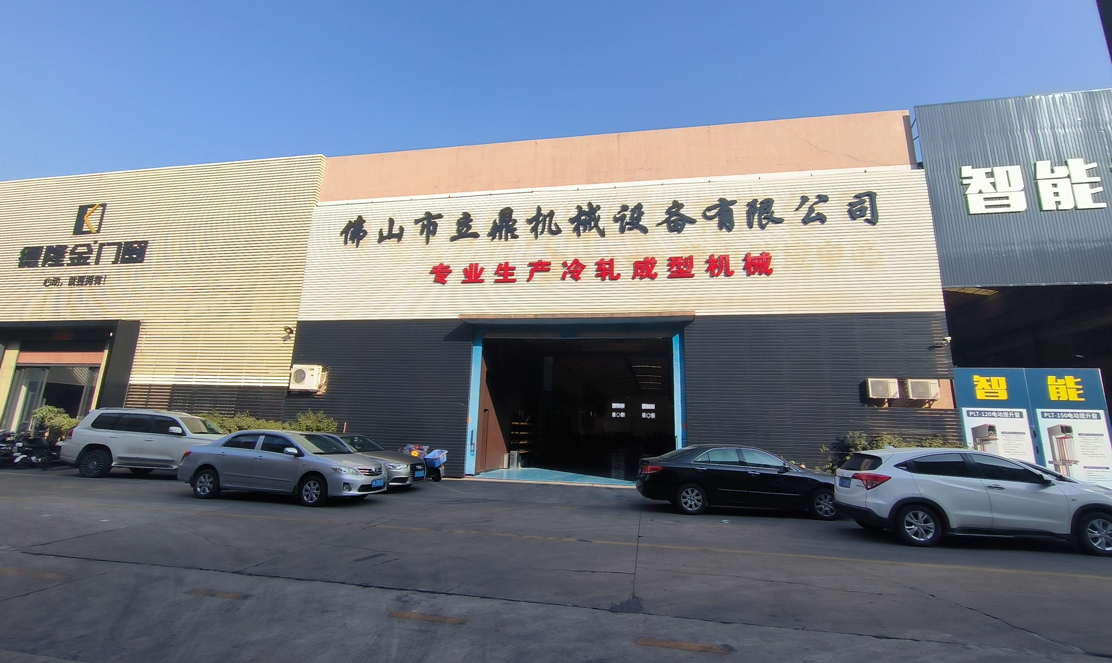
Foshan Liding Machinery Equipment Co., Ltd. was established in 2014, with a core technical team boasting over 25 years of experience in the cold-forming industry. We are a specialist manufacturer of metal roll forming equipment, dedicated to providing efficient, precise, and reliable customized production line solutions for global HVAC systems, building structures, and storage equipment sectors.
We are not merely a machine supplier — we are your strategic partner in product innovation and production efficiency enhancement. Our focus extends beyond the machinery itself to the quality and production costs of your end products, including marine and offshore air regulation damper exterior casings that must meet the most demanding international standards.
Liding Machinery — Our core technical team boasts over 30 years of experience in cold-forming.
We design and manufacture high-precision cold-forming equipment covering:
Foshan Liding Machinery Equipment Co., Ltd. was established in 2014, with a core team boasting over 25 years of experience in the cold-forming industry. We are a specialist manufacturer of metal roll forming equipment, dedicated to providing efficient, precise, and reliable customized production line solutions for global HVAC systems, building structures, and storage equipment sectors. We are not merely a machine supplier, but your strategic partner in product innovation and production efficiency enhancement.
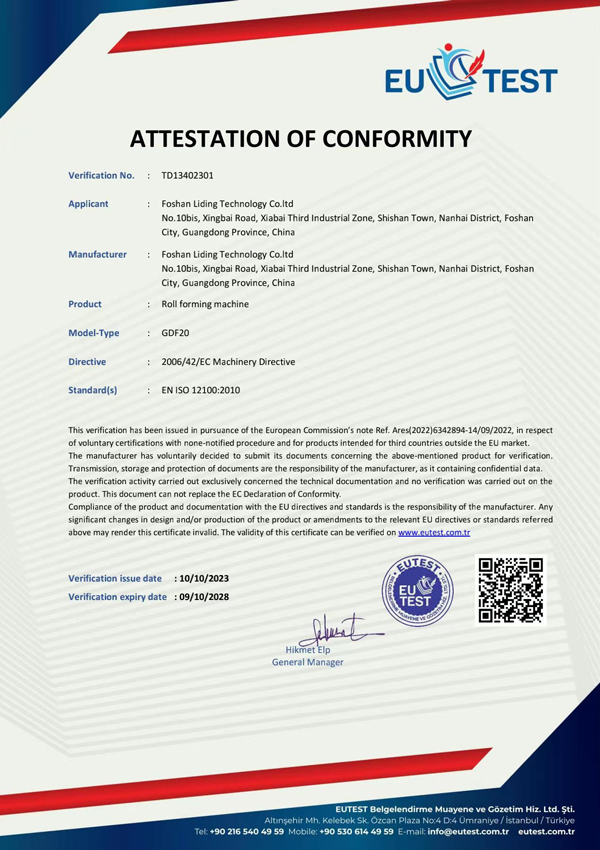
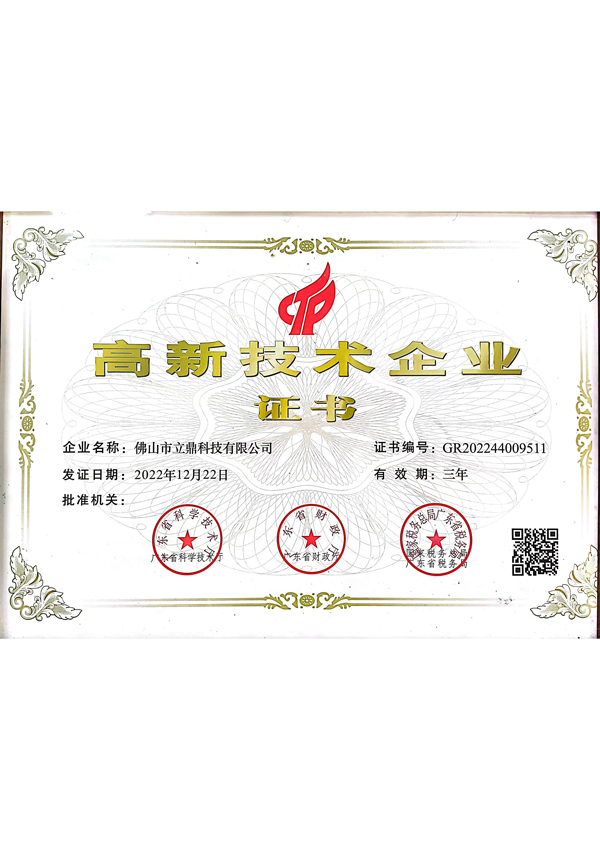
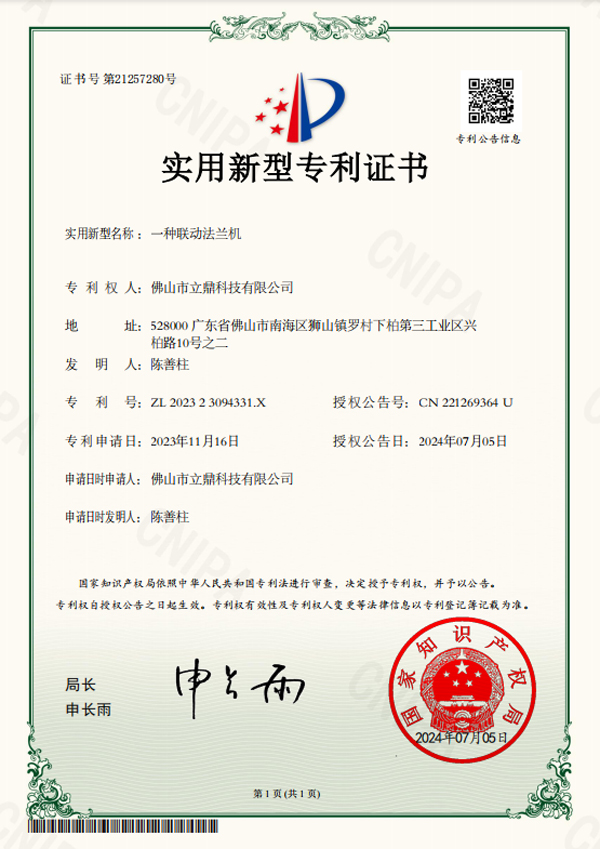
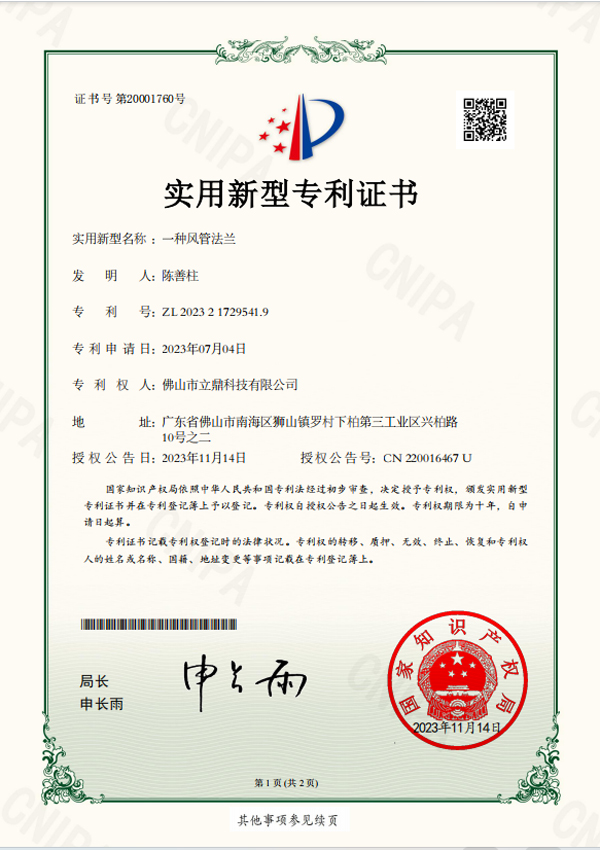
Quality certifications underpinning our marine and offshore roll forming machine reliability
Explore our full range of precision roll forming solutions for damper, duct, and structural applications