
Leave Your Message
Industry-leading cold forming equipment engineered for vertical industrial heavy pallet storage components — racking columns, beams, and shelving panels for multi-level logistics distribution warehouses.
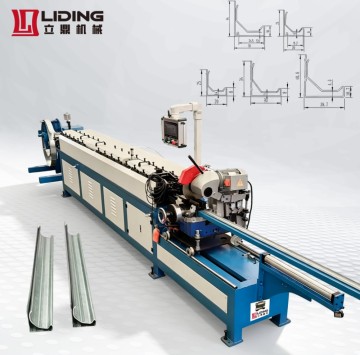 Warehouse Racking Column Cold Forming Machine | 16kw High-Efficiency for Heavy Pallet Storage Systems
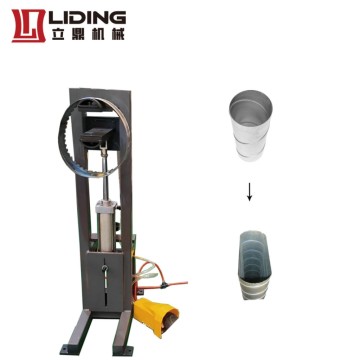 Portable Storage Beam Profile Forming Machine | No Power, 30s Fast Forming | φ100-300mm
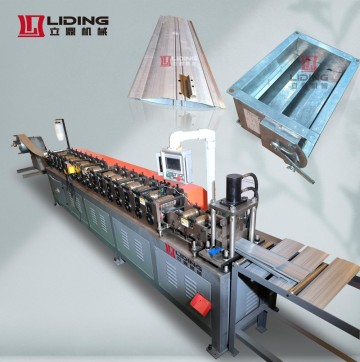 Turnkey Multi-level Pallet Rack Shelving Panel Production Line | 4-Machine Integrated Heavy Storage System
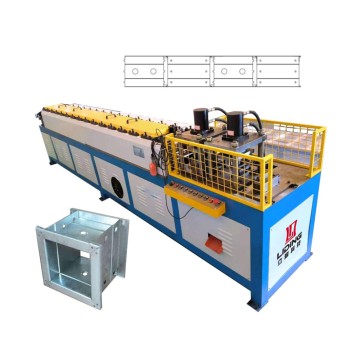 Liding LD-FD05 Vertical Warehouse Upright Frame Roll Forming Machine
As global e-commerce volumes surge and urban logistics networks grow increasingly complex, the demand for vertical industrial heavy pallet storage systems within multi-level logistics distribution warehouses has reached unprecedented levels. At the heart of this transformation lies a critical manufacturing technology: cold forming machines. These precision-engineered systems are responsible for producing the structural steel components — uprights, beams, cross-braces, and shelving decks — that form the skeleton of every modern high-density warehouse racking solution.
The global warehouse racking market is projected to exceed USD 12 billion by 2028, with multi-level pallet storage systems accounting for over 40% of total demand. Cold forming technology is the manufacturing foundation that makes this growth possible — enabling high-strength, lightweight steel profiles at production speeds that no other process can match.
In the context of vertical industrial heavy pallet storage, cold forming machines have become indispensable for several compelling commercial and industrial reasons. Unlike hot rolling or casting, cold forming reshapes steel at room temperature through a series of precisely calibrated roll sets, producing structural profiles with superior dimensional accuracy, enhanced yield strength, and minimal material waste.
Major logistics operators — including third-party logistics (3PL) providers, e-commerce fulfillment giants, cold chain distributors, and automotive parts warehouses — now mandate that their racking suppliers use certified cold-formed steel components. This requirement stems from the need for consistent load-bearing performance across thousands of rack bays installed in multi-story distribution facilities that can span hundreds of thousands of square meters.
From a cost-efficiency standpoint, cold forming delivers a decisive advantage. A single high-speed cold forming production line can produce upright column profiles at rates exceeding 25 meters per minute, with material utilization rates above 98%. For a warehouse racking manufacturer supplying a large-scale logistics hub, this translates directly into lower per-unit costs, faster order fulfillment, and the ability to respond dynamically to project-specific profile specifications.
Modern cold forming machines for warehouse racking now incorporate servo motor drive systems with closed-loop feedback, enabling sub-millimeter dimensional control. Integration with MES (Manufacturing Execution Systems) and IoT sensors allows real-time monitoring of forming parameters, predictive maintenance alerts, and automated quality verification — critical for producing the high-tolerance upright columns required in multi-level VNA (Very Narrow Aisle) racking systems.
The shift toward higher-density vertical storage has driven demand for ultra-high-strength steel (UHSS) profiles with yield strengths of 550 MPa and above. Next-generation cold forming machines are engineered with reinforced roll tooling, advanced pre-straightening units, and precision-controlled springback compensation systems to accurately form these advanced materials into the complex cross-sections demanded by heavy pallet rack uprights.
Warehouse racking manufacturers increasingly need to produce multiple profile types — from 80×80mm uprights to 140×50mm beams and perforated decking panels — on a single production line. The latest cold forming machines feature modular quick-change roll cassette systems that reduce profile changeover time from hours to under 20 minutes, dramatically improving production flexibility and reducing idle time between orders.
Sustainability mandates from major logistics operators are pushing cold forming machine manufacturers to develop energy-recovery systems, regenerative drive technologies, and optimized forming sequences that reduce power consumption by up to 30% compared to previous-generation equipment. Cold forming's inherently low-waste, room-temperature process already gives it a significant carbon footprint advantage over competing manufacturing methods.
Advanced FEA (Finite Element Analysis) simulation tools now allow cold forming engineers to digitally validate new racking profile designs before any physical tooling is manufactured. This capability is transforming the product development cycle for warehouse equipment manufacturers, reducing tooling development time by up to 60% and enabling rapid customization for project-specific load requirements.
As logistics networks expand into emerging markets across Southeast Asia, the Middle East, and Eastern Europe, local warehouse racking manufacturers are investing in cold forming production lines to reduce dependence on imported components. This trend is creating strong demand for turnkey cold forming solutions that include profile design, tooling engineering, machine commissioning, and ongoing technical support.
Understanding the specific structural components and performance requirements of each warehouse storage application reveals why cold forming machine capability is the defining factor in racking system quality.
Selective pallet racking remains the most widely deployed storage system in distribution warehouses globally. Cold forming machines produce the perforated upright columns — typically in C, Z, or box-section profiles — that define the load capacity and bay spacing of SPR systems. For multi-level installations reaching 12+ meters in height, precise dimensional consistency across thousands of column meters is non-negotiable. Liding's cold forming lines achieve ±0.5mm profile tolerance with integrated online punch units that create the characteristic connector holes at exact pitch intervals.
Drive-in racking systems, designed for high-density FIFO/LIFO pallet storage without individual aisle access, require cold-formed rail profiles with exceptional straightness and surface finish. The cold forming process produces the guide rails and support arms with the tight geometric tolerances needed to ensure reliable forklift navigation and pallet stability across the full depth of the storage lane — often extending 10 or more pallets deep.
AS/RS installations represent the highest-precision application for cold-formed racking components. Stacker crane guide rails, unit-load rack uprights, and aisle end frames must meet extremely tight tolerances — often ±0.2mm or better — to ensure reliable automated crane operation at speeds exceeding 3 m/s. Cold forming machines with servo-controlled roll positioning and real-time laser measurement systems are the only practical means of achieving this consistency at production scale.
Refrigerated and frozen distribution warehouses present unique challenges for racking structures: thermal cycling, moisture exposure, and the need for galvanized or coated profiles to resist corrosion. Cold forming machines process pre-galvanized steel coil to produce racking components that maintain their dimensional integrity across wide temperature ranges. The cold forming process preserves the zinc coating integrity far better than hot-working alternatives, making it the preferred production method for cold chain racking.
Warehouse mezzanine systems — which effectively double or triple usable floor area within existing building envelopes — rely on cold-formed structural members for both the primary framing and the decking panels. Cold forming machines produce the open-grid flooring panels, stair stringers, and secondary beam sections that make mezzanine systems both structurally sound and cost-effective. The ability to produce custom-width and custom-depth profiles on demand is a key advantage for mezzanine system fabricators.
Cantilever racking systems, used for storing pipes, timber, furniture, and other long or irregularly shaped items, require cold-formed column sections and arm profiles with specific stiffness characteristics. The cold forming process allows manufacturers to engineer custom cross-sections that optimize the strength-to-weight ratio for each arm length and load rating, enabling cantilever systems to be designed for specific load cases without material over-engineering.
Our cold forming machines power warehouse racking production lines across 50+ countries.
The quality of cold-formed racking profiles is fundamentally determined by the precision of the roll tooling design and manufacturing. Liding's engineering team employs advanced CAD/CAM systems and CNC-ground roll sets manufactured to H6/h5 tolerance standards, ensuring consistent profile geometry across the full production life of the tooling — typically 500,000+ meters of formed product before reconditioning is required.
A complete cold forming production line for warehouse racking components typically comprises: decoiler (hydraulic or motorized, 5–10 ton coil capacity) → straightening unit (7–11 rolls) → servo feeding system → pre-punching/notching unit → roll forming station (12–24 forming passes depending on profile complexity) → post-forming punching unit → servo flying cutoff or hydraulic guillotine shear → runout conveyor with stacking system. Liding engineers each line as an integrated system, optimizing the interaction between components to achieve maximum throughput and minimum setup time.
For a warehouse racking manufacturer producing 500 tons of steel profiles per month, investment in a modern cold forming production line typically delivers full ROI within 18–30 months. The key value drivers include: elimination of outsourced profile procurement (typically 15–25% cost premium over in-house production), scrap rate reduction from 3–5% to below 1%, reduced labor costs through automation, and the ability to offer shorter lead times and custom profile specifications — both powerful competitive differentiators in the project-based warehouse racking market.
Furthermore, the flexibility of modern cold forming lines allows racking manufacturers to enter adjacent markets — light steel framing, seismic bracket production, HVAC ductwork components — maximizing machine utilization and revenue per production hour. This cross-market capability is a defining feature of Liding's cold forming solutions, which are engineered from the outset for multi-product versatility.
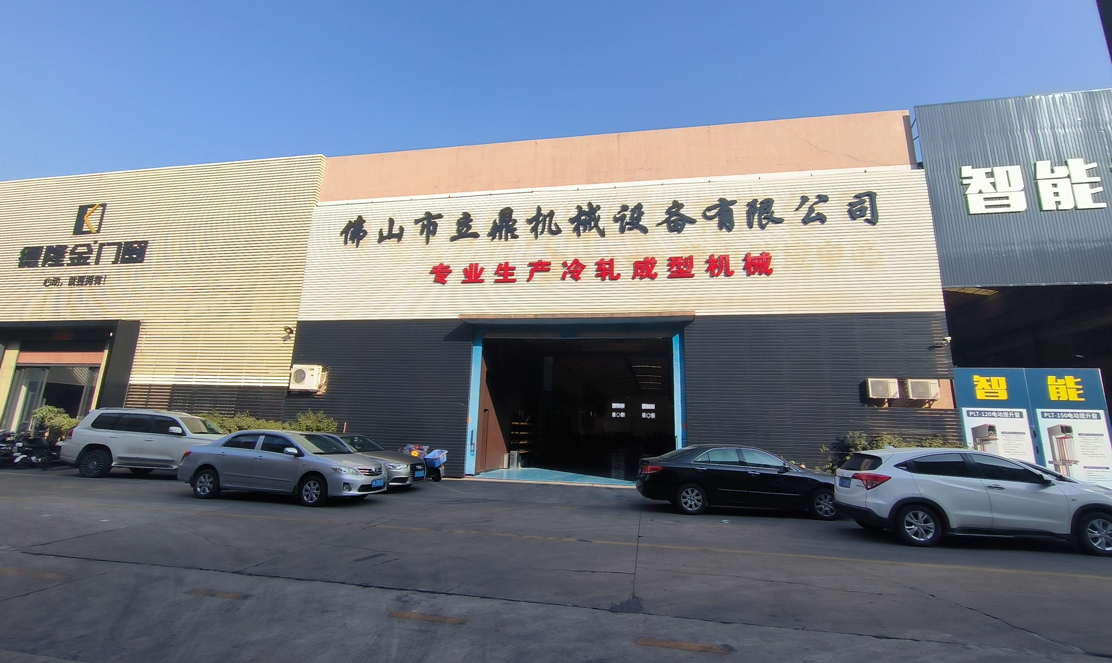
Foshan Liding Machinery Equipment Co., Ltd. was established in 2014, with a core technical team boasting over 25 years of experience in the cold-forming industry. We are a specialist manufacturer of metal roll forming equipment, dedicated to providing efficient, precise, and reliable customized production line solutions for global HVAC systems, building structures, and storage equipment sectors.
We are not merely a machine supplier — we are your strategic partner in product innovation and production efficiency enhancement. Our engineering approach begins with your end product requirements: load ratings, profile geometry, material specifications, and production volume targets all inform the design of your customized cold forming line.
25 years of experience in cold bending forming, with a research and development team of over 10 engineers dedicated to advancing cold forming technology for warehouse and industrial applications.
Anti-seismic bracket patented technology, safe and reliable. Our intellectual property portfolio reflects decades of innovation in structural cold forming for high-load storage environments.
Customized on demand — a full-line solution from blueprint to mass production. Every cold forming line is engineered to your specific racking profile requirements and production volume targets.
Quick changeover, versatile for one machine. Our modular roll cassette systems enable rapid profile switching — from upright columns to beam sections to decking panels — on a single production line.
Our cold forming machines and manufacturing processes are certified to international quality standards, ensuring reliable performance for global warehouse racking production customers.
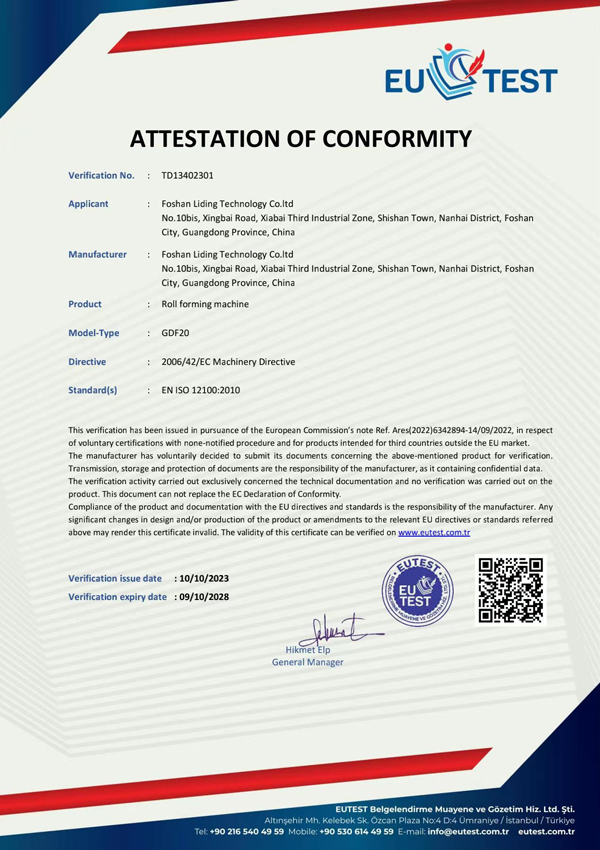
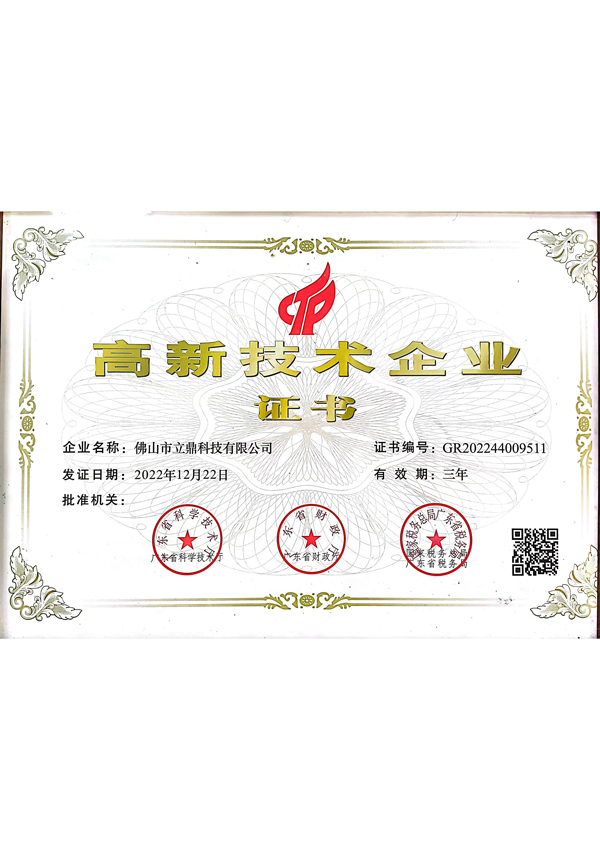
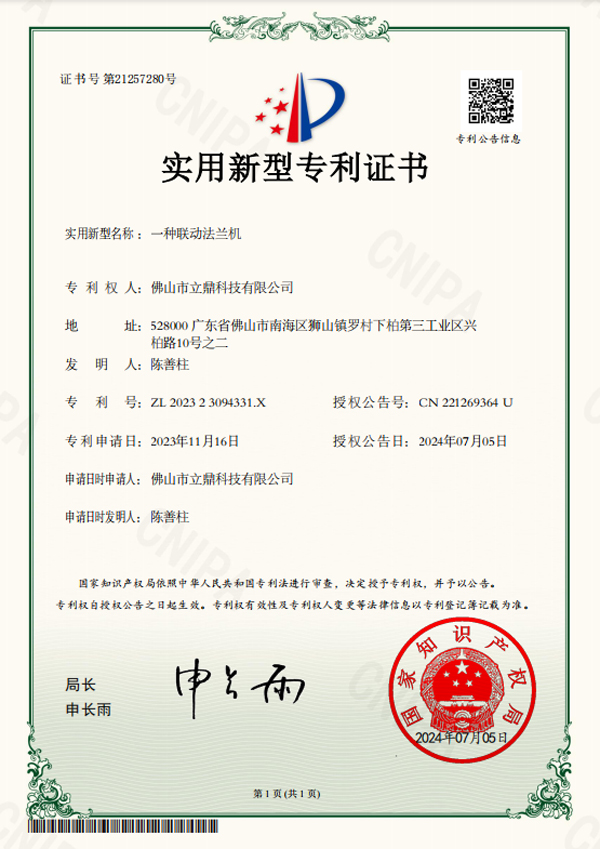
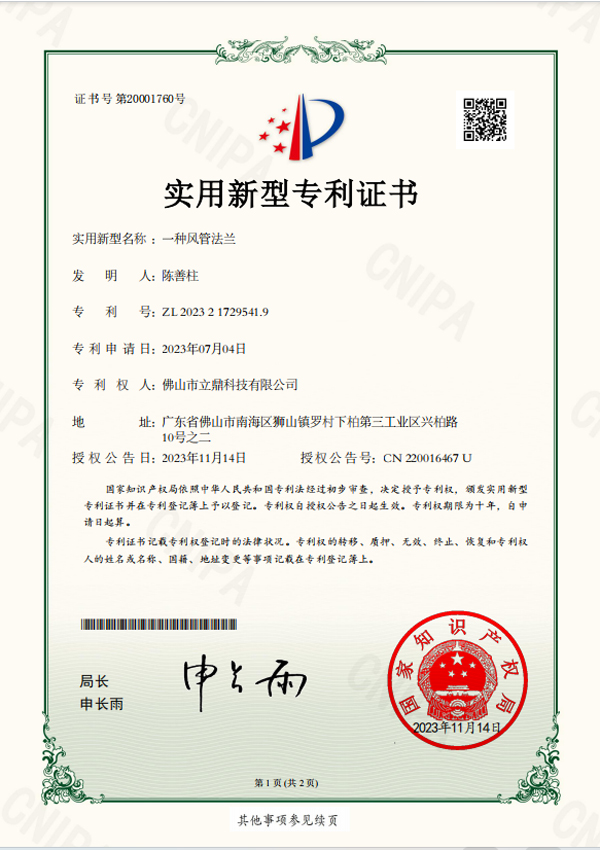
Explore our complete range of cold forming machines — engineered for warehouse storage racking, HVAC systems, building structures, and industrial component production.
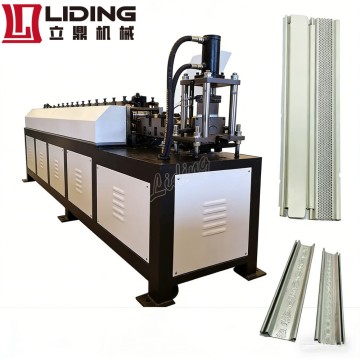 Warehouse Rolling Shutter Door Slat Cold Forming Machine — Liding LD-R02
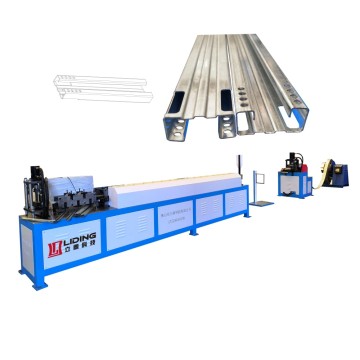 Warehouse Storage Upright Column & Steel Keel Forming Machine — Multi-Function Punching
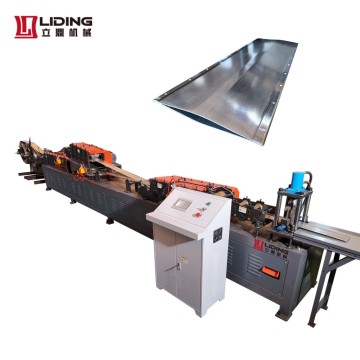 LiDing Auto Galvanized Steel Warehouse Panel Roll Forming Machine | Heavy Pallet Storage Deck Maker
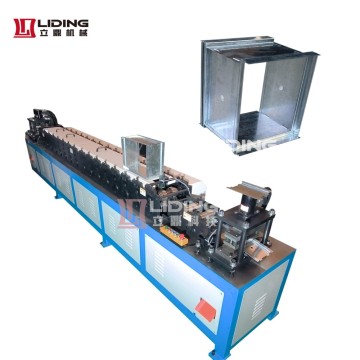 Heavy Duty Storage Frame Roll Forming Machine | 30mm Thick Side Plate Automatic Production Line
Liding Hot Sale Spiral Round Duct Forming Machine | 16kw Total Power for HVAC Systems
Portable Manual Round Duct Forming Machine | No Power, 30s Fast Forming | φ100-300mm
Turnkey Dual-Strip Hollow Damper Blade Production Line | 4-Machine Integrated HVAC VCD Louver Blade Making System
Liding LD-FD05 Fire Damper Frame Roll Forming Machine