Leave Your Message
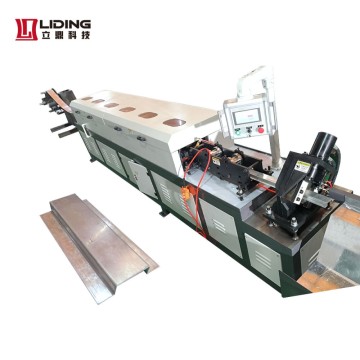
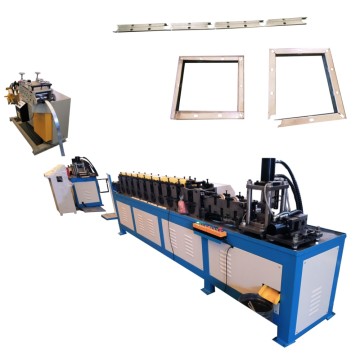
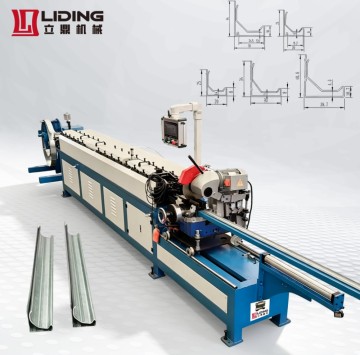
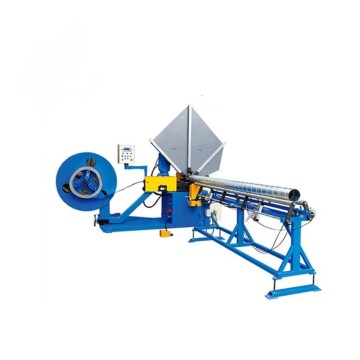
Explore our precision cold forming equipment designed for roof framing profiles, wall cladding support channels, and structural barn components.
The global agricultural building sector is undergoing a structural transformation — cold forming machines are at the heart of it.
Modern agricultural barns are no longer simple timber sheds. Today's large-scale livestock facilities, grain storage warehouses, greenhouse complexes, and multi-bay equipment halls demand structural systems that combine high load-bearing capacity, rapid erection speed, and long-term corrosion resistance. Cold forming machines have become the industrial backbone of this evolution.
Cold forming — also referred to as roll forming — is a continuous bending process in which a long strip of sheet metal (typically galvanized steel or high-strength steel coil) is progressively shaped by a series of roller dies into a desired cross-sectional profile without applying heat. This process produces structural components such as C-purlins, Z-purlins, hat channels, omega profiles, U-channels, and custom cladding support rails — all essential for agricultural barn roof framing and wall cladding systems.
📌 Key Insight: According to industry analysis, the global light gauge steel framing market — which relies heavily on cold forming technology — is projected to exceed USD 42 billion by 2030, with agricultural construction representing one of the fastest-growing application segments, driven by the global expansion of intensive farming and agri-industrial infrastructure.
Cold formed steel sections offer a superior strength-to-weight ratio compared to hot-rolled equivalents, enabling barn structures to span wider bays, resist wind and snow loads more efficiently, and be assembled with far less on-site labor. The dimensional precision delivered by modern CNC-controlled roll forming lines ensures that every purlin, bracket, and cladding rail fits perfectly — reducing waste and installation time dramatically.
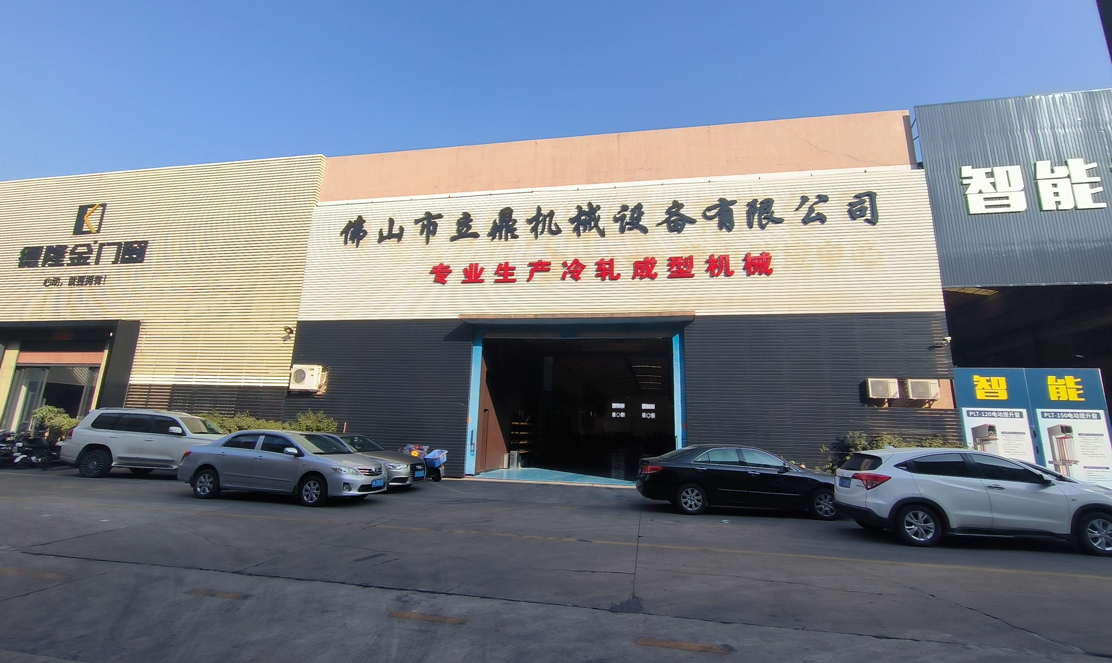
Trusted by agricultural construction companies, steel building manufacturers, and barn builders across 50+ countries worldwide.
From roof purlins to wall cladding rails — cold formed profiles serve every structural layer of a modern agricultural barn.
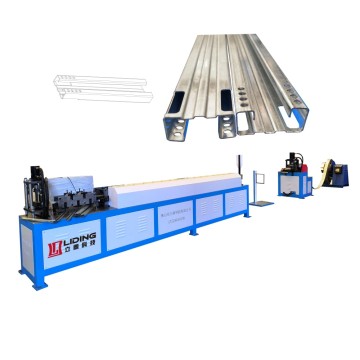
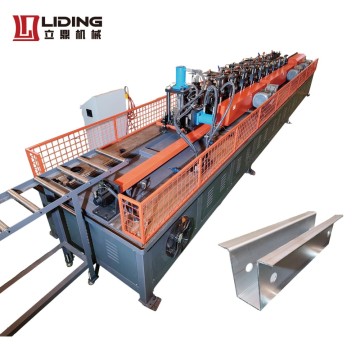
C-purlins and Z-purlins produced by roll forming machines form the primary secondary structural members supporting roof sheeting in agricultural barns. Cold formed purlins can span up to 12 meters between primary rafters, providing exceptional load distribution for heavy snow regions and large livestock facilities. CNC-controlled punching stations integrated into the forming line pre-punch bolt holes at precise intervals, eliminating on-site drilling and accelerating erection.
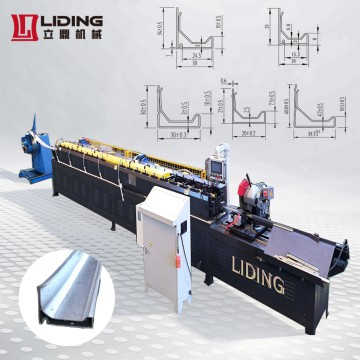
Horizontal girts and cladding support rails cold formed from galvanized steel coil provide the mounting framework for insulated wall panels, corrugated steel sheets, and composite cladding systems. Hat channels and omega profiles produced by Liding's changeable roll forming machines allow barn builders to switch between multiple profile sizes on a single machine — dramatically reducing tooling investment for contractors supplying multiple barn specifications.
Large-span grain storage facilities require cold formed steel sections with higher yield strengths (typically S350 or S550 grade) to handle grain pressure loads on wall panels. Roll forming machines configured for heavy-gauge coil (up to 3.0mm thickness) produce the robust structural uprights, horizontal ties, and corner reinforcement profiles that ensure grain barn walls remain plumb and structurally sound under full load conditions.
Modern intensive livestock buildings require sophisticated natural and mechanical ventilation systems. Cold formed steel framing components — including ridge vent support frames, sidewall ventilation aperture surrounds, and fan housing mounting brackets — are all produced efficiently on roll forming lines. The consistent dimensional accuracy of cold formed sections ensures airtight integration with ventilation equipment, critical for animal welfare compliance in commercial poultry, swine, and dairy facilities.
Agri-photovoltaic (agri-PV) installations are rapidly expanding, with agricultural barn roofs becoming prime real estate for solar energy generation. Cold formed aluminum and steel mounting rails produced by roll forming machines provide the structural substrate for solar panel arrays. The ability to rapidly produce custom-length rail profiles on-demand makes roll forming the preferred manufacturing method for solar mounting system fabricators serving the agricultural sector.
The prefabricated steel building industry — which supplies complete barn kits to agricultural clients globally — relies entirely on roll forming production lines for the manufacturing of structural components. A single integrated cold forming line can produce the full range of profiles required for a standard barn kit: columns, rafters, purlins, girts, flashing profiles, and trim sections — all cut to length, pre-punched, and bundled for flat-pack delivery to site.
Industry-shaping forces driving the next decade of cold forming machine technology and agricultural building innovation.
Modern roll forming lines are increasingly equipped with servo-driven punching systems, automatic coil feeding, and PLC-controlled length measurement — enabling unmanned production runs for high-volume barn component manufacturing. Integration with ERP and MES systems allows real-time production monitoring, predictive maintenance alerts, and digital quality traceability — critical for barn builders operating multiple prefabrication facilities.
The adoption of ultra-high-strength steel (UHSS) grades above S550 in agricultural barn construction is growing rapidly, driven by the need to reduce material consumption while maintaining structural performance. Next-generation roll forming machines are being engineered with hardened roller materials, reinforced machine frames, and enhanced drive systems capable of processing these demanding materials without profile distortion or excessive roller wear.
Agricultural building contractors increasingly demand flexibility — the ability to produce C150, C200, Z200, and Z250 purlins from a single machine without lengthy tooling changeovers. Liding's modular quick-changeover roll forming systems allow profile switching in under 30 minutes, enabling barn component manufacturers to respond rapidly to diverse project specifications and minimize machine downtime between production runs.
Cold forming is inherently a low-energy, zero-waste manufacturing process — no material is removed, only reshaped. As agricultural building projects increasingly target green building certifications and carbon footprint reduction targets, the sustainability credentials of cold formed steel components (100% recyclable, produced with minimal energy input) are becoming a significant commercial advantage for barn builders and steel building suppliers.
Building Information Modelling (BIM) is transforming agricultural construction project delivery. Cold forming machine manufacturers are developing direct interfaces between BIM design software and roll forming line control systems — enabling automatic generation of production programs from 3D structural models. This BIM-to-machine workflow eliminates manual data re-entry, reduces profile cutting errors, and accelerates the delivery of prefabricated barn components from design approval to factory output.
The rapid modernization of agricultural infrastructure across Southeast Asia, Sub-Saharan Africa, and South Asia is generating enormous demand for affordable, locally manufactured cold formed steel barn components. Roll forming machines — particularly compact, cost-effective models suited to developing market conditions — are being deployed by local steel fabricators to supply the booming demand for modern poultry houses, dairy barns, and grain storage facilities in these high-growth regions.
Four pillars of excellence that make Liding Machinery the preferred cold forming partner for agricultural construction worldwide.
25+ years of cold bending forming expertise with a dedicated R&D team of over 10 engineers specializing in agricultural structural profiles, purlin systems, and cladding support solutions.
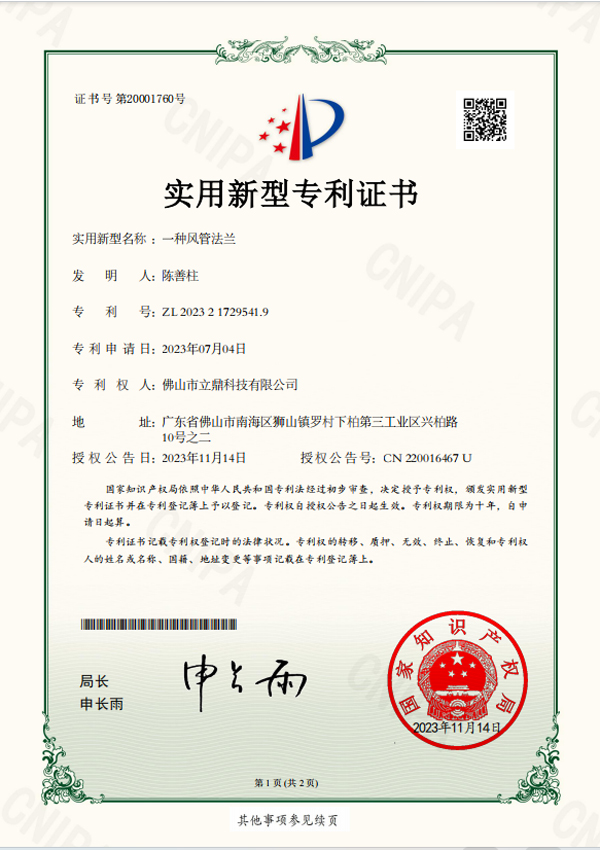
Anti-seismic bracket patented technology — safe, reliable, and engineered for structural integrity in agricultural environments subject to wind, snow, and dynamic livestock loading conditions.
You provide drawings or samples — we deliver a complete production solution. From blueprint to mass production, every forming line is engineered to your specific barn profile requirements and production volume targets.
Global technical support with a 48-hour response commitment. Our dedicated after-sales team provides remote diagnostics, spare parts supply, and on-site commissioning support for agricultural forming line installations worldwide.
Foshan Liding Machinery Equipment Co., Ltd. was established in 2014, with a core technical team boasting over 25 years of experience in the cold-forming industry. We are a specialist manufacturer of metal roll forming equipment, dedicated to providing efficient, precise, and reliable customized production line solutions for global HVAC systems, building structures, and storage equipment sectors.
We are not merely a machine supplier — we are your strategic partner in product innovation and production efficiency enhancement. Our engineering team works directly with agricultural building manufacturers, prefabricated barn suppliers, and steel structure fabricators to design forming lines that optimize profile quality, minimize material waste, and maximize production throughput.
Liding Machinery's cold forming equipment meets international quality and safety standards — ensuring compliance for agricultural construction clients worldwide.
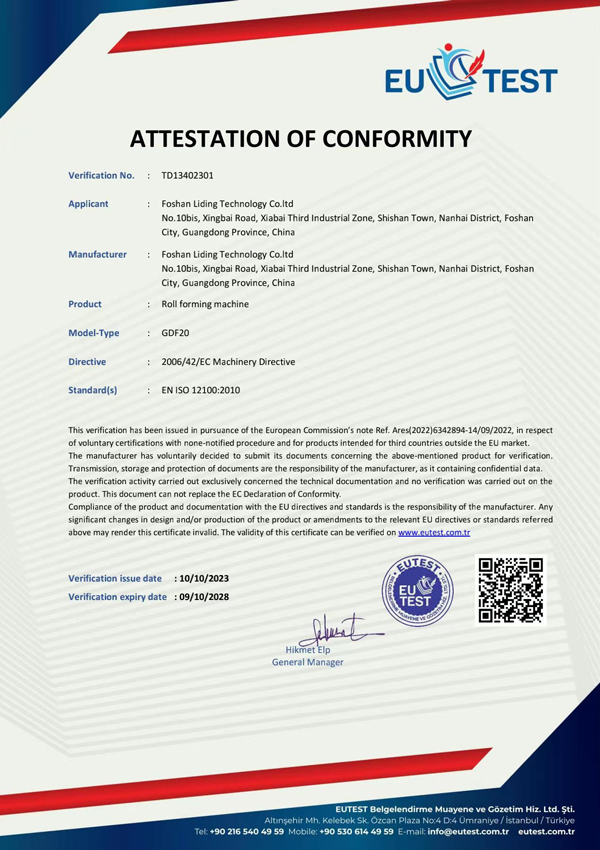
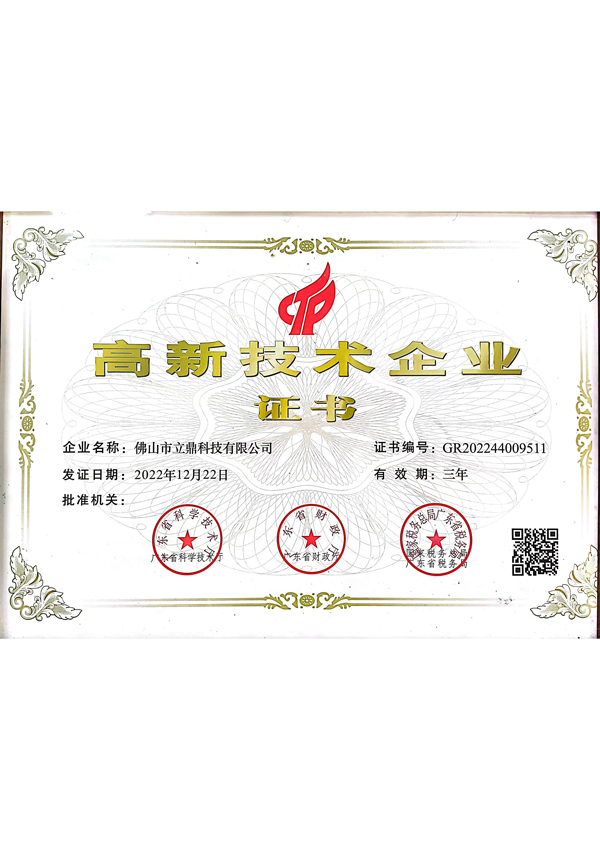
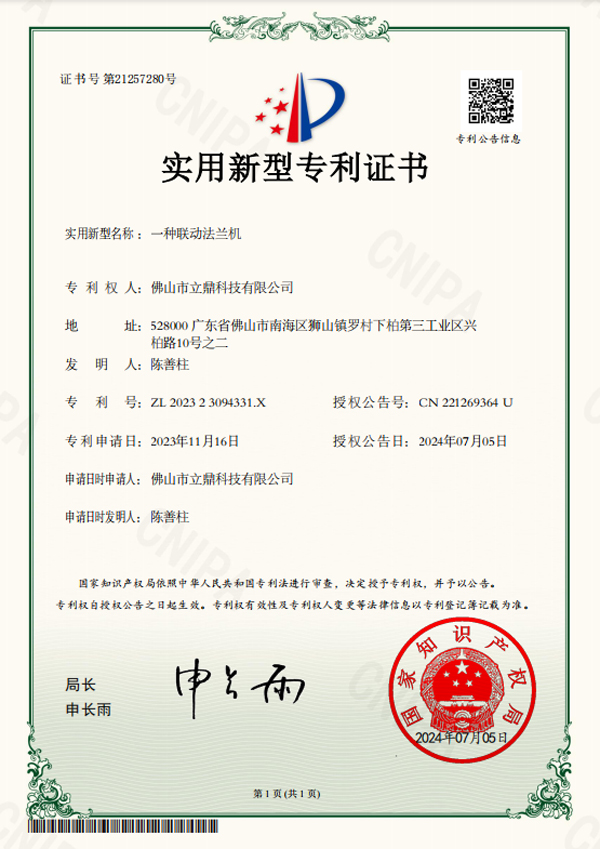
Contact Liding Machinery today for a customized cold forming solution tailored to your structural roof framing and wall cladding support requirements. Our engineers are ready to respond within 48 hours.
Request a Custom Solution →Complete range of Liding roll forming equipment for roof framing profiles, wall cladding support channels, and barn ventilation systems.