- Home
- About Us
- Products
- Solution
- Application
- News
- FAQ
- Contact Us
Leave Your Message
Thinking about getting a Duct Cutting Machine for your shop? Honestly, it might just be a game changer for your HVAC team’s daily workflow. Instead of the old-school way—measuring, marking, cutting by hand—your crew can set digital dimensions and be much more consistent. You really notice the difference, especially when things get busy. Edges come out cleaner, material waste is way easier to track, and you might even see a drop in rework. So yeah, it can make a real difference.
Now, Mark Ellison, an HVAC fabrication consultant, put it nicely when he said, “Precision is only valuable if it actually makes the whole process better.” That’s something you gotta keep in mind. Just buying a fancy-looking machine because it has cool tech? Not the best move. It needs to fit your specific duct sizes, the materials you work with, your software setup, your space, and how much you’re producing. A solid duct cutting machine can help you get quicker quotes, produce consistent parts, and keep your schedule on track. Plus, it can help ease the physical strain on your team during long days.
But hey, you gotta be careful with your choice. A cheap machine might seem like a deal but could end up costing you more down the line—through weak software, tricky maintenance, or poor support. Training’s a big deal too. And don’t forget about calibration—dusty tables, dull blades, or wrong settings can mess up your accuracy fast. It’s smart to ask suppliers like CutTech Systems or AirForm Automation for some test samples, info on after-sales support, and realistic production numbers. Trusting flashy claims alone isn’t the way to go.
At the end of the day, it’s all about the little details. Do a thorough review—balance the labor savings against the initial cost, energy bills, upkeep, and staff time. Keep in mind, what works for one shop might not fit another—that’s the not-so-great part. Some shops really need to jump into automation right away, while others might benefit more from tweaking their layouts and investing in training first. Remember, a duct cutting machine is just a tool. Its actual value depends on how you use it, the support you get, and honestly measuring its performance after you’ve set it up.
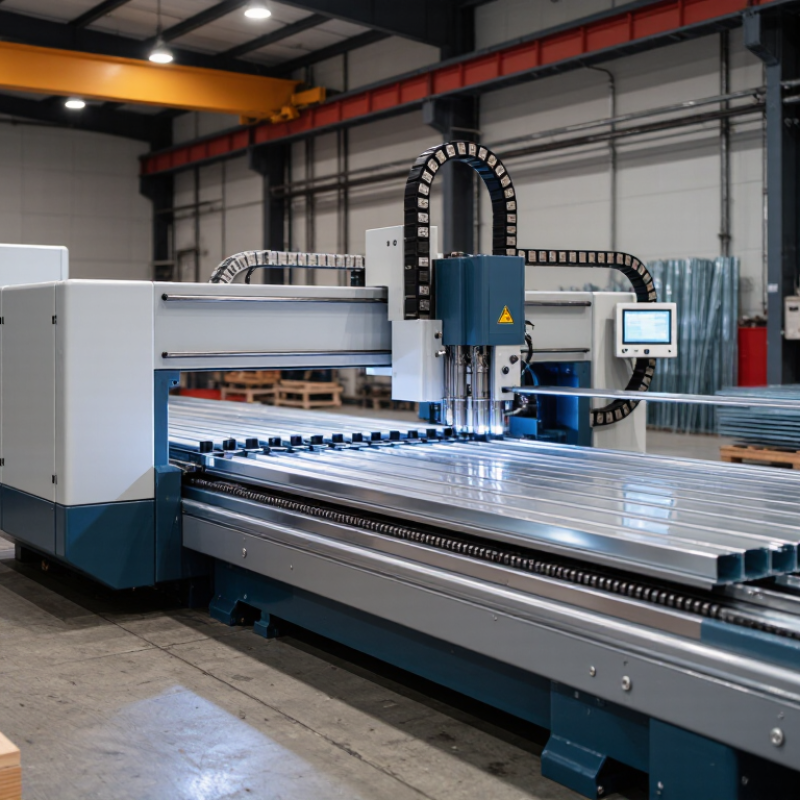
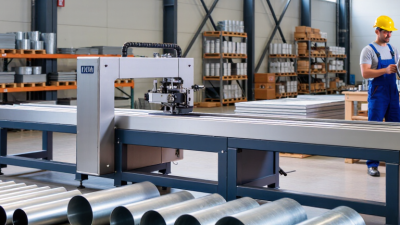
A duct cutting machine is industrial equipment designed to cut sheet metal, insulation, or composite duct panels into accurate shapes. It follows programmed measurements, drawings, or digital cutting files. Unlike manual snips, it can produce repeated openings, corners, and panel sections with consistent dimensions.
In practical workshops, operators place a flat panel on a cutting table and secure its edges. The machine then uses a blade, router, or controlled cutting tool to follow the selected path. Clean edges matter. Poorly cut panels may create gaps, weak joints, or extra sealing work during installation. Some systems also mark fold lines and connection points, reducing measuring errors.
The equipment can improve production speed, especially when projects contain many identical duct sections. It also helps limit material waste by arranging shapes closely on the panel. However, it is not completely automatic. Dust, worn blades, incorrect drawings, and uneven materials can still affect results. A trained operator must inspect settings and verify the first cut.
Small details matter.
From an experienced production perspective, regular calibration is essential. Operators should check dimensions with a tape measure, confirm ventilation, and use suitable protective equipment. A duct cutting machine is therefore more than a fast cutter. It is a controlled production tool that connects design accuracy with hands-on fabrication.
| Business and Technical Dimension | What a Duct Cutting Machine Typically Provides | Why It Matters to Your Business |
|---|---|---|
| Definition | A computer-controlled machine that cuts duct panels or sheet-metal components according to digital drawings, programmed patterns, or nesting layouts. | It converts design information into repeatable production steps and reduces dependence on manual marking and cutting. |
| Common Materials | Galvanized steel, stainless steel, aluminum, and duct-board materials, depending on the machine configuration and cutting tool. | One suitable machine can support multiple HVAC, ventilation, insulation, and air-distribution product lines. |
| Typical Sheet-Metal Thickness | Many HVAC duct applications use light-gauge sheet metal, commonly around 0.5–1.5 mm; the permitted range is machine- and tool-dependent. | Confirm the cutting head, tooling, and maximum material thickness before purchasing to avoid production limitations. |
| Cutting Method | Depending on the model, cutting may use a rotary tool, blade, milling cutter, plasma system, or another dedicated cutting head. | The cutting method affects edge quality, noise, heat input, consumables, material compatibility, and operating cost. |
| Digital File Compatibility | Production commonly starts with CAD or CAM data and may use formats such as DXF, depending on the control software. | Digital file transfer reduces transcription errors and helps connect design, estimating, nesting, and shop-floor operations. |
| Production Repeatability | The same programmed pattern can be reproduced with consistent dimensions when material setup, tooling, and machine calibration are controlled. | Repeatability supports standardized fittings, easier assembly, fewer reworked parts, and more predictable project scheduling. |
| Material Utilization | Nesting software can arrange multiple components on a sheet to reduce unused areas; actual savings depend on part geometry and layout. | Better nesting can reduce scrap purchases and improve the amount of sellable product obtained from each sheet. |
| Labor Requirements | Operators still load material, verify the program, monitor cutting, remove parts, and perform quality checks, but manual layout work is reduced. | The machine reallocates labor from repetitive marking and cutting toward setup, inspection, finishing, and production control. |
| Dimensional Accuracy | Accuracy depends on machine construction, cutting technology, material flatness, software settings, and calibration; the specified tolerance should be checked for each model. | Stable dimensions help improve joint fit, reduce adjustment time, and support reliable installation on site. |
| Production Flexibility | Digital programs can be changed for different duct sizes, transitions, elbows, flanges, access panels, and custom fittings without creating a new physical template. | Short-run and customized orders become easier to schedule without maintaining a large inventory of manual patterns. |
| Lead-Time Impact | Automated cutting can shorten the preparation stage, especially when drawings, material, and programs are ready; total lead time still includes forming, assembly, and inspection. | Faster preparation can improve order throughput and help businesses respond to project deadlines more consistently. |
| Quality Control | Recommended controls include verifying the digital drawing, checking the first cut, measuring critical dimensions, inspecting edges, and confirming material thickness. | A defined inspection process prevents software, setup, or material errors from being repeated across a full batch. |
| Safety Considerations | Operators need machine-specific training, guarding, suitable personal protective equipment, proper ventilation where required, and safe handling procedures for sharp sheet metal. | Safety controls reduce exposure to moving tools, sharp edges, noise, dust, fumes, and electrical or mechanical hazards. |
| Maintenance Requirements | Routine tasks may include cleaning, checking belts or guides, inspecting tooling, removing debris, lubricating specified components, and verifying calibration. | Preventive maintenance helps protect cut quality, reduce unexpected downtime, and extend the useful life of the equipment. |
| Best-Fit Business Profile | Most suitable for duct manufacturers, HVAC fabrication shops, contractors with recurring fabrication work, and businesses producing varied or custom components. | The investment is easier to justify when order volume, product variety, labor costs, scrap, or delivery pressure make manual cutting restrictive. |
The ceiling panel market is moving toward practical, flexible, and visually consistent solutions for both residential and commercial interiors. V-type ceiling and wall panels are increasingly valued for their clean geometric appearance, dimensional texture, and ability to support modern acoustic and decorative concepts. However, relying on distant suppliers for custom panels can lead to high purchasing costs, extended delivery schedules, transport damage, and variations in finish. These challenges can affect project efficiency, especially when contractors need different panel lengths or small quantities on short notice.
A dedicated V-type ceiling and wall panel roll forming machine allows interior contractors to manufacture panels directly in their own workshop. The equipment forms raw coils into accurately shaped profiles with stable dimensions and a consistent surface finish, helping reduce material waste and dependence on external orders. Production can be adjusted for small residential installations, renovation work, or large commercial projects, while on-demand manufacturing supports faster responses to changing design requirements. With streamlined operation and repeatable forming performance, contractors can maintain tighter quality control, improve scheduling, and provide customized ceiling and wall solutions without waiting weeks for overseas deliveries.
It is industrial equipment for cutting sheet metal, insulation, or composite duct panels. It follows measurements, drawings, or digital files.
An operator places a flat panel on a cutting table and secures its edges. A blade, router, or controlled tool follows the selected path.
Yes. Guided movement keeps openings, corners, seams, and panel sections closer to programmed dimensions. Small errors spread.
It creates repeated duct components within minutes. Digital layouts can place more shapes on each sheet, reducing marking time and material waste.
No. Operators must check drawings, settings, tool condition, and material thickness. Machines do not notice every mistake.
Confirm the material type, sheet thickness, reference measurements, ventilation, and protective equipment. A short calibration check can reveal drifting sensors or loose guides.
The first piece exposes setup problems early. Measure its dimensions, inspect the edge, and compare connection points with the drawing.
Uneven edges may create gaps, weak joints, distorted corners, or extra sealing work. Repeated errors can delay installation.
Calibration should be part of regular production checks. The exact interval depends on usage, materials, and machine condition.
Not always. A rushed setup may produce many identical errors before inspection catches them. That pause matters.
A Duct Cutting Machine is specialized equipment designed to cut and shape ductwork materials with greater speed, consistency, and control than manual tools. It typically uses programmed measurements, guided blades, or automated cutting systems to create accurate sections, openings, and fittings. Different models may be suitable for sheet metal, flexible duct materials, or various production volumes, allowing businesses to choose between manual-assisted, semi-automatic, and fully automated options.
For a business, investing in a Duct Cutting Machine can reduce material waste, shorten production time, and improve workplace efficiency. Precise cutting helps ensure better-fitting duct components, minimizes rework, and supports consistent product quality. Before choosing a machine, businesses should evaluate material compatibility, cutting capacity, automation level, operating speed, maintenance needs, safety features, available workspace, and overall cost. Selecting equipment that matches current workloads while allowing for future growth can provide lasting operational value.