Leave Your Message
0%

Choosing the right Ductwork Equipment suppliers around the world isn't just about comparing product catalogs or scoping out prices. It’s really about digging into real project results, verified testing, and making sure after-sales support is reliable. Remember, ductwork plays a big role—affecting airflow, indoor comfort, fire safety, how quickly things get installed, and even long-term energy bills. A small mistake in design can turn into a costly headache down the line.

According to the US Department of Energy, badly sealed or poorly insulated ducts can waste anywhere from 20% to 30% of the energy you spend on heating and cooling. They recommend sealing duct joints and, whenever possible, putting ductwork inside conditioned spaces—that way, you keep energy loss to a minimum. ASHRAE also stresses the importance of pressure control, proper insulation, leakage testing, and choosing hygienic materials. Meanwhile, standards from SMACNA give handy benchmarks for construction quality, sealing, reinforcement, and installation. Basically, all these sources give you a much stronger way to evaluate suppliers than just reading marketing fluff.

Building science expert Joseph Lstiburek often reminds us that “Ducts should be inside the pressure boundary and the thermal boundary.” This pretty much sums up what you should look for in suppliers like Lindab, Kingspan, and Nordfab. Good manufacturers should be transparent about leakage rates, material specs, fire ratings, sound data, and compliance docs. They should also have proven experience in projects involving hospitals, factories, data centers, or high-rises. When it comes to performance, trust me, it really matters.

That said, comparing suppliers isn’t always straightforward. Things like local standards, climate, labor skills, and project budgets can really influence what actually works best for you. You might come across companies that boast impressive lab figures but don’t have much real-world track record—that’s something to watch out for. So, when we assess the top global ductwork suppliers, I look at things like technical credibility, how practical their installation process is, documented project experience, and how transparent they are with customer support. All these bits really help you make a smarter, more informed choice.
Top Ductwork Equipment Suppliers Worldwide?

Ductwork Equipment: Definition, Scope, and Core Applications

Ductwork equipment covers the machines and tools used to design, fabricate, install, test, and maintain air distribution systems. The scope includes cutting tables, forming machines, seam closers, flange tools, lifting devices, and airflow measurement instruments. Gi Ductwork commonly refers to galvanized iron ductwork, valued for its practical strength and corrosion resistance in controlled environments.

A reliable supplier should support accurate drawings, suitable material gauges, tight joints, and clear maintenance records. On a fabrication floor, cutting accuracy affects every later connection. Small gaps matter. Poorly sealed seams can raise noise, energy use, and contamination risks. Technicians often inspect corners, access panels, flexible connections, and insulation before commissioning. Air must move. It must also move predictably.

Core applications include offices, hospitals, factories, warehouses, commercial kitchens, and cleanrooms. Each setting changes the equipment requirement. A hospital system may need precise filtration and pressure control. A kitchen system needs grease-resistant components and accessible cleaning points. Industrial ventilation may require stronger supports and dedicated exhaust paths. Equipment selection should consider airflow, temperature, humidity, available space, and local codes. In practice, specifications are not always complete. A drawing may show dimensions but omit service clearance. That oversight can make a well-built system difficult to repair. Suppliers with engineering support, inspection procedures, training, and traceable documentation are easier to evaluate. Yet paperwork alone proves little; delivered equipment must perform under measured operating conditions.

How to Evaluate Global Ductwork Equipment Suppliers

Top Ductwork Equipment Suppliers Worldwide?

How to Evaluate Global Ductwork Equipment Suppliers

Choosing a global ductwork equipment supplier requires more than comparing prices. Examine manufacturing experience, technical staff, and completed projects in similar climates. A supplier serving humid coastal sites may understand corrosion risks better than a general exporter. Ask for factory photographs, production records, and recent customer references. Details matter.

Review the equipment’s measurable performance. Check airflow capacity, pressure limits, dimensional tolerances, noise levels, and energy consumption. Request material certificates and independent test reports. Confirm that insulation, seals, motors, and control systems match your project requirements. A useful supplier explains limitations clearly. Overpromising is a warning sign.

Visit the facility when possible, or arrange a live video inspection. Observe sheet-metal storage, cutting accuracy, assembly areas, and final testing. Ask how rejected parts are recorded and corrected. This reveals more than a polished brochure. Also evaluate packaging, shipping protection, spare-part availability, and response times across time zones. One damaged flange can delay an entire installation.

Check compliance with applicable building, electrical, fire, and workplace standards in the destination market. Certificates should be traceable, current, and issued for the actual equipment model. Do not accept copied documents without verification. A sample order can expose weaknesses in labeling, documentation, and quality control before a large contract begins. It costs more initially. Sometimes, that is sensible. Supplier evaluation is not perfectly predictable, and even experienced buyers can overlook installation support or changing lead times. Reassess those risks before signing.

Leading Ductwork Equipment Suppliers by Region

Ductwork equipment suppliers vary widely by region, because climate, building codes, and manufacturing capacity shape every purchase. In North America, established suppliers often provide automated plasma cutters, spiral duct machines, and sealing equipment for commercial projects. Buyers usually expect clear documentation, dependable spare parts, and service technicians who understand local standards.

European suppliers commonly focus on energy efficiency, acoustic control, and precise fabrication. Their equipment may support advanced insulation systems and compact production lines for dense urban buildings. In Asia-Pacific, suppliers often compete through flexible configurations, high output, and shorter production schedules. However, lower prices can hide training gaps or inconsistent component quality. That assumption needs checking.

The Middle East and Africa require equipment that performs under heat, dust, and demanding logistics. Regional suppliers may offer reinforced machines, remote support, and practical maintenance packages. In Latin America, buyers often value adaptable systems that handle different duct sizes without costly retooling. Vcd Ductwork applications also require careful coordination between valves, controls, and airflow testing. Site experience matters here. A supplier should provide installation guidance, calibration records, and realistic delivery dates. Ask for test samples before approving large orders. One overlooked detail can delay an entire floor. Warranty language deserves close review, especially when service teams operate across borders. Supplier rankings can change quickly, so independent references and recent project evidence remain more useful than polished claims.

Top Ductwork Equipment Suppliers Worldwide? — Leading Ductwork Equipment Suppliers by Region

Regional supplier capacity is closely linked to the size of the construction, commercial real estate, and HVAC equipment markets. The chart below uses 2023 regional GDP as a transparent macroeconomic indicator of potential market scale, rather than ranking individual companies or brands.

Data source: World Bank World Development Indicators, 2023 current-price GDP by regional aggregate. Values are rounded to the nearest US$0.1 trillion.

Essential Products Offered by Ductwork Equipment Manufacturers

Ductwork equipment manufacturers supply the machines that shape, join, and test air distribution systems. Their core products often include plasma cutters, laser cutters, coil lines, and sheet metal bending machines. For rectangular ducts, lock-forming equipment creates Pittsburgh seams with consistent pressure. Spiral duct lines usually combine decoilers, forming rollers, and automatic cutting units. Precision matters here. A small misalignment can produce air leakage, vibration, or difficult installation.

Manufacturers also offer flange-forming machines, beading tools, corner insertion systems, and portable seam closers. These products support different duct sizes and materials, including galvanized steel, stainless steel, and aluminum. Experienced buyers should check working width, maximum thickness, production speed, and electrical requirements. A fast machine is not always the best machine. It may waste material when operators lack proper training. That is an easy detail to overlook.

Reliable suppliers provide operating manuals, safety guidance, spare parts, and technical assistance. They should explain maintenance intervals and provide realistic output figures. Factory demonstrations or sample cuts can reveal more than polished sales literature. Ask whether the equipment supports local electrical standards and accepted HVAC fabrication practices. I would also inspect adjustment points, guarding, noise levels, and access for cleaning. Some specifications look impressive, yet daily controls feel awkward. That weakness can reduce productivity over time. Small details matter.

Top Ductwork Equipment Suppliers Worldwide? - Essential Products Offered by Ductwork Equipment Manufacturers

Equipment Category Essential Product Typical Materials Typical Capacity or Specification Primary Application Common Standards or Requirements
Duct Fabrication Machinery Automatic duct forming line Galvanized steel, stainless steel, aluminum Commonly processes sheet metal from approximately 0.5 to 1.5 mm, depending on machine configuration High-volume rectangular HVAC duct production Automated production, dimensional accuracy, repeatable forming
Cutting Equipment Plasma or laser cutting machine Carbon steel, galvanized steel, stainless steel, aluminum Computer-controlled cutting of duct panels, fittings, and connection components Precise cutting of straight ducts and fittings CAD/CAM compatibility, reduced material waste, clean edge quality
Forming Equipment Power press brake Sheet steel and aluminum Used for controlled bending of duct panels, flanges, corners, and transitions Custom duct fittings and non-standard dimensions Programmable angle control, back-gauge positioning, repeatability
Lock-Forming Equipment Pittsburgh lock former Galvanized steel and stainless steel Forms longitudinal mechanical seams for rectangular duct sections Commercial and industrial rectangular ductwork Consistent seam geometry, secure mechanical joining, low rework
Flange Production TDF or TDC flange forming machine Galvanized steel and stainless steel Produces integral flange profiles for bolted or cleated duct connections Fast assembly of medium- and large-size duct sections Compatible with common transverse duct flange systems
Seaming Equipment Duct seamer and corner insertion tools Galvanized steel, stainless steel, aluminum Closes Pittsburgh seams and secures duct corners with consistent pressure Straight duct assembly and fitting fabrication Tight seams, smooth internal surfaces, reduced leakage risk
Rolling Equipment Slip roll or plate rolling machine Carbon steel, stainless steel, aluminum Forms cylindrical sections, elbows, reducers, and curved fittings Round ductwork and custom curved components Controlled radius, uniform curvature, adjustable roll gap
Spiral Duct Equipment Spiral duct forming machine Galvanized steel, stainless steel, aluminum Commonly produces round ducts in a broad range of diameters with helical seams Ventilation, air distribution, and industrial exhaust systems Consistent diameter, continuous seam formation, efficient material usage
Joining Equipment Spot welding or resistance welding machine Galvanized steel, stainless steel, mild steel Creates localized welds for brackets, supports, stiffeners, and fittings Metal duct reinforcement and component assembly Controlled weld current, repeatable joints, minimized distortion
Sealing Equipment Duct sealing machine and sealant applicator Metal ducts with approved duct sealants or gaskets Applies sealant to longitudinal seams, transverse joints, and access panels Low-leakage HVAC and process air systems Leakage control in accordance with project pressure class and testing requirements
Duct Cleaning Equipment Negative-air duct cleaning unit Metal ductwork, flexible ductwork, fiberglass-lined systems Uses vacuum collection, agitation tools, and filtration to remove deposited particles Commercial buildings, hospitals, industrial facilities HEPA-filtered exhaust options, containment, worker and occupant protection
Testing and Balancing Equipment Airflow measurement and duct leakage testing instruments Applicable to sheet-metal and non-metal duct systems Measures airflow, velocity, pressure, temperature, and leakage performance Commissioning, quality control, and system balancing Calibrated instruments, documented test procedures, project acceptance criteria
Flexible Duct Equipment Flexible duct cutting and connection tools Insulated flexible duct, polymer film, wire helix, fiberglass insulation Supports cutting, clamping, taping, and connection of flexible air ducts Branch connections and short air-distribution runs Proper support spacing, sealed connections, avoidance of excessive compression
Installation Accessories Duct flanges, cleats, hangers, access doors, dampers, and turning vanes Galvanized steel, stainless steel, aluminum, rubber, and polymer components Available in standardized and project-specific sizes Duct assembly, inspection, airflow control, and structural support Compatibility with duct dimensions, pressure class, fire rating, and access requirements

Supplier Comparison: Quality, Technology, Capacity, and Service

Choosing Top Ductwork Equipment Suppliers Worldwide requires more than comparing quotations. Air Ductwork quality begins with verified materials, leakage control, and dimensional accuracy. The U.S. Department of Energy reports that typical duct systems can lose 20–30% of conditioned air through leaks. That figure makes factory sealing tests commercially important, not cosmetic.

Technology should support measurable performance. Suppliers using automated forming, laser measurement, and digital production records usually provide more consistent joints. ASHRAE guidance also emphasizes correct insulation, pressure classification, and airflow testing. Ask for test certificates, tolerances, fire-performance documentation, and traceable inspection records. Marketing language is not evidence.

Capacity needs practical verification. The IEA’s Buildings 2023 report states that buildings consume about 30% of global final energy. Efficient duct systems therefore influence wider energy goals. A capable supplier should disclose monthly output, equipment availability, tooling limits, and contingency plans. Service matters just as much. Clear drawings, responsive engineering support, spare components, and installation training can prevent expensive site delays. Do not judge service only by response speed. Review previous project records and after-sales procedures. One weakness remains: published capacity may reflect ideal production, not peak-season reality. A factory visit or independent audit can reveal that difference.

Industry Standards, Certifications, and Purchasing Considerations

Top Ductwork Equipment Suppliers Worldwide?

Selecting a ductwork supplier requires more than comparing prices. The U.S. Department of Energy estimates that typical duct systems can lose 20–30% of conditioned air through leaks. That figure makes sealing performance a purchasing priority. For Home Ductwork, request tested leakage results, insulation values, and material thickness before approving a quotation.

Standards provide a practical filter. SMACNA’s HVAC Duct Construction Standards define reinforcement, pressure classes, and acceptable fabrication methods. UL 181 covers flexible air ducts and connectors, including fire and material performance. In Europe, EN 1507 and EN 12237 address rectangular and circular duct systems. These references should appear in the supplier’s technical documentation, not only in marketing language. Check factory quality systems, such as ISO 9001, but remember that certification does not guarantee every delivered component.

Look closely at details.

Ask for independent test reports, traceable batch records, and installation tolerances. ENERGY STAR guidance also stresses proper duct sealing and insulation, especially in unconditioned spaces. A reliable supplier should explain access panels, cleaning requirements, acoustic control, and replacement availability. On-site experience shows that a cheaper elbow can create turbulence, noise, and extra fan energy. I still find supplier comparisons imperfect because regional standards and testing methods differ. The safest decision combines documented compliance, sample inspection, lifecycle cost, and a realistic installation review.

HVAC Ductwork Market Insights: 16kW Spiral Round Duct Forming for Leak-Free Production—Grand View Research, 2024

The HVAC ductwork market is moving toward faster, more consistent production as contractors respond to rising demand for energy-efficient air distribution systems. A 2024 industry market assessment identifies commercial construction, renovation, and ventilation upgrades as key growth drivers, while U.S. Department of Energy guidance highlights that poorly sealed duct systems can waste a significant share of conditioned air. In this environment, 16kW spiral round duct forming equipment offers a practical route to stronger, more uniform duct production with fewer opportunities for leakage.

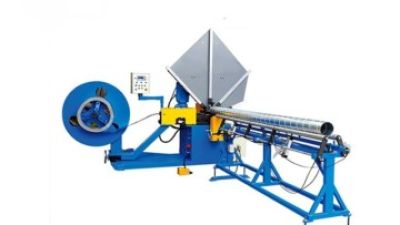
Manufactured in China by a supplier with more than 20 years of duct-equipment experience, this spiral duct machine is designed for small-to-medium fabricators and construction teams. Its fully mechanized forming process eliminates hand tapping and welding, replacing labor-intensive manual seamed pipes with consistent spiral round ducts and leak-resistant joints. The compact, rugged structure can be loaded onto a truck and transported directly to the job site, helping contractors reduce handling, shorten production cycles, and respond quickly to project requirements. Simple operation, dependable construction, and efficient 16kW performance make it suitable for workshops, mobile fabrication units, and commercial HVAC installation projects.

FAQS

Why do ductwork equipment suppliers differ by region?

Climate, building codes, labor costs, and manufacturing capacity influence supplier choices. North American buyers often seek automation, spare parts, and local technicians. European suppliers commonly emphasize energy efficiency, acoustic control, and compact production lines. Regional strengths are not guarantees.

What equipment do commercial ductwork projects commonly require?

Common equipment includes plasma cutters, spiral duct machines, forming tools, and sealing systems. The exact combination depends on duct shapes, material thickness, and production volume. Ask for sample production before placing a large order.

What should buyers check when comparing regional suppliers?

Review technical documents, service coverage, spare-part availability, and recent project evidence. Request realistic delivery dates. Also check installation guidance and calibration records. A polished website proves very little.

How can buyers evaluate duct sealing performance?

Request tested leakage results, insulation values, and material thickness data. Duct leakage can waste roughly 20–30% of conditioned air. Sealing quality affects comfort, energy use, and fan performance. Small gaps matter.

Which certifications and standards should suppliers provide?

Suppliers should provide documentation showing compliance with applicable construction, fire, material, and pressure requirements. Ask for independent test reports and traceable batch records. A quality-system certificate helps, but it cannot guarantee every component. That distinction is easy to miss.

What challenges affect suppliers in hot or dusty regions?

Equipment may need reinforced components, protective covers, remote support, and practical maintenance plans. Heat, dust, and difficult transport can slow repairs. Confirm how technicians handle failures at your site. Do not assume remote support is enough.

How can buyers avoid expensive retooling for different duct sizes?

Choose adaptable equipment with adjustable tooling and documented changeover procedures. Confirm the supported size range before signing a purchase order. Ask how long each setup change takes. The brochure may simplify this.

What should be included in a supplier warranty?

Review coverage periods, excluded parts, response times, labor terms, and cross-border service conditions. Clarify who pays for shipping and on-site repairs. Keep every promise in writing. Verbal assurances can disappear.

Why are installation and testing services important?

Poor installation can create turbulence, noise, leaks, and unnecessary fan energy use. Suppliers should explain access panels, cleaning needs, acoustic control, and airflow testing. Inspect a sample installation when possible. One overlooked elbow can delay an entire floor.

Conclusion

Ductwork Equipment includes the machines, tools, and systems used to manufacture, shape, connect, seal, and install air-distribution components for commercial, industrial, and residential buildings. This article explains its scope and core applications, then outlines how to evaluate global suppliers based on product quality, engineering capability, production capacity, delivery reliability, technical support, and after-sales service. It also presents a practical regional perspective without focusing on individual brands.

Key products may include forming machines, cutting and bending equipment, flange and seam systems, sealing tools, testing instruments, and automated production lines. Buyers should compare suppliers according to manufacturing precision, energy efficiency, automation, customization options, maintenance support, and total ownership cost. Industry standards, safety requirements, material traceability, and relevant certifications are equally important when selecting a reliable partner. By considering technology, capacity, compliance, and long-term service together, purchasers can make informed decisions and build efficient, durable, and cost-effective ductwork production capabilities.

Ava

Ava

Ava is a dedicated marketing professional with a deep-rooted expertise in metal roll forming equipment. With a strong passion for the manufacturing industry, she excels in communicating the intricacies and advantages of customized production line solutions. Her role involves not only promoting the......
Previous What Are the Top China Air Duct Machine Manufacturers?