Picking the right Air Duct Machine manufacturer in China isn't just about scoping out prices online—there's more to it than that. You really need to pay attention to things like quality of production, whether the machine runs smoothly, the kind of technical support they offer, and real reviews from other customers. This guide looks at some well-established players like Jinan Dega Machinery Co., Ltd., Jiangsu Yuli Machinery Co., Ltd., and Anhui Donghai Machine Tool Co., Ltd. These companies are well-known for supplying equipment that helps with cutting, beading, folding, punching, and shaping sheet metal ducts for HVAC projects.
A trustworthy manufacturer should be upfront about how their machines are built. It’s a good idea to look into details like the motor brands they use, control systems, how fast the machines can operate, whether they're compatible with different materials, and if spare parts are easy to get. And, honestly, if possible, visiting the factory can give you a lot of insight—checking out the welding quality, how things are assembled, and how the staff tests the equipment once it’s made. Don't hesitate to ask for installation records or references from previous clients.
At the end of the day, what really counts is how the machine performs in real-world conditions.
Top-notch suppliers don’t just have nice brochures—they’re willing to share detailed technical drawings, provide guidance on how to operate their equipment, offer training, and support you after the sale. But keep in mind, rankings can change. A company might have great machines but poor communication or limited options for customization—that’s something to watch out for.
This guide tries to compare manufacturers based on practical stuff—like their product range, manufacturing experience, quality control processes, ability to export, and reliability in service. Still, it’s wise to double-check their current certifications, warranty policies, delivery timelines, and their factory’s capacity before placing an order. Things can change quickly. The best approach is a mix of researching what they’ve published, chatting with them directly, and doing some testing if possible. That way, you’ll be better equipped to find an Air Duct Machine that fits your production needs, workspace size, and long-term maintenance expectations.
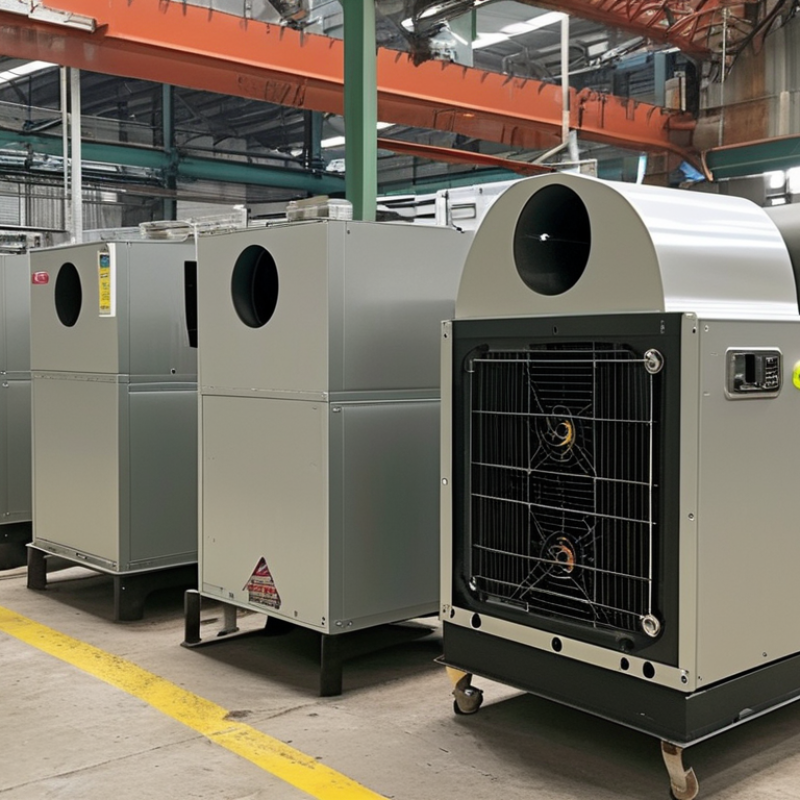
China’s role in the global air duct machine industry is substantial, supported by its broad HVAC manufacturing base. The International Energy Agency reported that global space-cooling electricity demand could rise from about 2,020 TWh in 2016 to 6,200 TWh by 2050. China represented roughly 35% of global cooling energy demand at that time. This pressure increases demand for duct-forming, cutting, folding, and sealing equipment.
Chinese manufacturers often combine CNC control, automated feeding, and flexible production lines. These systems can process galvanized steel, stainless steel, and aluminum sheets with consistent dimensions. Export capability is also improving. However, production scale does not always mean stable quality. Some machines appear highly advanced, yet their software support, spare-part availability, or calibration service may be limited. That is an uncomfortable point, but buyers should examine it carefully. Independent testing matters.
Tips: Ask for verified output samples, noise measurements, power consumption, and long-term accuracy records. Compare the machine’s rated capacity with your actual duct thickness and daily workload. The Global HVAC market reports from research firms also show continued growth, but forecasts differ by region and method. Treat projections as planning tools, not promises. A dependable supplier should provide installation guidance, operator training, safety documentation, and clear warranty terms. In practice, response speed after delivery can matter more than a low purchase price.
China’s strong position in steel production, manufacturing, industrial automation, and export-oriented machinery supports its competitiveness in air duct machine manufacturing. The indicators below show China’s approximate share of selected global industrial benchmarks in 2023.
Sources: World Steel Association, United Nations Industrial Development Organization, and International Federation of Robotics. Values are rounded 2023 global shares.
China’s leading air duct machine manufacturers usually focus on complete production lines, not one isolated tool. The Global Status Report for Buildings and Construction 2023 reports that buildings consume 34% of global energy and create 37% of energy-related emissions. Efficient ductwork therefore has practical value.
Key machine types include plasma or laser cutting systems, Pittsburgh lock formers, folding machines, and automated duct lines. A plasma cutter creates clean rectangular panels from galvanized steel sheets. A lock former shapes edges for tight, repeatable connections. TDF and TDC flange machines add rigid frames around duct sections. The Air Duct Damper Machine forms damper blades and frames for airflow control. Precision matters.
Seam closers and corner insertion machines support faster assembly on busy factory floors. The IEA’s Buildings 2023 report links better building efficiency with lower operating demand, but machine accuracy still depends on material thickness and operator training. A practical factory inspection should check cutting tolerance, noise, emergency stops, software stability, and spare-part access. Published speed figures need caution. A lower-priced machine may waste more sheet metal through inaccurate folds. Manufacturers with strong technical documentation, sample testing, and responsive service deserve closer attention than suppliers offering only attractive specifications.
What Are the Top China Air Duct Machine Manufacturers?
Identifying a leading Chinese manufacturer requires more than checking export volume. The IEA Buildings 2023 report states that buildings consume about 30% of global energy. This makes duct performance, sealing quality, and motor efficiency important purchasing factors. Grand View Research valued the global HVAC market at approximately USD 183.9 billion in 2023. It also projects continued growth through 2030. For buyers comparing a Duct Machine Air Conditioner, this growth increases supplier choices, but also increases verification risks.
Request factory records, not only polished brochures. Check whether the company controls cutting, forming, welding, electrical assembly, and final testing. Ask for airflow readings, noise results, power data, and dimensional tolerances. A reliable supplier should provide traceable inspection documents for each production batch. ISO 9001 certification can support process control, but it does not prove machine performance. That distinction matters. During a factory assessment, inspect sheet edges, duct joints, control panels, and spare-part storage. I have seen impressive samples hide inconsistent internal wiring. That detail deserves attention. Compare at least three production units, if possible. Review installation manuals and response times for technical support. Confirm whether testing follows recognized standards, such as ISO or IEC requirements. Independent laboratory reports are stronger than self-issued claims. Still, even laboratory data may reflect a limited sample. Buyers should test a finished machine under realistic workshop conditions. Temperature, material thickness, operator skill, and voltage stability can change results. This is where supplier promises often need a second look.
China’s Air Duct machine manufacturers often specialize in different production stages. Spiral duct equipment suits workshops producing round ventilation pipes quickly. It usually combines coil feeding, forming, cutting, and sealing. Rectangular duct specialists focus on plasma cutting, folding, beading, and corner insertion. Their machines support larger HVAC projects with strict dimensional requirements.
Some manufacturers concentrate on automatic duct lines. These systems connect software, laser or plasma cutting, punching, and panel forming. A sheet can move from loading to finished assembly with limited manual handling. Others build machines for Pittsburgh lock forming, TDF flanging, or reinforcement production. Product focus matters because a compact contractor workshop needs different equipment from a high-volume factory. The wrong machine can waste material every morning.
In my experience, reliable suppliers provide sample testing before shipment. Ask for actual cutting videos, tolerance records, electrical details, and maintenance guidance. Factory visits can reveal practical issues, such as noisy drives or awkward access panels. Product catalogs may look impressive. Reality needs checking. I would also compare spare-part availability, operator training, and response times. A small detail, like a stable feeding table, can prevent bent edges and repeated adjustments. Some evaluations remain uncertain without running your own galvanized steel through the machine.
China’s leading air duct machine manufacturers are usually distinguished by disciplined production standards, not attractive catalogs. Factories should document material traceability, electrical safety checks, and calibration records. ISO 9001-based procedures can support consistency, while applicable GB/T requirements guide local manufacturing practices. Buyers should request actual inspection reports, not general promises.
Technology affects both speed and duct accuracy. Modern production lines may combine CNC plasma cutting, automatic folding, Pittsburgh lock forming, and TDF flange processing. Servo-driven systems can reduce positioning errors during repeated cuts. A practical test should examine galvanized sheet samples, corner alignment, flange strength, and finished seam quality. Details matter. Software integration also deserves attention, because poorly matched controls can slow production instead of improving it.
Quality control should continue after installation. Reliable manufacturers provide operating training, spare-part lists, maintenance schedules, and responsive technical support. Factory audits can reveal important details, such as clean wiring cabinets, protected sensors, and organized component storage. However, quality claims are not always consistent with daily practice. Some inspection steps may depend too heavily on manual judgment. That gap matters. Buyers should compare sample results across several production cycles, review acceptance tolerances, and confirm how defects are recorded and corrected. A capable manufacturer explains limitations clearly, rather than promising perfect output for every material and duct design.
Choosing the right Chinese air duct machine supplier requires more than comparing online prices. Leading manufacturers should provide clear factory information, equipment specifications, and verifiable production records. Ask whether the company builds machines in-house or resells imported systems. A reliable supplier will explain cutting accuracy, forming speed, power requirements, and maintenance needs without vague promises.
Request a live video inspection or an on-site factory visit. Watch the machine process a galvanized sheet, especially around corners and seams. Check whether the finished duct keeps a straight edge after repeated forming. Ask for sample production using your usual material thickness. The supplier should also provide electrical diagrams, operation manuals, spare-parts lists, and training details. These documents reveal practical professionalism.
Do not select a supplier from price alone. A lower quote may exclude tooling, shipping protection, software updates, or installation support. Confirm warranty terms in writing and ask how quickly technical staff respond across time zones. For a Duct Air project, calculate output during a complete eight-hour shift, not only the advertised hourly rate. Some evaluations look convincing but miss operator fatigue and cleaning time. That oversight is easy to repeat. Review previous customer references, test reports, and payment milestones carefully. A capable supplier welcomes detailed questions, even uncomfortable ones.
A practical, brand-neutral comparison framework based on machine capability, compliance, service, and total ownership cost
| Evaluation Dimension | Typical Industry Data or Specification | What a Qualified Chinese Supplier Should Provide | Why It Matters to Buyers |
|---|---|---|---|
| Automatic Duct Production Line |
Typical sheet width: approximately 1,250–1,600 mm Typical process: decoiling, leveling, feeding, punching, forming, and cutting |
Complete process-flow diagram, line layout, throughput calculation, and compatibility with the buyer’s preferred CAD/CAM workflow | Best suited to high-volume rectangular duct production and helps reduce manual handling, setup time, and material waste |
| Pittsburgh Lock Former |
Common material range: galvanized steel and stainless steel in approximately 0.5–1.5 mm, depending on configuration Typical forming speed: around 8–15 m/min |
Verified material-thickness range, roller adjustment method, tooling drawings, and sample-lock inspection | Consistent lock geometry is essential for airtight joints and reliable duct assembly |
| TDF/TDC Flange Forming Machine |
Typical application: duct panels and flanged rectangular ductwork Key requirements: stable flange dimensions, accurate corner treatment, and repeatable forming |
Flange profile drawings, tolerance data, corner-forming solution, and test samples produced with the buyer’s sheet material | Dimensional consistency directly affects joint alignment, gasket compression, and installation efficiency |
| Plasma or Laser Cutting System |
Typical working area: commonly about 1,500 × 3,000 mm or larger Selection factor: cutting method must match the required sheet thickness and edge quality |
Cutting charts, nesting software information, consumable specifications, fume-extraction requirements, and accuracy test results | Accurate cutting improves duct dimensions and can lower scrap, rework, and downstream assembly time |
| Metal Sheet Compatibility | Common materials include galvanized steel, stainless steel, aluminum, and pre-painted steel; actual thickness capability varies by machine model | Written confirmation of material type, thickness, coil or sheet format, hardness limitations, and surface-finish precautions | Preventing material mismatch avoids roller damage, surface scratching, inaccurate forming, and warranty disputes |
| Electrical Configuration | Industrial machines are commonly supplied for three-phase power; voltage, frequency, motor rating, and control components must match the destination country | Electrical schematic, total connected load, control-panel photographs, component list, and destination-country voltage confirmation | Correct electrical configuration reduces commissioning delays and improves operational safety |
| Control and Automation | Common functions include touch-screen operation, recipe storage, length setting, automatic counting, fault alarms, and emergency-stop circuits | Control-system demonstration video, user interface language options, backup parameters, password levels, and remote diagnostic procedure | Clear controls reduce operator training time and make repeat production more reliable |
| Production Accuracy | Do not rely only on advertised accuracy; request a written tolerance for length, punching position, flange size, and lock-forming consistency | Inspection report using the buyer’s own drawings or test files, including measured samples and the inspection instrument used | Documented acceptance criteria provide an objective basis for factory acceptance and after-sales claims |
| Safety and Compliance | Important features include guarding, emergency stops, overload protection, electrical grounding, warning labels, and a safety-risk assessment | Machine risk assessment, electrical safety documentation, operating manual, maintenance manual, and destination-market compliance support | Safety documentation supports legal operation, employee protection, insurance requirements, and site approval |
| Factory Acceptance Testing | Testing should cover continuous operation, dimensional accuracy, emergency stops, noise or vibration observations, and final product quality | Signed FAT checklist, video record, sample production using agreed material, and a written punch list before shipment | FAT reduces the risk of receiving equipment that cannot meet the agreed production requirement |
| Installation and Training | Support may be provided through manuals, video guidance, remote commissioning, or on-site technical service | Clearly defined installation scope, training hours, technician travel terms, required site utilities, and commissioning responsibilities | Transparent responsibility prevents unexpected costs and shortens the time needed to reach stable production |
| Spare Parts and Maintenance | Critical items commonly include rollers, blades, belts, bearings, sensors, relays, switches, and forming tools | Recommended two-year spare-parts list, part numbers, prices, lead times, lubrication schedule, and preventive-maintenance plan | Parts availability has a direct effect on machine uptime and long-term operating cost |
| Supplier Manufacturing Capability | A suitable supplier should demonstrate engineering, machining, assembly, testing, and quality-control capability rather than only trading activity | Factory audit access, production photos or live video, quality records, organization information, and traceable machine serial-number records | Verifiable manufacturing capability lowers the risk of inconsistent build quality and weak technical support |
| Export and Documentation Experience | Relevant documents may include commercial invoice, packing list, user manuals, electrical drawings, certificates, and shipping data | Redacted examples of export documentation, packaging specifications, loading photos, and experience with the buyer’s destination requirements | Complete documentation helps avoid customs delays, installation errors, and communication problems |
| Warranty and Response Time | Warranty duration, exclusions, response time, and remedy method vary by contract and should not be assumed from general advertising | Written warranty terms, service-response commitment, remote-support channel, escalation process, and definition of consumable parts | A precise service agreement is more useful than an unspecified promise of lifetime support |
| Total Cost of Ownership | Evaluate purchase price together with freight, installation, tooling, electricity, consumables, spare parts, maintenance, and downtime risk | Itemized quotation with Incoterms, payment schedule, tooling costs, packing charges, optional items, and estimated operating requirements | The lowest initial quotation may not provide the lowest cost per finished duct over the machine’s service life |
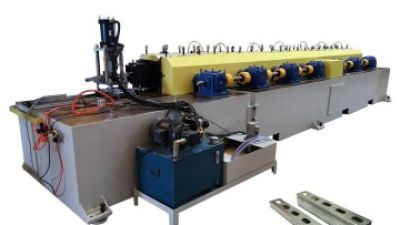
The China LD-S01 Unistrut Channel Roll Forming Machine is designed for producing standard 41x21mm and 41x41mm galvanized steel channels used in solar panel mounting structures, industrial pipe supports, cable management systems, and general construction frameworks. Its forming process delivers uniform profiles with smooth surfaces and reliable dimensional stability, helping manufacturers meet the requirements of different installation projects.
Equipped with high-speed punching technology, the machine can create accurate mounting holes during the forming process, with dimensional precision reaching ±0.2mm. This integrated operation reduces the need for secondary drilling and supports faster fabrication with consistent hole positioning. It is suitable for continuous production where stable output and repeatable quality are essential.
A reinforced 8-ton steel frame provides structural strength during high-speed operation, while the 16Mpa hydraulic system supports dependable cutting and punching performance. The production line is built for extended working schedules, including 24/7 manufacturing environments, and can be configured to process both 41x21mm and 41x41mm channel specifications. Its combination of automated forming, precise punching, and robust construction helps improve production efficiency while reducing material handling and processing time.
: Ask for material traceability records, electrical safety checks, and calibration reports. Actual documents matter more than attractive catalogs. ISO 9001-based procedures may support consistent production. Applicable local standards should also be explained clearly.
Useful systems may include CNC plasma cutting, automatic folding, lock forming, and flange processing. Servo-driven controls can reduce repeated positioning errors. Technology is not always an advantage. Poorly matched software may slow operators and create unnecessary adjustments.
Request samples made from your usual galvanized sheet thickness. Inspect corner alignment, straight edges, flange strength, and seam quality. Run repeated forming cycles. One successful sample proves very little.
Check wiring cabinets, sensor protection, and component storage areas. Look for clean electrical connections and labeled spare parts. Observe the machine during real production, not only demonstrations. Daily practice can expose weaknesses hidden by polished presentations.
Yes, especially when an on-site visit is impractical. Ask the operator to process a sheet around corners and seams. Watch for vibration, delays, manual corrections, and uneven forming. Video evidence helps, but it cannot replace every physical check.
Request electrical diagrams, operating manuals, spare-parts lists, and maintenance schedules. Training details should be provided in writing. Confirm installation procedures and technical support arrangements. Missing documents may create expensive confusion later.
Compare complete project costs, not only the machine quotation. Check tooling, shipping protection, software updates, installation, and training. Calculate output across a full eight-hour shift. Advertised hourly speed may ignore cleaning and operator fatigue.
Confirm warranty terms, response times, and technical contact methods. Ask how support works across different time zones. Review defect records and correction procedures. No supplier catches every problem perfectly. Clear limitations are more credible than perfect promises.
China has become a major contributor to the global air duct equipment industry, offering a wide range of solutions for HVAC and ventilation fabrication. Chinese manufacturers commonly produce duct forming machines, plasma cutting systems, lock forming machines, folding equipment, beading machines, seam closing machines, and integrated production lines. Their advantages often include broad product selection, flexible customization, efficient production capacity, and competitive pricing. Leading manufacturers can usually be identified through consistent product quality, engineering expertise, reliable after-sales service, clear technical documentation, and proven experience serving different market requirements.
When evaluating an Air Duct Machine supplier, buyers should examine manufacturing standards, automation technology, material quality, inspection procedures, safety features, and production efficiency. A dependable supplier should provide stable performance, precise forming or cutting results, convenient operation, and accessible maintenance support. Buyers should also compare machine specifications, customization options, delivery capabilities, warranty terms, training services, and total ownership costs. Selecting the right supplier requires balancing technical performance, quality control, communication, and long-term service rather than focusing only on the initial purchase price.