- Home
- About Us
- Products
- Solution
- Application
- News
- FAQ
- Contact Us
Leave Your Message
Picking out the right Duct Cutting Machine can really make a difference in daily work, affecting how well things go, the quality of your materials, and safety in the shop. Honestly, the choice isn’t just about comparing prices or motor sizes—there’s more to it. Seasoned HVAC fabricators often check out real production conditions before making a decision. They think about things like duct thickness, insulation type, how much they need to cut, how much space they have on the floor, and how skilled the operators are. Sometimes, it’s the small details that make all the difference.
A good, dependable Duct Cutting Machine should cut clean edges whether you're working with galvanized steel, aluminum, or approved composites. It’s a smart idea to ask suppliers for samples, noise levels, maintenance tips, and verified capacity specs. And when you see a demo, pay attention to the blade’s path—vibrations, dust movement, how responsive controls are, and how long it takes to set everything up. These little things often tell you way more than glossy catalog photos. Keep in mind, a machine that works flawlessly in one shop might not be the best fit for another. There’s no one-size-fits-all choice.
Also, don’t forget to check out the build quality, how easy it is to get replacement parts, the training offered, warranty conditions, and tech support. Companies like Baileigh Industrial and Roto-Die are helpful names to keep in mind as references, but you still gotta dig deeper—specs can be incomplete or a bit optimistic. It’s also super valuable to chat with operators who are using similar machines every day. Their firsthand experience might reveal tricky controls, frequent adjustments, or unexpected maintenance costs you wouldn’t find in glossy brochures. Basically, making a smart choice means combining practical testing, solid info, and realistic expectations for your production needs. Remember, the fastest machine isn’t always the best one; what really matters is consistent, reliable cuts, easy upkeep, and dependable results under your actual working conditions.
How to Choose the Best Duct Cutting Machine?
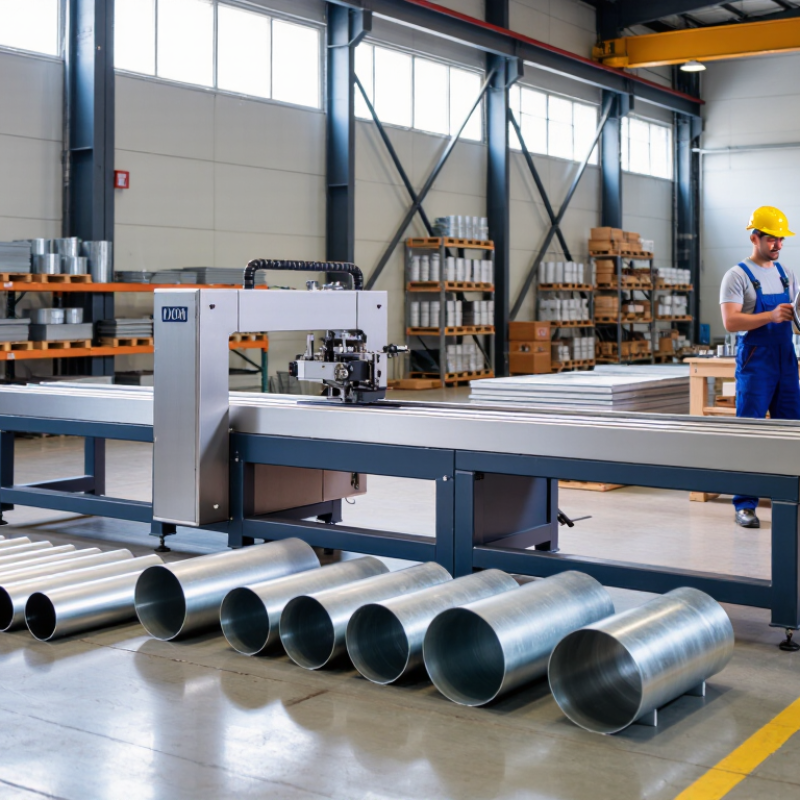
Duct cutting machines fall into several practical types. CNC plasma cutters suit galvanized steel and stainless steel sheets, especially for rectangular HVAC ductwork. Fiber laser machines provide cleaner edges and tighter tolerances, but their purchase and maintenance costs are higher. Coil lines combine feeding, cutting, notching, and forming. They work well in high-volume fabrication shops. Shear machines remain useful for short runs, repairs, and thicker materials.
Application should guide the choice. Round duct production often needs rotary or spiral cutting equipment, while square ducts require programmable sheet cutting and corner notching. Cleanroom projects demand controlled edges and low surface contamination. On busy sites, compact electric cutters can reduce handling, though they may sacrifice speed and repeatability. The U.S. Department of Energy reports that duct losses can exceed 30% of space-conditioning energy in poorly sealed systems. Accurate cutting matters.
Energy efficiency also affects machine selection. The International Energy Agency’s Buildings report states that buildings consume about 30% of global final energy. A machine that reduces scrap, burrs, and fitting errors can support better installation quality. Check cutting thickness, extraction, software compatibility, and operator training before buying. Do not trust speed claims alone. Real workshops have uneven sheets, worn blades, and rushed measurements. A small trial run may reveal more than a polished brochure.
| Duct Cutting Machine Type | Typical Materials | Common Cutting Method | Typical Production Role | Suitable Duct Applications | Main Advantages | Key Limitations | Important Selection Criteria |
|---|---|---|---|---|---|---|---|
| Manual Guillotine Shear | Galvanized steel, stainless steel, aluminum, light-gauge sheet metal | Mechanical straight-line shearing | Low-volume fabrication, repair work, prototyping | Rectangular ducts Flat sheets Small fittings | Low purchase cost, simple operation, minimal maintenance, no electrical power required | Requires manual effort; limited cutting length and productivity; generally unsuitable for complex contours | Blade length, maximum material thickness, frame rigidity, back gauge, operator safety features |
| Powered Guillotine Shear | Galvanized steel, stainless steel, aluminum, coated sheet metal | Hydraulic or electric mechanical shearing | Medium- to high-volume straight cutting | Rectangular duct panels Flanges Long sheet blanks | Faster and more consistent than manual shearing; suitable for repeated straight cuts | Higher energy and maintenance requirements; does not normally create holes or intricate profiles | Cutting length, rated thickness, stroke rate, back-gauge accuracy, blade adjustment, guarding |
| Plasma Cutting Machine | Carbon steel, stainless steel, aluminum, galvanized steel | High-temperature plasma arc | Medium- to high-volume profiling and part production | Access openings Duct fittings Irregular profiles Heavy-gauge parts | Fast cutting of electrically conductive metals; handles curves, slots, and internal openings | Produces heat-affected edges and dross; requires compressed air or gas, ventilation, and electrical safety controls | Rated amperage, pierce capacity, table size, CNC compatibility, consumable cost, fume extraction |
| Fiber Laser Cutting Machine | Carbon steel, stainless steel, aluminum, galvanized and pre-coated sheet metal | Focused laser beam | High-precision automated production | CNC duct panels Complex fittings Flange holes Seam details | High accuracy, narrow kerf, clean profiles, repeatable production, and efficient nesting of parts | Higher initial investment; reflective metals require appropriate machine configuration; needs trained operators | Laser power, working area, maximum sheet thickness, positioning accuracy, automation, software support |
| CNC Plasma Table | Carbon steel, stainless steel, aluminum, galvanized sheet metal | Computer-controlled plasma arc | Automated batch cutting and nesting | Rectangular fittings Round fittings Tapers Branch connections | Automates repeatable shapes, reduces manual marking, and supports digital duct-layout files | Cut edge quality depends on settings and consumables; requires programming and fume management | Table dimensions, cutting current, torch height control, CAD/CAM compatibility, nesting software |
| CNC Knife Cutting Table | Flexible duct fabric, insulation board, fiberglass-faced board, foam and non-metallic sheet materials | Oscillating, rotary, or tangential knife | Automated cutting of soft and semi-rigid materials | Flexible ducts Duct insulation Air-distribution board Gaskets | No thermal discoloration, clean edges on many non-metallic materials, fast pattern changes | Not intended for conventional metal duct sheet; blade wear varies with abrasive materials | Cutting head type, material compression, vacuum hold-down, table size, dust collection, file compatibility |
| Rotary Tube and Spiral Duct Cutter | Round galvanized steel, stainless steel, aluminum, spiral duct sections | Rotary blade, abrasive wheel, or dedicated circular cutting head | Cut-to-length processing for round ductwork | Round ducts Spiral ducts Pipe sections Collars | Efficient circumferential cuts, consistent lengths, and reduced manual layout for repetitive work | Limited mainly to round or tubular workpieces; end deformation may require deburring or forming | Diameter range, wall thickness, cut squareness, clamping method, indexing accuracy, deburring provisions |
| Portable Nibbler or Electric Shear | Thin galvanized steel, aluminum, stainless steel, and coated sheet metal | Small repeated punches or powered shearing action | On-site modification and small-batch fabrication | Field openings Corners Trimming Repairs | Portable, relatively affordable, and useful where large stationary equipment is impractical | Slower and less precise than CNC equipment; creates chips or narrow waste strips depending on tool type | Maximum thickness, minimum cutting radius, tool weight, battery or power supply, access and ergonomics |
| Waterjet Cutting Machine | Stainless steel, aluminum, carbon steel, composites, rubber, and other heat-sensitive materials | High-pressure water with abrasive when required | Specialized precision cutting and mixed-material production | Custom fittings Heat-sensitive parts Thick plate components | Minimal heat-affected zone and broad material compatibility; suitable for complex profiles | Higher operating complexity, water management, slower cutting for some thin-sheet applications, and abrasive consumption | Pump pressure, cutting envelope, abrasive system, dimensional accuracy, drainage, water treatment |
| Practical note: The stated capabilities are typical industry applications rather than fixed specifications. Confirm the machine’s rated material thickness, cutting envelope, accuracy, safety system, ventilation requirements, and compatibility with the actual duct material before purchase. | |||||||
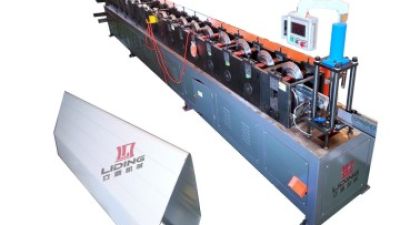
V-type ceiling and wall panels add clean lines, depth, and a modern architectural finish to residential, commercial, and industrial interiors. However, relying on distant suppliers for custom panels can lead to long delivery times, higher transportation costs, damaged materials, and inconsistent dimensions. A dedicated V-type ceiling and wall panel roll forming machine gives contractors and fabricators greater control over production, allowing them to manufacture panels on demand in their own workshop.
The machine continuously forms metal coils into accurately shaped V-type panels through a series of precision rollers. This streamlined process supports stable dimensions, smooth surfaces, and consistent profiles across both small orders and large construction projects. Operators can adjust production settings to meet different panel specifications, helping reduce manual work, material waste, and dependence on external suppliers. With a reliable forming system, businesses can respond more quickly to design changes, replacement needs, and urgent project schedules.
For interior contractors, on-site or in-house panel production can improve workflow efficiency and customer service. Whether producing a limited quantity for a residential renovation or thousands of panels for a commercial building, the equipment helps maintain uniform quality while controlling production costs. Its practical design makes it suitable for businesses seeking faster delivery, dependable results, and greater flexibility in V-type ceiling and wall panel manufacturing.
CNC plasma cutters handle galvanized and stainless steel sheets. Fiber laser cutters create cleaner edges and tighter tolerances. Coil lines combine feeding, cutting, notching, and forming. Mechanical shears suit short runs, repairs, and thicker materials.
Programmable sheet cutters suit square and rectangular ducts. Corner notching improves assembly accuracy. Plasma machines can work well on steel sheets. The best choice depends on thickness, volume, and edge requirements.
Round ducts often need rotary or spiral cutting equipment. These machines follow curved production paths more naturally. A flat-sheet cutter may create extra handling. That can slow production.
Choose capacity from the thickest routine material. Do not select equipment only for rare maximum thickness. Shears suit thinner sheets with little heat. Plasma handles thicker steel quickly, but may leave dross.
No. Excessive power can distort thin sheet metal. Higher wattage may improve speed, but not every job needs it. Match power with normal production work. More power is not automatically better.
Cut a sample panel before full production. Inspect the edge and measure the finished opening. Check for burrs, dross, and heat distortion. Measure twice. A one-millimeter error can create visible assembly gaps.
Cleanroom projects need controlled edges and low surface contamination. Select suitable extraction and stable cutting settings. Remove loose residue after cutting. A technically accurate edge may still need better cleaning.
Accurate parts fit more easily and require less sealing adjustment. Poorly fitted edges may increase leakage risks. They can also slow installation around access doors and transitions. Cutting accuracy helps, but it does not solve every leakage problem.
Check cutting thickness, extraction, software compatibility, maintenance needs, and training requirements. Review actual workshop samples, not only speed claims. Test uneven sheets and worn tooling when possible. Brochures can look perfect. Real production is messier.
Test a sample panel using common materials and normal settings. Record cutting time, edge quality, scrap, and finished dimensions. Include one rushed measurement. The results may expose weaknesses that demonstrations hide. The trial is useful, though not perfect.
Choosing the best Duct Cutting Machine starts with understanding the type of ductwork and the applications it must handle. Consider whether the machine will process rectangular, round, or customized ducts, as well as the materials, thicknesses, dimensions, and daily cutting volume involved. These factors help determine the most suitable cutting method, machine power, speed, accuracy, and ability to produce consistent results.
It is also important to evaluate the machine’s size, automation level, safety features, and ease of operation. Check whether it fits your workspace, supports existing production systems, and allows convenient maintenance and adjustment. Operating costs, energy use, replacement parts, and technical support should be included in the overall assessment. Finally, compare the machine’s capabilities with your budget and production goals to select a reliable solution that improves efficiency, maintains cutting quality, and supports long-term manufacturing needs.